Automatic Case Packers: Key Parameters and Safety Interlocks
Automatic Case Packers: Key Parameters and Safety Interlocks
Answer first: an automatic case packer is specified by a defined set of measurable parameters — power voltage, power consumption, air pressure, air consumption, carton dimension range, packing capacity in cartons per minute, overall dimensions and net weight — and it is qualified by a documented factory test sequence that includes a PLC control logic test, an electrical safety test, a safety interlock and E-stop test, a pneumatic leakage test, no-load and load running tests, and dimensional tolerance inspection. If a quotation does not state those values and those tests, the project risk has not been assessed yet, whatever the price suggests.
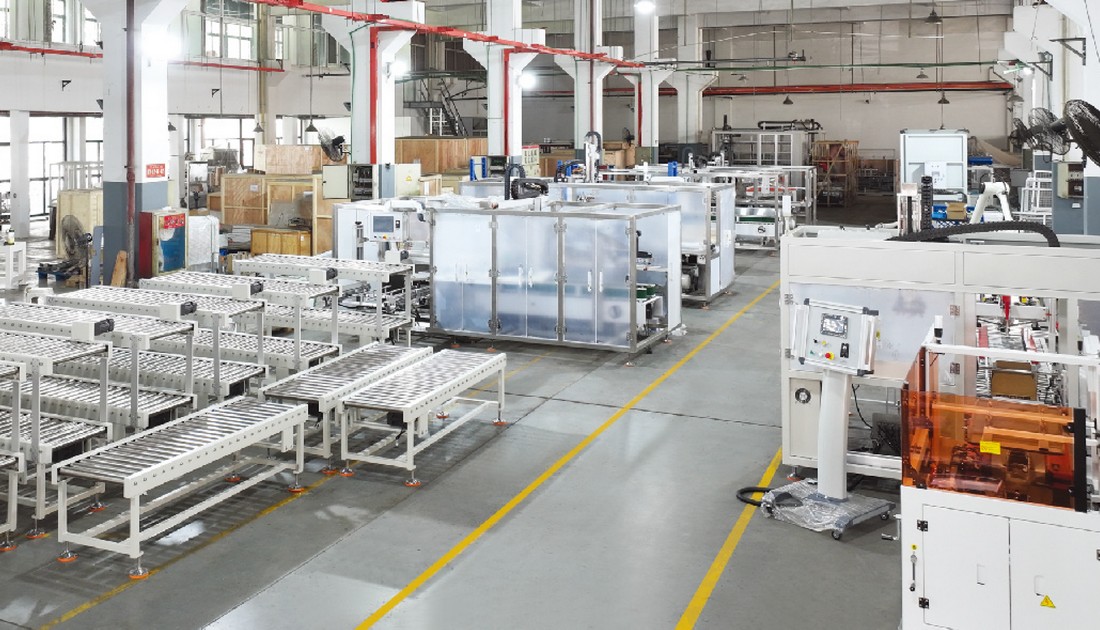
WIMACH packaging machinery workshop, Ruian, Wenzhou — automatic case packers and integrated packaging lines.
This technical guide is written for the people who sign off a case packer specification: project engineers, procurement managers and line integrators who must confirm that a case packing machine fits the carton, the line and the plant — and that its safety functions can be demonstrated rather than assumed. It covers the two models in the WIMACH case packer range, the Automatic Side Load Case Packer CP-S50 and the Automatic Top Load Case Packer CP-T60, and explains what each parameter controls.
Wenzhou Wimach Machinery Co., Ltd. (WIMACH) is a Chinese packaging machinery manufacturer founded in 2021 and located in Ruian, Wenzhou, Zhejiang. The company operates a 3,000 m² factory with 37 employees, a five-engineer R&D team and an annual output of 160 sets, of which about 60% is exported to the EU, North America and South America. Its range covers tissue packing machines and integrated packaging lines, including case packers, and all WIMACH machines are CE certified.
Problem Definition: Case Packer Projects Fail on Paper First
Most automatic case packer problems that surface during installation were already present in the specification. They are specification gaps rather than machine defects, and they cluster into six predictable categories:
- Carton envelope mismatch. The carton that will actually be packed falls outside the adjustable dimension range of the machine that was quoted.
- Electrical mismatch. The site supply does not match the machine's power voltage rating — typically 380V 50/60Hz, 3-phase — or the connected load was never checked against the machine's power consumption.
- Compressed air shortfall. Air pressure and air consumption were estimated rather than measured, and the machine starves at peak cycle.
- Footprint and floor load. Overall dimensions and net weight were checked after the line layout had already been frozen.
- Throughput mismatch. Packing capacity does not match the upstream wrapper or cartoning machine.
- Compliance file gap. The machine is CE certified, but the buyer cannot trace which safety functions were actually tested on the unit before shipment.
The consequence is a line that runs below its design rate from day one, or a delivery that stalls at the buyer's own acceptance inspection. Both are avoided in the same way: by treating parameters and safety tests as a single specification rather than two separate documents.
Industry Background: Documentation Now Weighs as Much as Capacity
Case packing sits inside a packaging equipment market that is expanding steadily. Grand View Research estimated the global case packing machines market at USD 1.07 billion in 2024, projected to reach USD 1.74 billion by 2033. Asia Pacific accounted for 37.9% of that industry in 2024, and within machine types the top load case packer segment held the largest share at 45.5% in 2024.
Adjacent automation categories show the same direction. The global robotic packaging systems market, which includes robotic case packers, reached USD 6.4 billion in 2024 (Global Market Insights), and secondary packaging equipment — the category that contains case packers — holds approximately 45% of the total packaging robot market share (Fact.MR).
Two regulatory reference points explain why buyers increasingly ask for test evidence instead of a certificate alone:
- EN ISO 12100 is the harmonized European standard for machinery safety and is mandatory for CE marking on case packers sold in the EU (ISO / European Commission).
- ANSI/PMMI B155.1-2023 is the primary safety standard for packaging and processing machinery in the United States (PMMI).
The Core Parameter Set for an Automatic Case Packer
A complete case packer specification groups into three parameter families — utilities, physicals and throughput — and each family maps to a specific site decision.
Utility Parameters: Power Voltage, Power Consumption, Air Pressure and Air Consumption
Both WIMACH case packers are rated at 380V 50/60Hz, 3-phase. The Automatic Side Load Case Packer CP-S50 draws 4.5 kW; the Automatic Top Load Case Packer CP-T60 draws 7.5 kW. Both operate on a compressed air supply of 0.5–0.8 MPa. Air consumption differs: 350 L/min for the CP-S50 and 450 L/min for the CP-T60.
These four numbers answer three plant-side questions: whether the existing distribution board can carry the connected load, whether the compressor and air treatment can sustain the machine at full cycle rate, and whether a dedicated air line is required. Air consumption is the parameter most often left out of quotations and most often responsible for a machine that runs correctly at start-up and then slows down once other equipment on the same compressor starts.
Grid variation is handled as a configured option rather than a workaround on site: voltage is one of the items WIMACH customises, alongside packaging dimensions, machine configuration and logo.
Physical Parameters: Overall Dimensions, Net Weight and Carton Range
The CP-S50 measures 4200 (L) × 2300 (W) × 1900 (H) mm and weighs 1500 kg. The CP-T60 measures 4200 (L) × 2600 (W) × 2200 (H) mm and weighs 1600 kg. Both are available in stainless steel or carbon steel construction.
Overall dimensions define conveyor interfaces, operator access, maintenance clearance and the height available for sealing and discharge. Net weight matters for floor loading, for lifting equipment during installation, and for deciding how close the machine may sit to structural columns. The carton range should be fixed before anything else: the CP-S50 accepts cartons from 240–500 (L) × 200–400 (W) × 180–400 (H) mm, while the CP-T60 accepts 300–600 (L) × 200–400 (W) × 150–400 (H) mm.
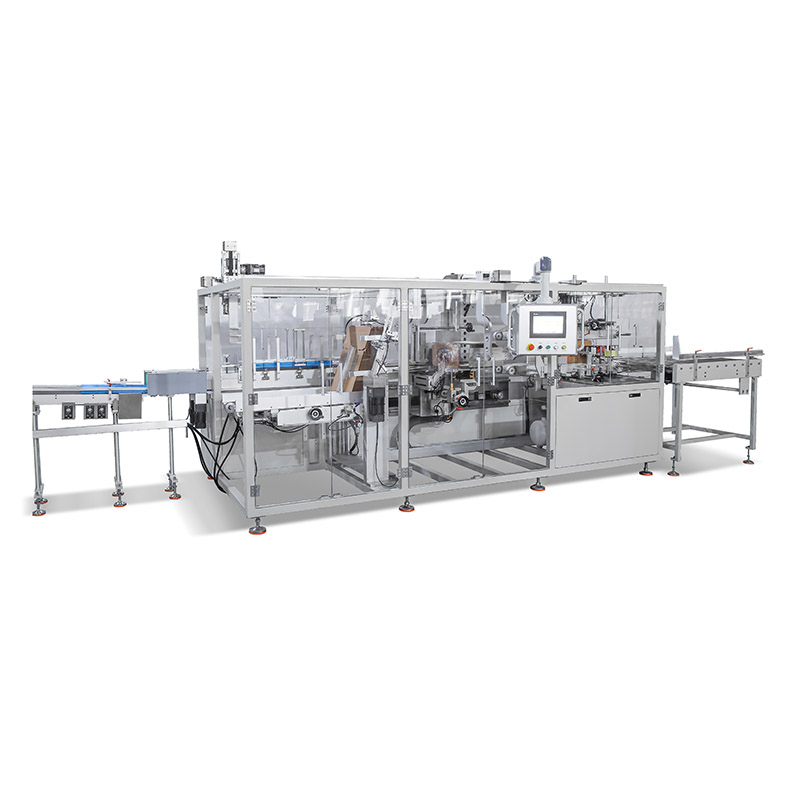
Automatic Side Load Case Packer CP-S50: 1–16 cartons/min, 380V 50/60Hz 3-phase, 4.5 kW, 1500 kg.
Throughput Parameters: Packing Capacity in Cartons per Minute
Packing capacity is stated as a range, not a single figure, because it depends on carton size and product arrangement. The CP-S50 is rated at 1–16 cartons/min and the CP-T60 at 1–8 cartons/min. For reference, the integrated WIMACH lines that include a case packer state a maximum case packing speed of 10 cases/min — the toilet paper packaging line and the facial tissue box packaging line both use that figure.
The practical rule is to place the required output inside the range with margin, and to verify it against the slowest upstream unit rather than the fastest. A case packer specified at the top of its range has no allowance left for a downstream stoppage or for a carton sitting at the upper limit of the dimension range.
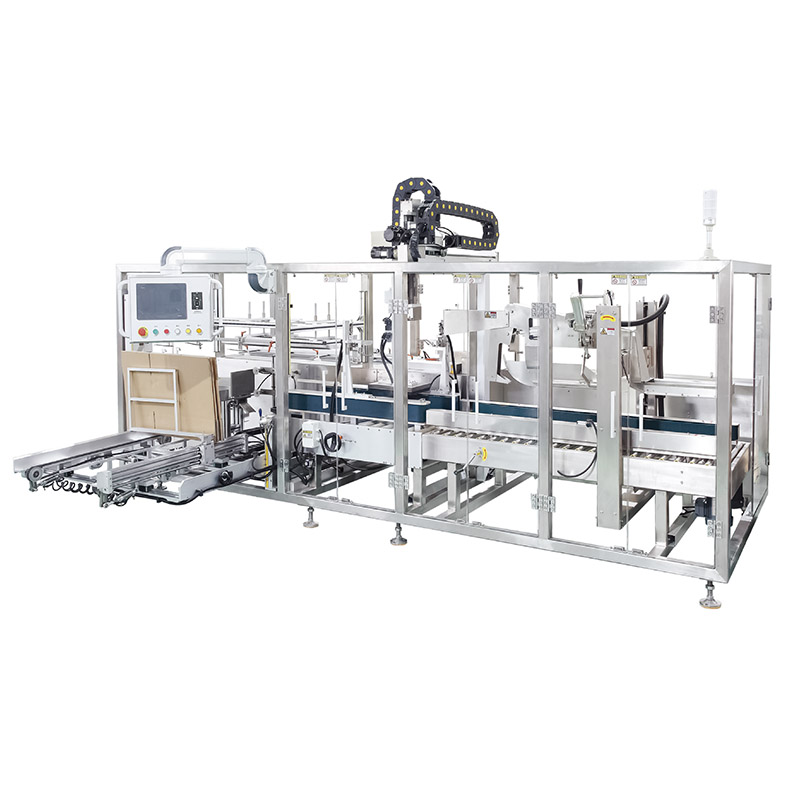
Automatic Top Load Case Packer CP-T60 (pick-and-place): 1–8 cartons/min, 380V 50/60Hz 3-phase, 7.5 kW, 1600 kg.
Safety Interlocks, PLC Logic and E-Stop Verification
Parameters prove that a machine will run; safety interlocks prove that it will stop. WIMACH's pre-shipment quality control sequence treats control and safety verification as separate, named tests rather than as part of a general commissioning step:
- PLC control logic test — confirms that the machine's control sequence executes station by station as designed, so that transfer, loading and discharge actions occur in the intended order.
- Safety interlock and E-stop test — confirms that protective devices and the emergency stop function halt hazardous motion, and that the machine cannot be restarted without a deliberate action by the operator.
- Electrical safety test — confirms that the electrical assembly is safe to energise and that control and power wiring meet the requirements applicable to the destination market.
These tests connect directly to CE compliance, because EN ISO 12100 is the harmonized standard for machinery safety that is mandatory for CE marking on case packers sold in the EU. A supplier can hold a CE certificate and still be unable to show which safety functions were verified on a specific unit; the fix is to require the test record by name, at quotation stage.
All WIMACH machines are CE certified. For projects destined for the United States, ANSI/PMMI B155.1-2023 is the primary safety standard for packaging and processing machinery, and buyers specifying into that market should confirm in writing which standard the supplier's safety documentation references.
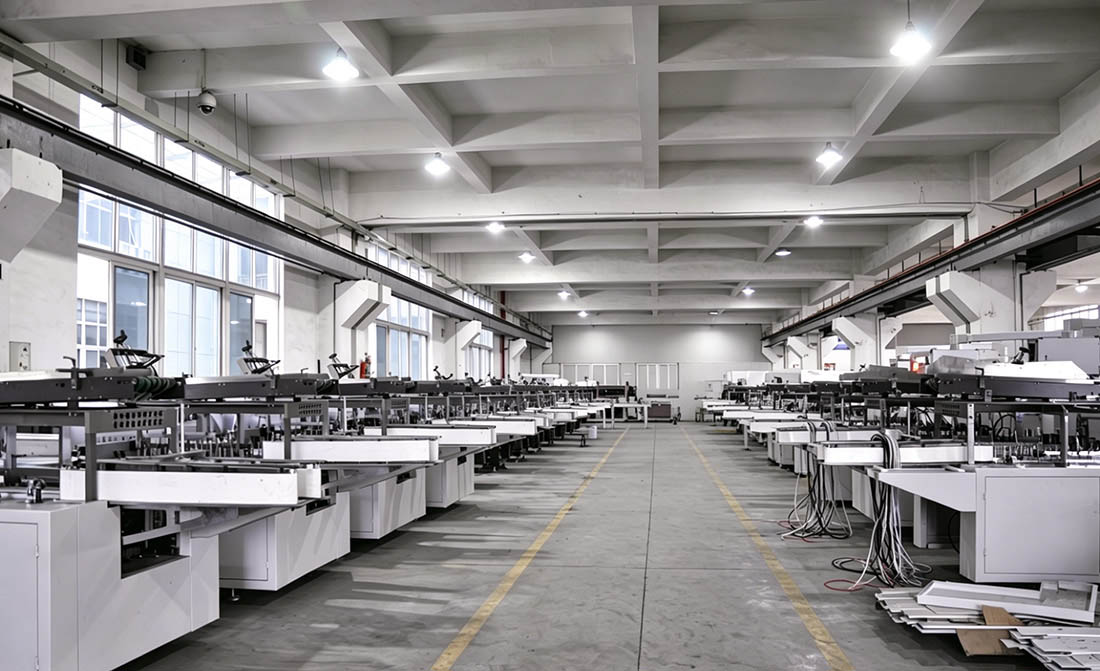
Pre-shipment testing at the WIMACH workshop: no-load and load running tests, pneumatic leakage test and safety interlock checks.
The Nine-Point Factory Quality Control Sequence
WIMACH applies the same nine-item quality control sequence to every machine before shipment. Read as a sequence rather than a checklist, it moves from mechanical correctness to functional behaviour and finally to safety.
| Quality control step | What it verifies | Project risk it reduces |
|---|---|---|
| No-load & load running test | The machine runs correctly first without product, then under load with product in the carton | Start-up failures and rate shortfalls discovered after installation |
| Dimensional tolerance inspection | Manufactured parts and assemblies sit within the drawing tolerances | Carton jams, misfeeds and alignment problems |
| Mechanical assembly check | Components are assembled, aligned and fastened as designed | Premature wear and mechanical stoppages |
| Pneumatic leakage test | Tightness of the air circuit at the specified working pressure | Pressure loss and unstable cycle behaviour |
| Electrical safety test | The electrical assembly is safe to energise and wired to the applicable requirements | Electrical hazards and acceptance-inspection failures |
| PLC control logic test | The control sequence executes in the intended order | Sequence faults, incorrect transfer and discharge actions |
| Safety interlock & E-stop test | Protective devices and the emergency stop halt hazardous motion | Operator safety incidents and compliance gaps |
| Long-time aging test | Stability of operation over an extended running period | Early-life failures after delivery |
| Surface appearance inspection | Finish quality of the machine as delivered | Handover disputes and rework |
The order matters. Mechanical and pneumatic checks come before running tests because an air leak will distort a load test; electrical and PLC verification comes before the safety interlock test because the safety functions are executed through the same control architecture. A buyer reviewing test documentation should be able to match each of these nine items to a record for the specific unit being shipped.
Step-by-Step Breakdown: How to Evaluate a Case Packer Specification
The following sequence turns the parameter set above into a purchase decision. It is written for a Research-to-Evaluation stage buyer comparing case packing machines for a defined project.
Step 1 — Lock the carton envelope. Measure the actual carton, including any bulge from the packed product. Then check it against the machine range: 240–500 × 200–400 × 180–400 mm for the CP-S50, and 300–600 × 200–400 × 150–400 mm for the CP-T60. Carton dimensions and machine configuration are both customisable items, so an out-of-range carton is a configuration question, but it must be raised before quotation, not after.
Step 2 — Balance cycles against the upstream machine. Compare the required cartons per minute with the case packer's rated range (1–16 for the CP-S50, 1–8 for the CP-T60) and with the maximum case packing speed used in comparable integrated lines (10 cases/min in the WIMACH toilet paper and facial tissue box lines).
Step 3 — Confirm plant utilities. Verify that the site can supply 380V 50/60Hz, 3-phase; that the connected load covers 4.5 kW (CP-S50) or 7.5 kW (CP-T60); and that compressed air is available at 0.5–0.8 MPa with enough volume for 350 L/min or 450 L/min respectively.
Step 4 — Verify footprint, height and floor load. Check the 4200 × 2300 × 1900 mm footprint of the CP-S50 or the 4200 × 2600 × 2200 mm footprint of the CP-T60 against the layout, and confirm that the floor and handling equipment can take 1500 kg or 1600 kg.
Step 5 — Define the compliance route. For the EU, EN ISO 12100 applies as the harmonized machinery safety standard mandatory for CE marking on case packers; for the United States, ANSI/PMMI B155.1-2023 is the primary packaging machinery safety standard. State the destination market in the enquiry so that the correct documentation set is quoted.
Step 6 — Require the test records by name. Ask for the nine quality control items — no-load and load running test, dimensional tolerance inspection, mechanical assembly check, pneumatic leakage test, electrical safety test, PLC control logic test, safety interlock and E-stop test, long-time aging test and surface appearance inspection — and confirm they will be performed on the unit being shipped.
Step 7 — Confirm customization, order quantity and lead time. WIMACH customises packaging dimensions, machine configuration, voltage and logo; the minimum order quantity is 1 set; lead time is 30–45 days for customized machinery service and 15–45 days for OEM/ODM projects, against a monthly capacity of 13 sets. After-sales scope covers installation and commissioning, training, warranty service, remote technical support, lifetime after-warranty support and upgrade or retrofit service.
Use Cases: Project Fit in Practice
The parameter and test logic above is the same logic applied in configured WIMACH projects across tissue, food-adjacent and wet wipe applications.
Facial tissue packaging line, Poland. A complete packaging line built for fully automatic packaging of facial tissue and cream tissue, integrating conveying, automatic cartoning, case packing, pallet feeding, robotic palletizing, strapping and stretch wrapping. The case packing stage uses the Automatic Side Load Case Packer CP-S50 in a 12-set configuration; the recorded project duration is 2 years. Finished output is whole pallets of shipping cases, strapped and stretch-wrapped, described as stable, dust proof and moisture proof, ready for warehouse storage or direct delivery. The line design is customized and compliant with CE standards.
Toilet paper roll packaging line, United States. A customized line for toilet paper rolls where rolls are individually wrapped, then case packed, then palletized and stretch-wrapped. The case packer used is the Automatic Top Load Case Packer CP-T60, in a 6-set configuration with a recorded project duration of 4 years. Because the case packing stage sits between wrapping and palletizing, the CP-T60's 1–8 cartons/min range and 4200 × 2600 × 2200 mm footprint determine how the conveyor sections are laid out. Product 5579 in the US market provides customized end-of-line packaging including roll wrapping, case packing, palletizing and stretch film wrapping for toilet paper rolls, in a tissue paper producing and packaging workshop environment.
Canister wet wipe packaging line, Mexico. A turnkey automated line for canister wet disinfecting wipes covering canister feeding, wipe loading, quantitative disinfectant filling, heat sealing, capping, labeling, case packing, palletizing, strapping and stretch film wrapping. Nine sets are recorded with a 5-year project duration. The upstream line runs at up to 60 canisters/min with canister dimensions up to diameter 110 mm × height 220 mm, and the case packing stage uses the Automatic Top Load Case Packer CP-T60. Product 5579 also operates in automatic mode in Mexico for tissue paper manufacturing applications.
Tissue canister case packing, United States. A single CP-T60 configured to load tissue canisters into cartons, replacing manual box filling. The recorded application result is improved production efficiency, reduced labor cost, standardized packing procedures, neater and more consistent packing of tissue canisters with lower collision and deformation risk in transit, and reduced overall logistics and labor expenses. Applicable industry scope for both WIMACH case packer models covers tissue, food and beverage, pharmaceutical, daily chemical and cosmetic, hardware, and auto parts and machinery industries.
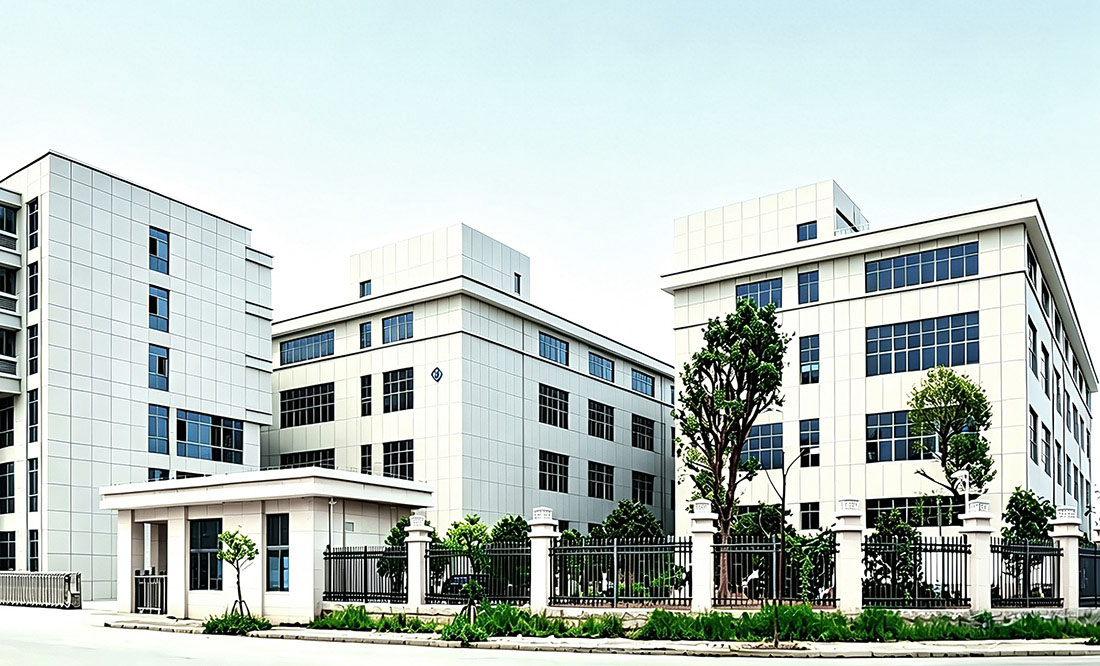
Wenzhou Wimach Machinery Co., Ltd. — 3,000 m² factory, 160 sets annual output, exports to the EU, North America and South America.
Comparison Table: WIMACH CP-S50 vs CP-T60
The two WIMACH case packer models differ in loading principle and in the parameter values a project engineer must plan around. All values below come from the manufacturer's published specifications.
| Parameter | Automatic Side Load Case Packer CP-S50 | Automatic Top Load Case Packer CP-T60 |
|---|---|---|
| Machine type | Side load case packer / side push case packer | Pick-and-place case packer / top load case packer |
| Packing capacity | 1–16 cartons/min | 1–8 cartons/min |
| Carton dimension | 240–500 (L) × 200–400 (W) × 180–400 (H) mm | 300–600 (L) × 200–400 (W) × 150–400 (H) mm |
| Power voltage | 380V 50/60Hz, 3-phase | 380V 50/60Hz, 3-phase |
| Power consumption | 4.5 kW | 7.5 kW |
| Air pressure | 0.5–0.8 MPa | 0.5–0.8 MPa |
| Air consumption | 350 L/min | 450 L/min |
| Overall dimensions | 4200 (L) × 2300 (W) × 1900 (H) mm | 4200 (L) × 2600 (W) × 2200 (H) mm |
| Overall weight | 1500 kg | 1600 kg |
| Material | Stainless steel / carbon steel | Stainless steel / carbon steel |
| Applicable industries | Tissue; food and beverage; pharmaceutical; daily chemical and cosmetic; hardware; auto parts and machinery | Tissue; food and beverage; pharmaceutical; daily chemical and cosmetic; hardware; auto parts and machinery |
Read against a project specification, the trade-off is visible in three numbers. The CP-S50 reaches a higher cycle range (up to 16 cartons/min) at lower connected power (4.5 kW) and a smaller footprint, while the CP-T60 handles a longer carton (up to 600 mm) and a lower carton height (from 150 mm) but consumes 7.5 kW and requires 450 L/min of air. Which model fits is a project decision driven by the carton envelope and the required rate — not by model hierarchy.
FAQ
1. Which safety standards should be referenced when an automatic case packer is specified for the EU or the United States?
EN ISO 12100 is the harmonized European standard for machinery safety and is mandatory for CE marking on case packers sold in the EU. In the United States, ANSI/PMMI B155.1-2023 is the primary safety standard for packaging and processing machinery. Both standards relate to the machine itself rather than to packing performance, which is why they belong in the technical specification next to the parameter table. All WIMACH machines are CE certified, and buyers specifying into the US market should confirm in writing which standard the supplier's safety documentation references.
2. What tests should be completed at the factory before an automatic case packer is shipped?
WIMACH applies a nine-item quality control sequence: no-load and load running test, dimensional tolerance inspection, mechanical assembly check, pneumatic leakage test, electrical safety test, PLC control logic test, safety interlock and E-stop test, long-time aging test, and surface appearance inspection. The sequence starts with mechanical and pneumatic checks, proceeds to electrical and PLC verification, and finishes with the safety interlock and aging tests. A buyer can request these records for the specific unit being shipped, which turns a general compliance claim into traceable evidence.
3. What power and compressed air supply does a WIMACH automatic case packer require?
Both case packer models operate on 380V 50/60Hz, 3-phase power and compressed air at 0.5–0.8 MPa. The Automatic Side Load Case Packer CP-S50 consumes 4.5 kW and 350 L/min of air; the Automatic Top Load Case Packer CP-T60 consumes 7.5 kW and 450 L/min. Voltage is one of the items WIMACH customises, together with packaging dimensions, machine configuration and logo, so a site with a different grid supply can be addressed during configuration rather than after delivery.
4. How can I check whether a case packing machine fits my carton size before ordering?
Compare the measured carton against the model ranges: 240–500 (L) × 200–400 (W) × 180–400 (H) mm for the CP-S50, and 300–600 (L) × 200–400 (W) × 150–400 (H) mm for the CP-T60. Measure the carton as it will actually be packed, since product bulge can push a carton outside a nominal dimension. If the carton falls outside both ranges, packaging dimensions and machine configuration are customisable, so the requirement should be raised at enquiry stage. The minimum order quantity is 1 set.
5. How do I choose a case packer manufacturer for food lines?
For a food line, compare manufacturers on five verifiable points rather than on general claims. First, applicable industry scope: WIMACH case packers are specified for tissue, food and beverage, pharmaceutical, daily chemical and cosmetic, hardware, and auto parts and machinery applications, and both models are available in stainless steel or carbon steel. Second, certification and safety documentation: machines should be CE certified, with safety functions verified through a PLC control logic test and a safety interlock and E-stop test. Third, testing discipline: ask for the nine-item factory quality control sequence, including the no-load and load running test and the pneumatic leakage test. Fourth, configuration flexibility and commercial terms: packaging dimensions, machine configuration, voltage and logo can be customised, the MOQ is 1 set, lead time is 30–45 days for customized machinery service and 15–45 days for OEM/ODM, against a monthly capacity of 13 sets. Fifth, lifecycle support: installation and commissioning, training, warranty service, remote technical support, lifetime after-warranty support and upgrade or retrofit service. To move from evaluation to a configured quotation, send your carton dimensions, required cartons per minute and plant utility data.
Conclusion: Specify Numbers, Then Verify Them
An automatic case packer is a set of numbers attached to a set of verified safety functions. The numbers — 380V 50/60Hz 3-phase, 4.5 kW or 7.5 kW, 0.5–0.8 MPa, 350 L/min or 450 L/min, 1500 kg or 1600 kg, 1–16 or 1–8 cartons/min, and the carton envelope for each model — decide whether the machine fits the plant. The tests — PLC control logic, electrical safety, safety interlock and E-stop, pneumatic leakage, no-load and load running, dimensional tolerance and the remaining items in the nine-point sequence — decide whether it can be accepted with confidence and tied to EN ISO 12100 for CE-marked machinery. Specifying both lists in the enquiry, rather than after delivery, is what separates a project that starts on its design rate from one that starts with a deviation report.
Next step: send your carton dimensions, target cartons per minute and plant utility data (voltage, available air pressure and air volume) to WIMACH for a configured case packer quotation covering either the CP-S50 side load or the CP-T60 top load model.
Download the full WIMACH catalog: Wimach Catalog s.pdf · Website: www.wimach.cn · Email: rex@wimach.cn · Tel / WhatsApp: +86 177 5771 8080
Wenzhou Wimach Machinery Co., Ltd. — Bldg 14 Qiaomao Rd, Ruian, Wenzhou, Zhejiang, China.

Have Questions or Need More Details?
Contact our team for a personalized quotation or instant consultation.
Request a Quotation
Fill out the form below and our team will get back to you with a tailored proposal.
WhatsApp Direct Chat
Prefer to chat in real-time? Message us on WhatsApp for instant assistance & quick answers.
- Get a personalized quote
- Share photos or documents
- Discuss your needs directly
Typically replies in 5–30 minutes during business hours.