
Tissue Packing Machine Compliance Guide: Voltage, Air, and Carton Specs for Regional Sites
Quick answer. A tissue packing machine is compliant at site level when three things match the plant it will run in: the electrical supply, the compressed air supply, and the carton or film format. The WIMACH TP-280 high-speed soft tissue wrapping machine is specified for 380 V, 50/60 Hz three-phase power with 18 kW power consumption, and for compressed air at 0.5–0.8 MPa with 120 L/min air consumption. The WIMACH TC-100 tissue cartoning machine is specified for 300–400 gsm carton board and cartons with a length of 100–240 mm. These five data points should be checked against the site drawing before a purchase order is released, not after the machine arrives.
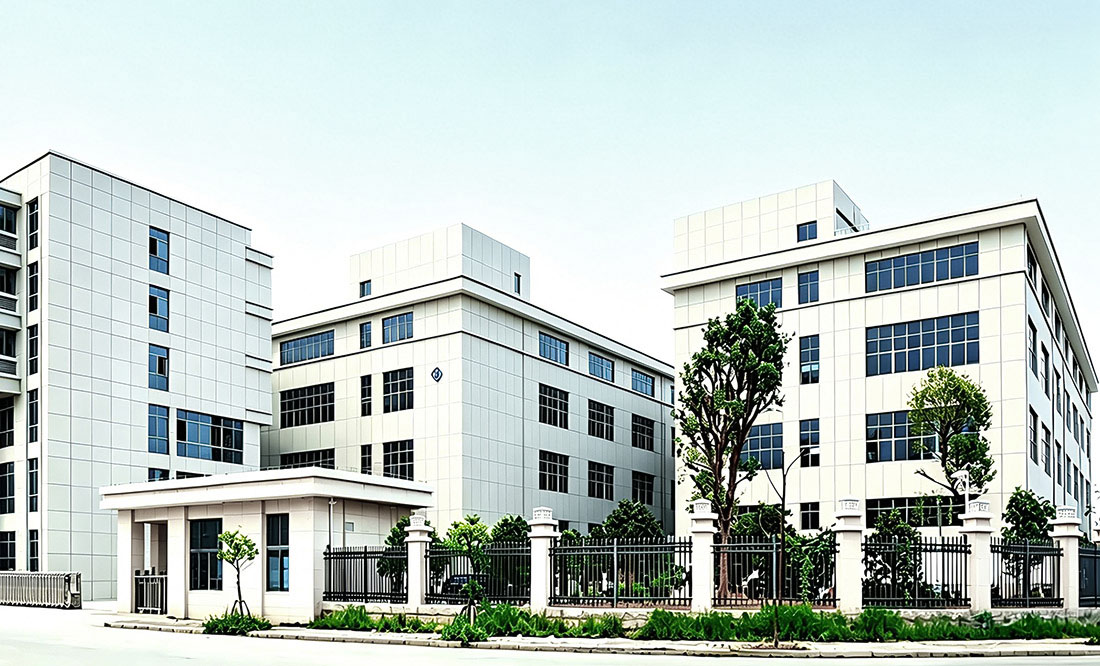
Wenzhou Wimach Machinery Co., Ltd., which trades as WIMACH, is a Chinese manufacturer of tissue packing machines and integrated packaging lines based in Ruian, Wenzhou, Zhejiang. Its range covers soft tissue wrapping machines, facial tissue and napkin cartoning machines, toilet paper roll wrapping machines, case packers and complete turnkey lines, and the company states that all of its machines are CE certified.
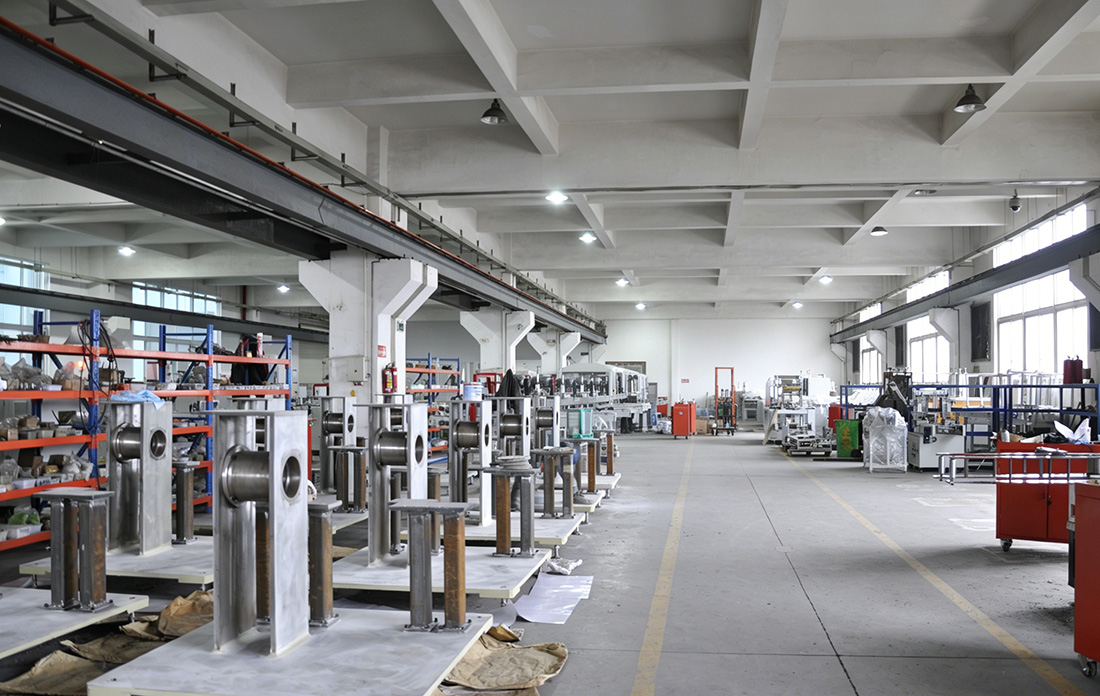
What Compliance Actually Means at the Installation Site
Compliance for a tissue packing machine is usually discussed as a certification question. In practice, most commissioning problems are utility and material mismatches that surface long after the certificate has been filed. The machine arrives, the line is wired, the air hose is connected, the first cartons are delivered, and only then does it become clear that the supply, the air header or the board grade sits outside what the datasheet assumes.
Four failure patterns account for most of these delays:
- Voltage or frequency does not match the nameplate. A machine specified for 380 V, 50/60 Hz three-phase power has to be connected to a supply that meets that specification. Where the site differs, the two sides need a documented agreement before the order is released.
- Air is available but not adequate. Header pressure is not the same as inlet pressure during peak demand. The TP-280 specification of 0.5–0.8 MPa at 120 L/min contains both a pressure window and a flow requirement, and both have to hold at once.
- Carton board falls outside the stated grammage. The TC-100 is specified for 300–400 gsm board and 100–240 mm carton lengths. Locally sourced board at a different grade is a material change, not a tolerance.
- Documentation arrives late. Safety test records, manuals and connection drawings need to reach the site before installation, not with the container.
The cost is not only downtime. A machine installed outside its stated utility window is also harder to accept formally, and acceptance is defined in the contract as factory acceptance testing.
Why Utility Mapping Has Become a Procurement Step
Tissue packing machines cross regions far more than they used to. Market research published by Precedence Research valued the global tissue paper packaging machine market at approximately USD 3.9 billion in 2025, with Asia Pacific holding a 39.8% share and facial tissue packaging applications accounting for 42.1% of that market. Machines built in one region are routinely installed in another, and the buyer sits between the two.
That has two practical effects on procurement. First, specification checks that were once delegated to a local integrator now fall on the buyer's own engineers. Second, the compliance conversation has shifted from a single certificate to a set of verifiable data points: what the machine requires, what the site provides, and what evidence exists for both.
Two classification and standards points are worth separating here:
- Tissue packaging machinery is classified under HS Code 8422.40 (other packing or wrapping machinery), which is the reference point for customs documentation.
- The EN 1034 series of standards that appears in tissue-related searches addresses tissue-making and general paper-making machinery. That scope should not be extended to finished tissue packing equipment without confirmation from the destination market's authority. A standards catalog entry is not a conformity assessment.
WIMACH states that all of its machines are CE certified and that each machine is assembled with components from established suppliers. For the buyer, the more useful question is narrower: do the electrical, pneumatic and carton figures on the datasheet match this specific site, and can the manufacturer show the test records that prove the machine was checked against them?
The Three Specifications That Decide Whether a Machine Fits a Site
1. Electrical supply: 380 V, 50/60 Hz, three-phase, 18 kW
The TP-280 high-speed soft tissue wrapping machine is specified for 380 V three-phase power at 50/60 Hz, with 18 kW power consumption. Read as a site requirement, that sentence contains four separate checks.
- Voltage. 380 V is the rated supply. Where site distribution differs, the gap has to be closed deliberately — by transformer, by a machine configured for the site supply, or by a documented agreement with the manufacturer — before the order is placed.
- Frequency. The 50/60 Hz rating means the machine is specified to run on either frequency. The site still has to confirm which one it delivers and that drives and controls are configured accordingly.
- Phase sequence. A three-phase connection requires correct rotation. Phase sequence should be verified at commissioning, before the machine is run under load.
- Connected load. 18 kW is the consumption figure the site electrical engineer needs for the load schedule, cable sizing and protection coordination, checked against the installation rules that apply at that site.
None of these checks requires the machine to be opened. All of them require the datasheet and the site single-line diagram to be compared side by side, which is why the electrical check belongs at quotation stage rather than during installation.
2. Compressed air: 0.5–0.8 MPa at 120 L/min
The same machine is specified for compressed air at 0.5–0.8 MPa, equivalent to 5–8 bar, with air consumption of 120 L/min. Three practical points follow from that pair of numbers.
- Pressure window. 0.5 MPa is the lower limit and 0.8 MPa the upper limit of the stated range. A supply that sags below 0.5 MPa at peak demand is outside the specification, even when static header pressure looks acceptable on an idle line.
- Flow, not only pressure. 120 L/min is the machine's stated consumption. It has to be added to the plant air balance alongside every other consumer on the same header before the machine is connected.
- Air quality. Filtration and drying at the point of use protect pneumatic components and are normal practice for packaging equipment. The pressure and flow figures are the machine's requirement; air treatment is the site's responsibility.
Adding a high-speed wrapping machine to an existing header without recalculating the air balance is the most common cause of low-pressure faults on a new line. Measuring pressure at the machine inlet during a full-speed run, rather than at the compressor outlet, is the check worth writing into the commissioning plan.
3. Carton format: 300–400 gsm board, 100–240 mm length
The TC-100 tissue cartoning machine is specified for carton board of 300–400 gsm and carton lengths of 100–240 mm, with a stated packaging speed of 100 boxes per minute in WIMACH technical data. For a cartoning machine, the carton is a machine input rather than a packaging afterthought.
- Grammage inside the window. Board within 300–400 gsm is what the machine is specified for. Board outside that range is a material change and should be validated with samples rather than assumed to run.
- Length inside the window. 100–240 mm is the stated carton length range. A carton design outside it is a format question, and format questions are cheapest to answer before the carton order is placed.
- Local supply. Where cartons are sourced after import, the board grade available in that market should be checked against the same window. Sending local carton samples to the manufacturer for a trial run before shipment is the lowest-cost route to certainty.
4. Documentation, safety verification and acceptance
Utility mapping is only half of the site-level compliance picture. The other half is evidence. WIMACH states that all packaging machines are equipped with safety PLCs or safety relays implementing full-range safety interlock points, that all safety function tests are completed before shipment, and that supporting safety operation and maintenance manuals and after-sales safety technical support are provided.
For the buyer, that translates into three documents to request with the quotation: the safety function test record, the operation and maintenance manual, and the electrical and pneumatic connection drawings. Acceptance itself is defined as FAT in WIMACH's stated purchasing terms. A FAT that includes a run at the site's actual voltage, air pressure and carton board is more informative than one run only on the manufacturer's standard materials, particularly where site utilities differ from the standard specification.
Step-by-Step: Mapping a Machine to a Regional Site
- Collect the site utility data. Voltage, frequency, number of phases, available connected load, compressor capacity, header pressure at peak demand, and air treatment already in place.
- Collect the carton or film specification. Board grammage, carton length, and the local supplier if cartons will be sourced in-market.
- Compare datasheet against site, line by line. 380 V, 50/60 Hz, three-phase, 18 kW; 0.5–0.8 MPa at 120 L/min; 300–400 gsm; 100–240 mm. Record every mismatch, including small ones.
- Resolve mismatches before the order. Close voltage and frequency differences through configuration or a transformer; close air shortfalls through compressor or receiver capacity; close carton deviations through a sample trial.
- Confirm the trade documentation. HS Code 8422.40 is the classification reference for tissue packaging machinery. Delivery terms offered are FOB, FCA, CIF and CFR, and the chosen term decides who arranges and insures freight.
- Agree acceptance criteria. FAT is the stated criterion, and the protocol should include a run on the site's carton board and at the site's air pressure where these differ from standard.
- Plan the installation window. Typical production lead time runs from 15 to 60 days depending on the product line, so site works, air upgrades and carton supply should be scheduled against that window rather than after it.
- Verify at commissioning. Check phase sequence, inlet air pressure at full speed, carton feed with production board, and safety interlock function. Record the readings; they become the maintenance baseline.
Use Cases: Where Utility Mapping Changes the Buying Decision
New converting plant in an export market
A buyer building a new tissue line imports the machine and discovers at commissioning that the plant supply is not 380 V. Handled at quotation stage, that is a configuration or transformer decision with a known cost. Handled at commissioning, it is a production delay with an unclear owner.
Adding a cartoner to an existing wrapping line
An existing line already runs a wrapping machine and a TC-100 is added downstream. The electrical load is usually manageable; the air balance is the constraint. The 120 L/min requirement for the TP-280, plus the demand of the new cartoner, has to be checked against what the compressor and receiver can hold during simultaneous operation.
Local carton sourcing after import
Many buyers import the machine and source cartons locally. That is where the 300–400 gsm and 100–240 mm window matters most. Sending the local board to the manufacturer for a trial before shipment costs far less than discovering the mismatch after installation.
Multi-site rollout or distributor standardisation
A distributor or a group operating plants in several regions gains most from a single utility baseline. If every site is described with the same five data points — voltage and frequency, connected load, air pressure and flow, carton grammage, carton length — the same machine specification can be quoted against every site, and deviations become visible before the order rather than after it.
Specification Comparison: TP-280 and TC-100
| Requirement | TP-280 soft tissue wrapping machine | TC-100 tissue cartoning machine | What the site must confirm |
|---|---|---|---|
| Voltage and phase | 380 V, three-phase | Confirm with manufacturer for the configured build | Site distribution voltage and phase count |
| Frequency | 50/60 Hz | Confirm with manufacturer for the configured build | Actual supply frequency at the plant |
| Power consumption | 18 kW | Confirm with manufacturer for the configured build | Connected load, cable and protection sizing |
| Compressed air pressure | 0.5–0.8 MPa (5–8 bar) | Confirm with manufacturer for the configured build | Inlet pressure at full-speed running |
| Air consumption | 120 L/min | Confirm with manufacturer for the configured build | Plant air balance with all consumers on the header |
| Carton board | Film and wrap format, confirm per configuration | 300–400 gsm carton board | Board grade available from the local supplier |
| Carton length | Not applicable to wrap format | 100–240 mm | Carton drawing and dimensions before the carton order |
| Rated speed | Confirm with manufacturer for the configured build | 100 boxes per minute (WIMACH technical data) | Line balance upstream and downstream |
| Acceptance | FAT | FAT | FAT protocol, including safety function test record |
Figures shown are the specifications published for the TP-280 and TC-100. Where a site's supply or carton format differs, the configuration must be agreed with the manufacturer rather than assumed from the standard specification.
Supply Model Comparison: WIMACH and European-Built Tissue Packing Machines
| Dimension | WIMACH tissue packing machines | Tissue packing machines from Europe |
|---|---|---|
| Machine and spare parts price | Reported at 20% to 30% of European counterparts | Reference level |
| Overall cost difference | 70–80% lower | Reference level |
| Product compatibility | Stated at over 50% compared with European equipment | Reference level |
| Average delivery lead time | 50% shorter than European machines | Reference level |
| Maintenance | Positioned as requiring less maintenance | Reference level |
| Best suited to | Tissue paper manufacturers balancing capital cost against configuration and lead time | Buyers prioritising European supply chains and local service presence |
Comparative figures are those published in WIMACH's own comparison material and describe the company's positioning; they are not an independent benchmark. Buyers should validate them against their own quotations and total cost of ownership calculation.
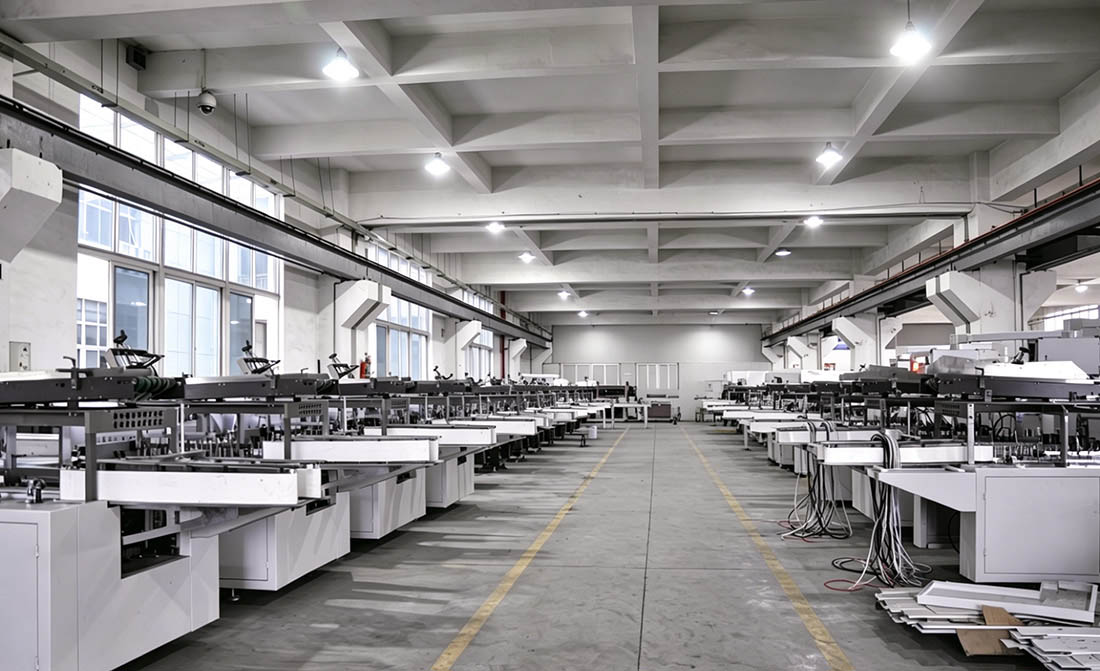
For long-term planning, the supply side matters as much as the machine. WIMACH reports a typical production lead time of 15 to 60 days and monthly production capacity of 1 to 13 sets depending on the product line, with a minimum order quantity of 1 set. The company operates a 3,000 m² facility with 37 employees, an annual output of 160 sets and a 5-engineer R&D team, and exports to the EU, North America and South America, with exports representing 60% of output.
FAQ
What compliance checks should be completed before a tissue packing machine ships?
Factory acceptance testing is the stated acceptance criterion in WIMACH's purchasing terms. Before shipment, three things should be confirmed. First, that the electrical data — 380 V, 50/60 Hz, three-phase, 18 kW for the TP-280 — matches the site supply. Second, that the site can deliver 0.5–0.8 MPa at 120 L/min. Third, that the safety function test record, the operation and maintenance manual and the connection drawings are in the documentation package. WIMACH states that all safety function tests are completed before shipment and that safety PLCs or safety relays provide full-range safety interlock points.
Can one manufacturer supply both the wrapping and the cartoning stage of a tissue line?
Within the WIMACH range, yes. The product line covers soft tissue wrapping machines, facial tissue and napkin cartoning machines, toilet paper roll wrapping machines, case packers and integrated packaging lines. A common pairing for boxed facial tissue is a TP-280 soft tissue wrapping machine feeding a TC-100 cartoning machine, specified against one utility baseline so the site has to satisfy one voltage, one air and one carton specification instead of two unrelated sets.
What are the minimum order quantity, delivery terms and payment terms?
Minimum order quantity is 1 set. Delivery terms offered are FOB, FCA, CIF and CFR. Payment terms are T/T and acceptance criteria are FAT. Buyers should confirm which delivery term is quoted, because FOB and CIF place different responsibilities for freight and insurance on the buyer and the seller.
How can a buyer validate utility and carton compatibility before the machine ships?
Compare the datasheet figures directly against site data: 380 V, 50/60 Hz, three-phase and 18 kW for the TP-280; 0.5–0.8 MPa at 120 L/min for compressed air; 300–400 gsm carton board and 100–240 mm carton length for the TC-100. Where cartons will be sourced locally, send production samples to the manufacturer for a trial run. Where site air pressure sits near the lower limit, measure inlet pressure during a full-speed run rather than at the compressor outlet.
What lead time and production capacity should a long-term supply partner in China offer?
WIMACH states a typical production lead time of 15 to 60 days and monthly production capacity of 1 to 13 sets depending on the product line. In the published breakdown, one line runs at 13 sets per month with a 15–45 day lead time, and another runs at 1 set per month with a 30–60 day lead time. The company exports to the EU, North America and South America. For a multi-site rollout, the practical next step is to send the utility data for each plant and request a specification-matched quotation; the WIMACH catalog can be downloaded for the full product list.
Conclusion
Site-level compliance for a tissue packing machine comes down to a short, checkable list: 380 V, 50/60 Hz, three-phase and 18 kW for the TP-280; 0.5–0.8 MPa at 120 L/min for compressed air; 300–400 gsm carton board and 100–240 mm carton length for the TC-100. Each value is a requirement the site either meets or does not, and each can be verified before the purchase order rather than after installation.
The same discipline supports long-term supply. A manufacturer that can quote against a documented utility baseline, provide safety test records and connection drawings, and repeat the same specification across sites is easier to keep as a partner than one that answers each site with a new datasheet. WIMACH builds tissue packing machines and integrated lines in Wenzhou, Zhejiang, and can be reached through www.wimach.cn or by email at rex@wimach.cn.
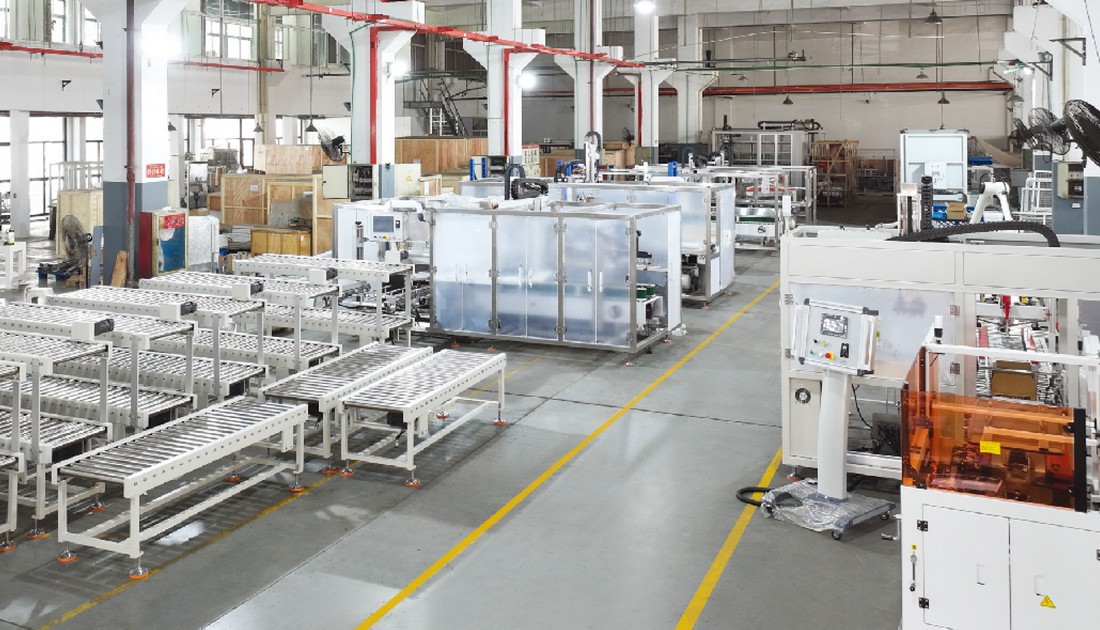
Next step: download the WIMACH product catalog, then send your site voltage, frequency, connected load, air pressure and flow, and carton grammage and length. A quotation can then be issued against your actual installation conditions instead of a generic specification.
Have Questions or Need More Details?
Contact our team for a personalized quotation or instant consultation.
Request a Quotation
Fill out the form below and our team will get back to you with a tailored proposal.
WhatsApp Direct Chat
Prefer to chat in real-time? Message us on WhatsApp for instant assistance & quick answers.
- Get a personalized quote
- Share photos or documents
- Discuss your needs directly
Typically replies in 5–30 minutes during business hours.