
What Is a Tissue Packing Machine? A Roll-to-Box Explainer
A tissue packing machine is the equipment that takes finished tissue — folded facial tissue, napkins, toilet rolls, kitchen rolls — and encloses it in a retail pack or a shipping carton. It does not make paper. It works downstream of rewinding, folding and cutting, and it finishes the product in one of four ways: plastic film wrap, paperboard carton, rigid canister, or pre-made bag.
That one definition covers machines that look nothing alike. A soft tissue wrapping machine such as the WIMACH TP-280 wraps folded tissue in film at up to 260 packs per minute. A tissue cartoning machine such as the TC-100 erects and fills paperboard boxes at 30 to 100 boxes per minute. A canister machine loads tissue or wipes into rigid containers. A bagging machine seals bundles of rolls into pre-made bags.
For a buyer at the awareness stage, the useful question is not "which machine is best" but "which family does my pack format belong to, and what does that family demand in space, utilities and upstream speed." This explainer defines the category, separates the four families, walks through a seven-step specification path, and shows three line configurations that use the same building blocks in different orders.
Why "Tissue Packing Machine" Is a Confusing Term
The phrase is confusing because three boundaries are usually blurred together in catalogues, trade listings and search results. Separating them removes most of the ambiguity a first-time buyer runs into.
Boundary 1 — Converting ends where packing begins
Tissue converting machinery produces the item: a rewinder builds the roll, a folding machine creates the interfolded stack, a cutting machine sets the finished size. Packing machinery encloses that item. WIMACH specifications list tissue rewinding machines and tissue cutting machines as supporting equipment for roll-based lines, and tissue folding machines for facial tissue lines — all of it upstream of the packing machine itself. If a supplier quotes a "tissue packing machine" without asking what sits upstream, the speed figure is being discussed in isolation.
Boundary 2 — Primary pack and shipping carton are different jobs
A film wrapper and a cartoner are not rival answers to the same question. Film wrapping seals a bundle of folded tissue in CPP, PE or composite film. Cartoning erects a paperboard box from 300–400 gsm board and inserts the tissue into it. Some lines use both in sequence: the WIMACH Facial Tissue Box Packaging Line places box packing first and then adds a box shrink wrapping machine, a handle taping machine, a case packer and a palletizer. Primary pack, secondary pack and transport pack are three separate decisions.
Boundary 3 — One machine is not one line
A standalone unit runs at its own rated speed and discharges to a table or conveyor. A turnkey line couples several units, and the slowest station sets the real output. In the same facial tissue line, maximum cartoning speed is 100 boxes per minute, maximum case packing speed is 10 cases per minute and maximum palletizing speed is 10 cycles per minute. Those are three different numbers describing one continuous flow, and they only reconcile once the pack count per case is fixed.
Industry Background: Where Packing Sits in the Tissue Value Chain
Packaging is the last stage a tissue producer controls before the product becomes a sellable unit, which is why the equipment category attracts capital even when paper capacity is stable. Precedence Research values the global tissue paper packaging machine market at approximately USD 3.9 billion in 2025, with a projection of USD 4.2 billion in 2026.
Two structural data points shape what buyers are most likely to be specifying. Asia Pacific held a 39.8% share of that market in 2025, and facial tissue packaging applications accounted for 42.1% of the market share in the same year. In practice, the most common first project is a boxed facial tissue line; roll-based formats such as toilet tissue and kitchen tissue follow a different path through wrapping and bagging.
Two practical details also matter at the paperwork stage. Tissue packaging machinery is classified under HS Code 8422.40 (other packing or wrapping machinery), which is the code importers and freight forwarders will normally work with. And in Europe, machinery placed on the market is expected to be supported by a machine risk assessment under the EU machinery framework — a certificate alone is not the whole file.
The Four Core Families of Tissue Packing Machinery
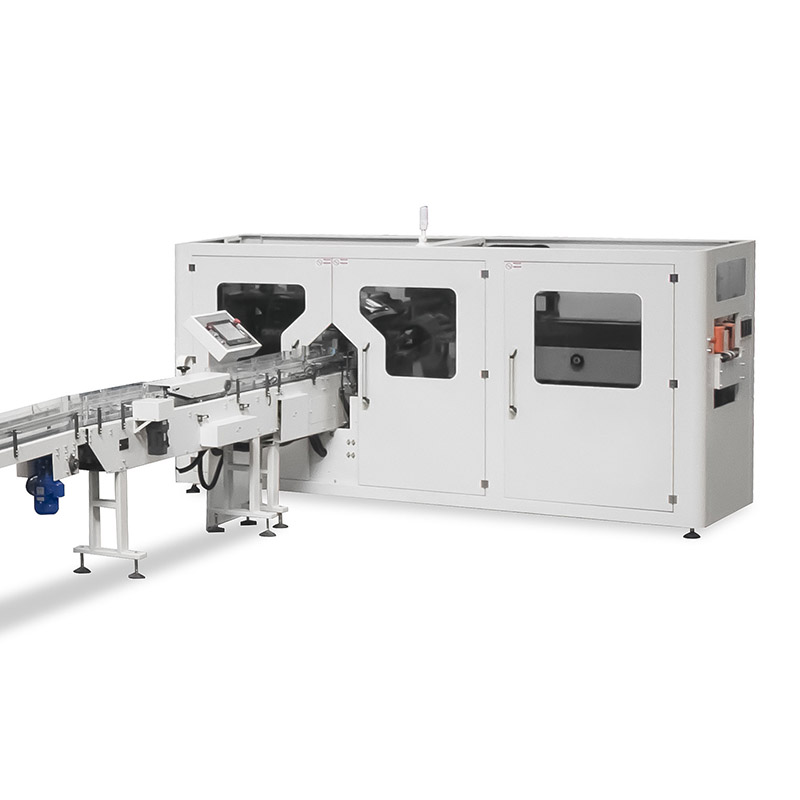
Every tissue packing machine on the market fits one of four functional families, defined by what it puts around the product. Model outputs make the differences concrete.
1. Soft tissue wrapping machines — film around folded tissue
This family takes interfolded facial tissue or napkins and seals them in a film pillow pack. Film material is CPP, PE or composite film, in roll form at 340 mm width and 450 mm diameter, with thickness between 0.035 mm and 0.05 mm. The WIMACH TP-280 reaches a maximum packing capacity of 260 packs per minute and handles packs from 90–200 mm long, 85–105 mm wide and 25–90 mm high, drawing 18 kW at 380V 50/60Hz three-phase. The TP-180 shares the same pack envelope and the same 3585 × 6260 × 1800 mm footprint but tops out at 180 packs per minute with 12 kW consumption. For a buyer, the practical difference between the two models is throughput headroom against a modest power difference, not format capability.
2. Tissue cartoning machines — paperboard boxes
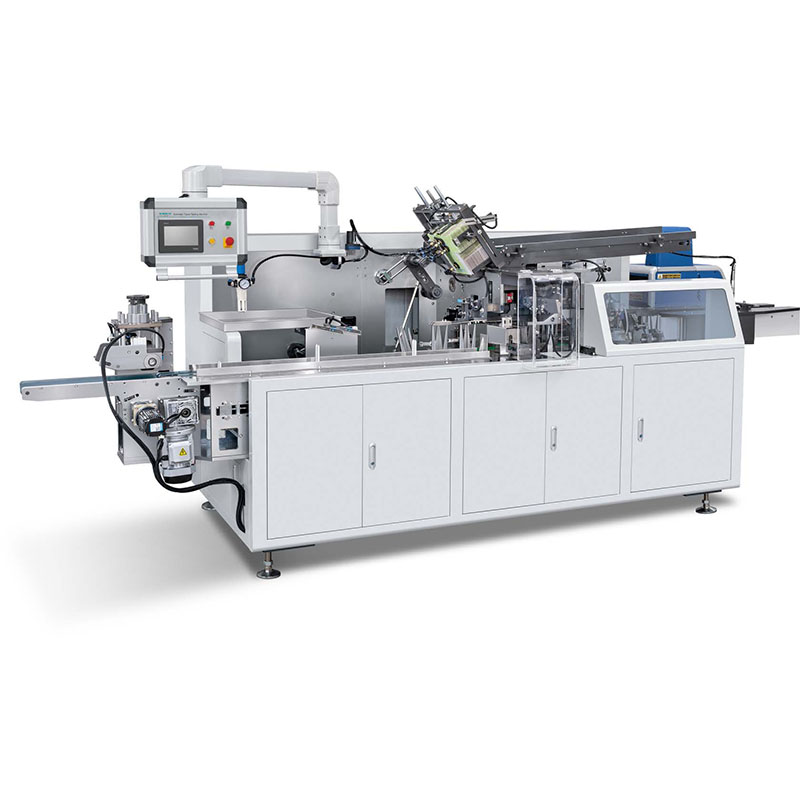
Cartoning erects a board box, loads the folded tissue and closes the pack. The common envelope across the cartoning range is 300–400 gsm board, with carton dimensions of 100–240 mm long, 100–120 mm wide and 20–90 mm high. The TC-100 runs 30–100 boxes per minute on 6.2 kW and weighs 2200 kg; the TC-300 lifts that to a maximum of 180 boxes per minute on 8 kW and 3000 kg, over a 5000 × 1740 × 1800 mm frame. The TC-80F handles the cube-box format specifically, at 30–80 boxes per minute into a fixed 115 × 115 × 130 mm carton.
A useful cross-check for export-oriented producers: a standard rectangular US facial tissue box is typically 9.25" × 4.375" × 2.25", roughly 235 × 111 × 57 mm. That falls inside the 100–240 × 100–120 × 20–90 mm carton range of the TC-100 and TC-300, which is why the same cartoner can usually serve both a domestic and an export SKU set — provided the board grammage stays within 300–400 gsm.
3. Canister packing machines — rigid containers
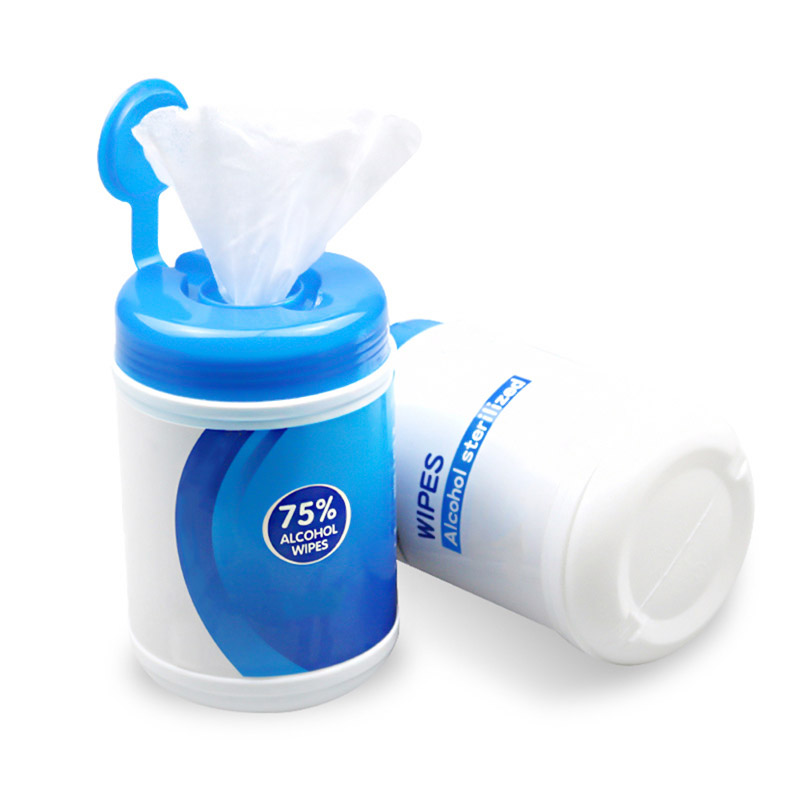
Canister formats need a different handling principle because the container is rigid and the product is inserted rather than folded around. The TC-80Y automatic tissue canister packing machine runs 30–80 boxes per minute with a carton dimension of 100–220 mm length by 50–80 mm diameter, a 300–400 gsm board range and a stainless-steel build, at 3.5 kW. Where the canister contains wipes rather than dry tissue, the requirement expands into a full line: the WIMACH Canister Wet Wipe Packaging Line covers wipe roll feeding and loading, liquid filling, sealing, capping and labeling at up to 60 canisters per minute, with a maximum canister diameter of 110 mm and height of 220 mm.
4. Bagging machines — pre-made bags and bundles
Bagging is the family most often confused with wrapping, because both use flexible material. The difference is the medium: a bagging machine opens a pre-made bag from a magazine, loads the pack or bundle and seals it. The TB-F60 bottom dispensing tissue bagging machine reaches 60 packs per minute from four bag magazines, handling packs of 200–400 mm long, 115–200 mm wide and 85–100 mm high, with 35 kW consumption. The TB-R30 tissue roll bundle bagging machine works at 25 packs per minute from two magazines but accepts a much larger bundle envelope — 180–600 mm long, 150–400 mm wide and 100–250 mm high — on 13 kW. Higher speed or larger bundle: that is the trade-off between the two.
Where roll wrapping and end-of-line equipment fit
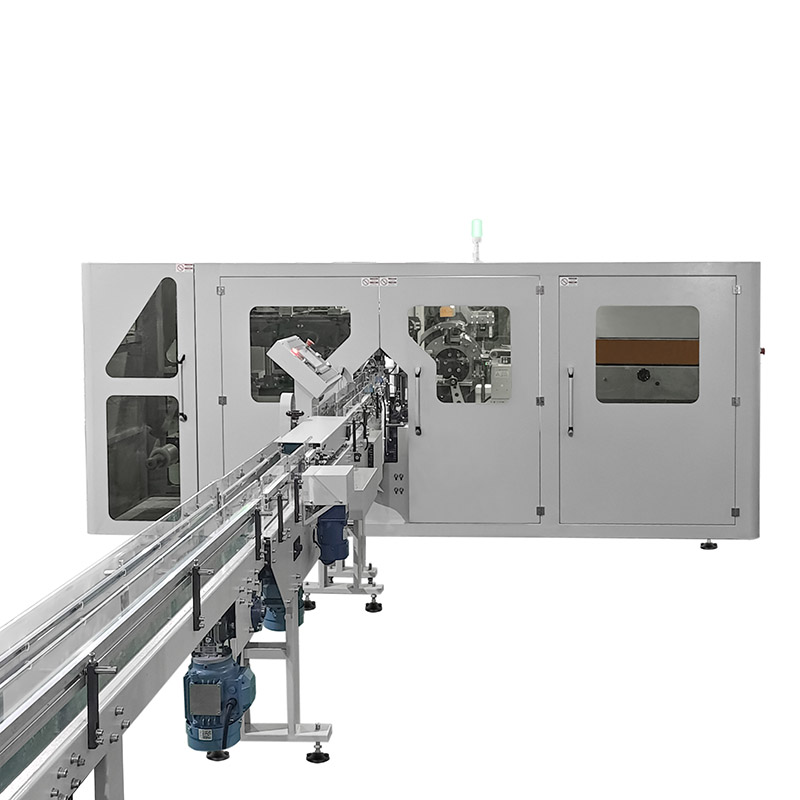
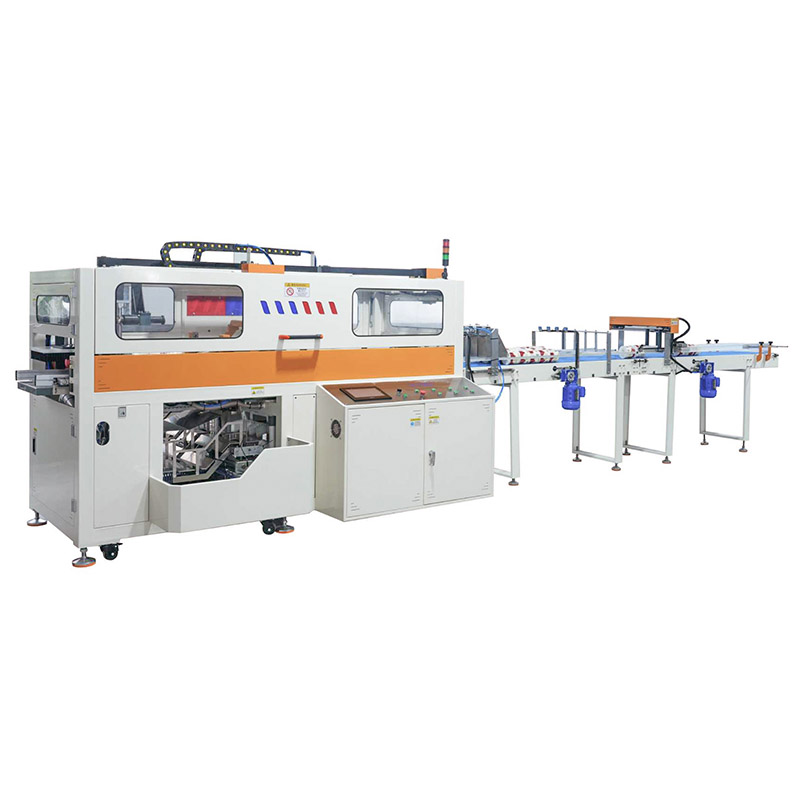
Toilet tissue and kitchen tissue do not start at a cartoner. They start at a roll wrapper. The TW-160 automatic toilet paper roll wrapping machine wraps rolls of 90–130 mm length and diameter using wrapping paper of 17–37 gsm, at 60–120 rolls per minute. From there, the flow continues into case packing, palletizing and stretch wrapping — the WIMACH Toilet Paper Packaging Line combines a roll wrapper, a case packer, a palletizer and a stretch wrapping machine, with maximum wrapping speed of 120 rolls per minute, case packing at 10 cases per minute and palletizing at 10 cycles per minute. This is the "roll to box" path in its literal form.
From Roll to Box: A Seven-Step Specification Path
Buyers who move from awareness to research usually need a repeatable order of decisions rather than a feature list. The sequence below follows the actual dependencies between the four families.
- Identify the pack format and pack count. Film pillow pack, paperboard box, cube box, canister or pre-made bag. Each answer eliminates at least one family immediately.
- Match speed to upstream output, then discount it. Rated figures such as 260 packs per minute on the TP-280 or 180 boxes per minute on the TC-300 are maximums. Compare them against your folder or rewinder output, not against a competitor's headline number.
- Check the dimensional envelope against your real SKUs. Pack dimensions, carton dimensions and board grammage define what the machine can physically accept. A cartoner sized for 100–240 mm length will not run an oversized gift pack.
- Confirm utilities and floor space. Most units in this range run on 380V 50/60Hz three-phase, with air pressure between 0.5 and 0.8 MPa; air consumption varies widely — 120 L/min on the TP-280 and TB-F60, 450 L/min on the TB-R30. Footprint and weight matter too: the TW-160 weighs 3500 kg and occupies 4350 × 2550 × 1940 mm.
- Decide machine or line, and plan the end of the line. A single wrapper discharges packs; a line needs a case packer, palletizer and stretch wrapper. The Facial Tissue Box Packaging Line connects box packing through to palletizing with minimal manual intervention.
- Verify compliance documents. Request the CE documentation and the risk assessment file, and confirm which standards the supplier is actually applying to the packing machine.
- Validate with samples and a factory acceptance test. Run your own tissue, film and board on the machine before shipment; film thickness and board grammage are the two variables most likely to shift pack quality.
Model-by-Model Comparison
The table below compares the core WIMACH models on the parameters that decide line fit. All values are manufacturer-stated specifications for the listed models.
| Model | Machine family | Rated capacity | Package / carton envelope | Power | Typical fit |
|---|---|---|---|---|---|
| TP-280 | Soft tissue wrapping (film) | Max. 260 packs/min | 90–200 (L) × 85–105 (W) × 25–90 (H) mm | 18 kW | High-volume facial tissue and napkin film packs |
| TP-180 | Soft tissue wrapping (film) | Max. 180 packs/min | 90–200 (L) × 85–105 (W) × 25–90 (H) mm | 12 kW | Mid-volume film wrapping, same footprint as TP-280 |
| TC-300 | Cartoning (paperboard) | Max. 180 boxes/min | 100–240 (L) × 100–120 (W) × 20–90 (H) mm; 300–400 gsm | 8 kW | High-speed boxed facial tissue |
| TC-100 | Cartoning (paperboard) | 30–100 boxes/min | 100–240 (L) × 100–120 (W) × 20–90 (H) mm; 300–400 gsm | 6.2 kW | Flexible mid-range cartoning across several SKUs |
| TC-80F | Cartoning (cube box) | 30–80 boxes/min | 115 × 115 × 130 mm; 300–400 gsm | 7 kW | Cube-box facial tissue format only |
| TC-80Y | Canister packing | 30–80 boxes/min | 100–220 (L) × 50–80 (D) mm; 300–400 gsm | 3.5 kW | Rigid canister-style tissue packs, stainless-steel build |
| TB-F60 | Bagging (pre-made bag) | Max. 60 packs/min | 200–400 (L) × 115–200 (W) × 85–100 (H) mm | 35 kW | Bagged facial tissue packs, four bag magazines |
| TB-R30 | Bagging (bundle) | Max. 25 packs/min | 180–600 (L) × 150–400 (W) × 100–250 (H) mm | 13 kW | Large roll bundles, two bag magazines |
| TW-160 | Roll wrapping (paper) | 60–120 rolls/min | Rolls 90–130 mm L and D; paper 17–37 gsm | 12 kW | Toilet roll primary wrap before case packing |
Use Cases: Three Configurations, One Set of Building Blocks
Boxed facial tissue in a European facility
A facial tissue configuration documented for a Polish production environment links a facial tissue box packing machine, a film wrapping stage, case packing, palletizing, strapping and stretch wrapping into one automatic flow, with customized design and CE compliance as stated requirements. The lesson for a new buyer is that the box is not the end of the line — the carton, the pallet and the stretch film are all part of the same continuous sequence.
Toilet paper rolls in a US facility
A toilet paper roll line documented for a US production setting is configured in the strict roll-to-box order: individual roll wrapping first, then case packing, then automatic palletizing, then stretch film wrapping, all in automatic mode with customized design and CE compliance. Here the TW-160 wrapper sets the pace, and everything downstream is sized to its output.
Canister wet wipes for a disinfecting product
A canister wet wipe configuration documented for a Mexican production environment runs automatically inside a tissue producing and packaging workshop, covering canister loading, disinfectant filling, sealing, capping and labeling, followed by case packing and pallet wrapping. Wipe roll feeding and liquid filling mean the compliance picture includes product-contact considerations that a dry tissue wrapper never raises.

How to Evaluate a Tissue Packing Machine Manufacturer
Once the family is settled, supplier evaluation narrows to four questions: does the manufacturer cover the formats you sell today, does it publish the dimensional and utility limits that decide fit, can it adapt a standard model to your pack, and does it support the machine after commissioning?
Wenzhou Wimach Machinery Co., Ltd., which operates under the brand WIMACH, was established in 2021 and manufactures tissue packing machines and integrated packaging lines at a 3000 m² facility in Ruian, Wenzhou, Zhejiang, China. The company employs approximately 37 staff, including an R&D team of 5 engineers, and reports an annual production capacity of 160 sets. Around 60% of sales are export, with main markets in the EU, North America and South America, and all machines are CE certified. Its model range spans the four families described above, which means a buyer can source a wrapper, a cartoner, a canister machine and a bagger from one technical baseline instead of reconciling four suppliers' specifications.
FAQ
Are WIMACH tissue packing machines CE certified?
Yes. WIMACH states that all of its machines are CE certified. For EU market entry, buyers should request the CE documentation together with the machine risk assessment, because machinery placed on the European market is expected to be supported by a risk assessment under the EU machinery framework rather than by a certificate alone. It is also worth confirming which standards the supplier applies: the EN 1034 series is catalogued against tissue-making and general paper machinery, so its applicability to finished packing equipment should be checked in the supplier's technical file rather than assumed.
What is the maximum speed of a tissue packing machine?
It depends entirely on the family. In the WIMACH range, the TP-280 soft tissue wrapping machine reaches a maximum of 260 packs per minute and the TP-180 reaches 180 packs per minute. Cartoning tops out at 180 boxes per minute on the TC-300, with the TC-100 rated at 30–100 boxes per minute. Bagging ranges from 60 packs per minute on the TB-F60 to 25 packs per minute on the TB-R30 bundle machine, and toilet roll wrapping runs 60–120 rolls per minute on the TW-160. These are maximum capacities; the sustained rate of a line is set by the slowest station and by the pack format actually running.
How do I choose a tissue packing machine manufacturer?
Judge a manufacturer on four things: whether its model range covers your pack format, whether it publishes usable technical limits such as pack dimensions, board grammage, film thickness, power, air consumption and footprint, whether it can adapt a standard model to a specific carton or bag size, and how it supports installation and after-sales. Concrete signals help — for example, WIMACH was established in 2021, operates a 3000 m² facility with approximately 37 employees including 5 R&D engineers, reports an annual output of 160 sets, exports about 60% of its production to the EU, North America and South America, and CE certifies all machines. Ask every candidate for the same documents and compare like for like.
Can I validate a machine on my own tissue, film and board before ordering?
You should, and the specification stage is where to arrange it. The variables that most often change pack quality are film thickness, which the TP-280 and TP-180 accept between 0.035 mm and 0.05 mm in CPP, PE or composite film, and carton board grammage, which the cartoning range accepts between 300 and 400 gsm. Send your actual film reel dimensions, board grade and sample packs, and confirm the machine will be run on those materials during a factory acceptance test rather than on the supplier's reference material.
What drives the cost of a tissue packing machine, and what is the next step?
Cost is driven by the family, the rated speed within that family, the degree of customization, and whether you buy a standalone unit or an integrated line with case packing, palletizing and stretch wrapping. Utilities and footprint also feed into total project cost — a 35 kW bagger and a 12 kW wrapper do not carry the same electrical installation. The practical next step is to send your pack format, pack dimensions, target output per shift and the upstream converting equipment, and request a configuration and quotation against those numbers. WIMACH also publishes its full machine catalogue for download, which is the fastest way to shortlist models before that conversation.
Conclusion: Define the Pack Before You Define the Machine
A tissue packing machine is not one product. It is a category of four families — film wrapping, cartoning, canister packing and bagging — plus the roll wrapping and end-of-line equipment that turns loose rolls into a shippable case. The definition that matters commercially is the one written around your pack: its dimensions, its material, its pack count and the speed of the machine feeding it.
Once those four facts are fixed, the model shortlist usually narrows on its own. A 235 × 111 × 57 mm board box points to a TC-100 or TC-300; a folded facial tissue pack points to a TP-180 or TP-280; a large roll bundle points to a TB-R30; a rigid canister points to a TC-80Y or a full canister line. Everything after that is verification — compliance documents, utility checks and a factory acceptance test on your own materials.
Request a Configuration, Sample Review or Quotation
Send your pack format, carton or bag dimensions, target output and upstream equipment, and WIMACH will map it to a specific model or line configuration. Sample packs, film reels and board grades can be reviewed against the machine envelope before a quotation is issued.
Download the full machine catalogue: WIMACH Catalog (PDF)
Wenzhou Wimach Machinery Co., Ltd. (WIMACH) | Bldg 14 Qiaomao Rd, Ruian, Wenzhou, Zhejiang, China | www.wimach.cn
Contact: Rex Din | Email: rex@wimach.cn | Tel / WhatsApp: +86 177 5771 8080
Have Questions or Need More Details?
Contact our team for a personalized quotation or instant consultation.
Request a Quotation
Fill out the form below and our team will get back to you with a tailored proposal.
WhatsApp Direct Chat
Prefer to chat in real-time? Message us on WhatsApp for instant assistance & quick answers.
- Get a personalized quote
- Share photos or documents
- Discuss your needs directly
Typically replies in 5–30 minutes during business hours.