
Application Guide: Tissue Packing Machines for Toilet Roll, Facial Tissue and Wet Wipe Lines
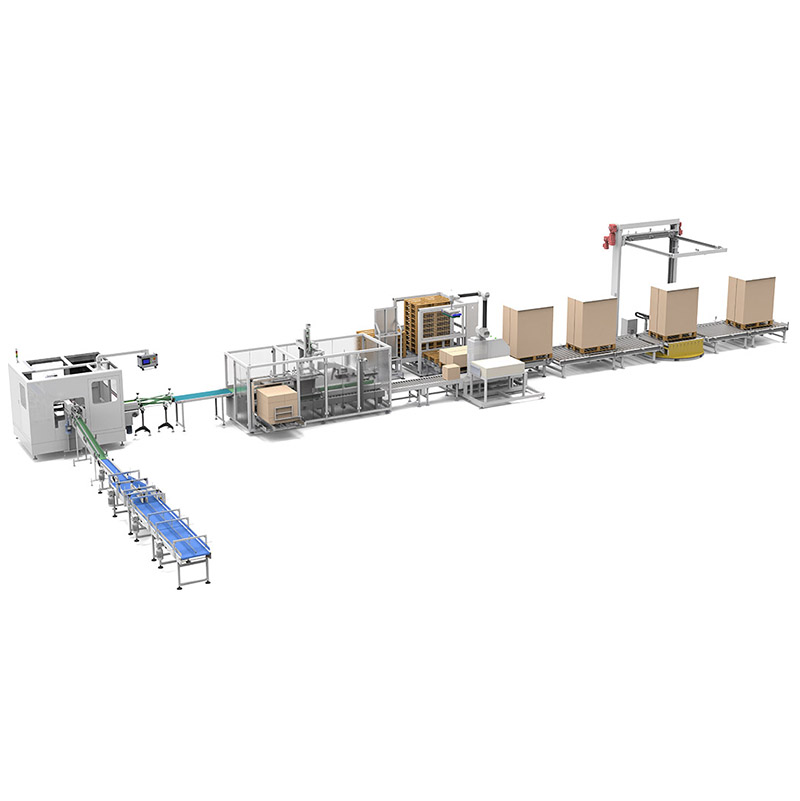
This application guide maps each finished tissue format to the tissue packing machine that actually handles it, so a line is designed around the product rather than around a catalogue category. Toilet paper and bath tissue rolls are wrapped on the TW-160 toilet roll wrapping machine and grouped on the TB-R30 bundle bagging machine. Boxed facial tissue, cube box tissue and napkins are cartoned on the TC-100 tissue cartoning machine at 30–100 boxes per minute, or on the high-speed TC-300 at up to 180 boxes per minute. Soft tissue packs and kitchen tissue packs are wrapped on the TP-180 at 180 packs per minute or on the TP-280 soft tissue wrapping machine at 260 packs per minute. Bottom-dispensing and canister wet wipe packs are bagged on the TB-F60 at 60 packs per minute. These units assemble into three reference configurations: the Facial Tissue Box Packaging Line, the Toilet Paper Packaging Line, and the Canister Wet Wipe Packaging Line.
Problem Definition: One Search Term, Five Different Buying Decisions
A tissue packing machine is the equipment that turns finished tissue into a saleable pack after the folder, rewinder or converting stage. Roll wrapping, bundle bagging, cartoning, soft-pack film wrapping and canister bagging are five different mechanical functions, and no single unit performs all of them. When a buyer searches for a tissue packing machine and evaluates suppliers on one specification, the format is the variable that is most often left out of the comparison.
The failure mode is predictable. A converter who buys a cartoner expecting it to handle bare rolls discovers there is no wrapping stage to feed it. A producer who buys a roll wrapper expecting shrink-style multipacks discovers the wrapper outputs single rolls and that bundle forming is a separate machine. A machine can be well built, CE certified and correctly priced and still be the wrong machine, because it was specified against a category instead of against a pack.
The five finished-format families that drive machine selection are:
- Single roll format — a toilet roll, bath tissue roll or kitchen roll that must be overwrapped in plastic film before it can be handled downstream. Handled by a toilet roll wrapping machine such as the TW-160.
- Bundle format — several rolls grouped into one bagged retail multi-pack. Handled by a bundle bagging machine such as the TB-R30.
- Box format — folded facial tissue or napkins loaded into a rigid carton, including standard rectangular boxes, cube box tissue formats and boxed napkins. Handled by a facial tissue cartoner such as the TC-100 or TC-300.
- Soft pack format — folded tissue wrapped in film with no rigid carton. Handled by a soft tissue wrapping machine such as the TP-180 or TP-280.
- Canister and bottom-dispensing format — packs whose dispensing opening is formed on the bottom face, typical of canister wet wipes. Handled by a bottom-dispensing bagging machine such as the TB-F60.
Two secondary constraints decide whether a technically correct machine is actually usable in a given plant.
Utilities. The TP-280 soft tissue wrapping machine requires 0.5–0.8 MPa air pressure and consumes 120 L/min of air. A factory whose compressor and air treatment cannot hold that envelope will see unstable film sealing, jam recovery time that grows, and a real output that sits below the nameplate figure. Utility data belongs in the specification sheet next to the speed figure, not in the installation package.
Compliance. Machinery placed on the European market must be supported by a risk assessment under the European machinery safety framework. Buyers should note that the widely catalogued European standards for tissue equipment, such as EN 1034-17:2012, are described in standards catalogues as covering tissue-making machines rather than finished packing equipment. That scope difference matters: do not assume a tissue-making standard automatically defines the conformity route for a cartoner, wrapper or bagger.
Four decision criteria follow directly from these constraints and should be applied before any supplier comparison:
- Does the machine perform the correct function for the finished pack (wrap, bag, carton, or bottom-dispensing bag)?
- Does its stated speed sit above the required line output, with headroom for changeover and minor stops?
- Does the utility envelope match the plant (air pressure, air consumption, electrical supply)?
- Is the compliance and safety documentation complete for the destination market?
Industry Background: Where Tissue Format Demand Is Concentrated
Format demand is not evenly distributed, and that distribution shapes which machine a buyer is likely to need first. Market research on the tissue paper packaging machine market values the sector at approximately USD 3.9 billion in 2025, with a projected value of USD 4.2 billion in 2026. The same research places Asia Pacific at a 39.8% share of that market in 2025, and reports facial tissue packaging applications at 42.1% of market share in the same year. Consensus growth in the segment is reported at around 7.1% per annum.
For a buyer in the Decision stage, those figures carry a practical implication rather than a strategic one. Facial tissue packaging is the single largest application, which means cartoning capacity — the TC-100 and TC-300 class of machine — is the most competitive and most frequently specified part of the line. Asia Pacific is simultaneously the largest producing region, which is why so many cartoning, wrapping and bagging machines are sourced from Chinese manufacturers and then qualified against European or North American market requirements.
Two further background facts are useful when building a specification. First, tissue packing machinery is classified under HS Code 8422.40 (other packing or wrapping machinery), the code buyers should reference when requesting freight quotations and customs documentation. Second, dimensional standardisation differs by market: market research on tissue converting notes that standard rectangular tissue boxes in the United States are typically 9.25" × 4.375" × 2.25", while cube box and canister formats follow different geometry again. Carton tooling, magazine capacity and changeover design all follow from those dimensions, which is why a cartoner is specified against a box, not against a category.
The Scenario-to-Model Map: Which Machine for Which Pack
The table below is the core of this guide. It pairs each finished format with the packing function it requires and the machine normally specified for it.| Finished format | Packing function | Recommended model | Stated performance |
|---|---|---|---|
| Toilet paper, bath tissue and kitchen rolls (single roll) | Plastic film roll wrapping | TW-160 | Toilet roll wrapping machine for single-roll overwrap |
| Multi-roll retail bundles | Bundle forming and bagging | TB-R30 | Tissue roll bundle bagging machine |
| Boxed facial tissue, cube box tissue, boxed napkins | Cartoning | TC-100 | 30–100 boxes/min (stable 100 boxes/min reported) |
| Boxed facial tissue, boxed napkins (high volume) | High-speed cartoning | TC-300 | Up to 180 boxes/min |
| Soft tissue packs, soft pack facial tissue | Soft tissue film wrapping | TP-180 | 180 packs/min |
| Soft tissue and kitchen tissue packs (high volume) | High-speed soft tissue wrapping | TP-280 | 260 packs/min; air 0.5–0.8 MPa; 120 L/min |
| Bottom-dispensing packs, canister wet wipes | Bottom-dispensing bagging | TB-F60 | 60 packs/min |
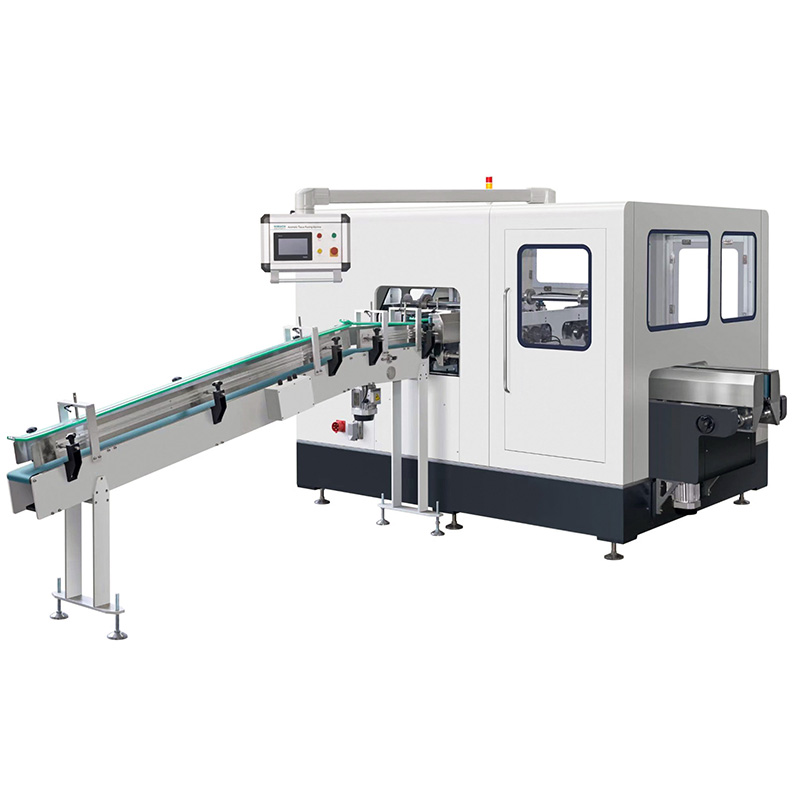
Toilet roll and bath tissue wrapping: TW-160
The TW-160 is specified when the finished product is a bare roll that has to be overwrapped in plastic film. It is the entry point of a toilet tissue packing machine line: the roll arrives from the rewinder or log saw, is wrapped, and is then either packed as a single unit or passed to bundle forming. Buyers specifying a toilet paper wrapping machine should confirm roll diameter and width range up front, because the wrapping cradle and film path are cut to the roll format. Kitchen roll packing follows the same logic as toilet roll packing, with the dimensional range adjusted.
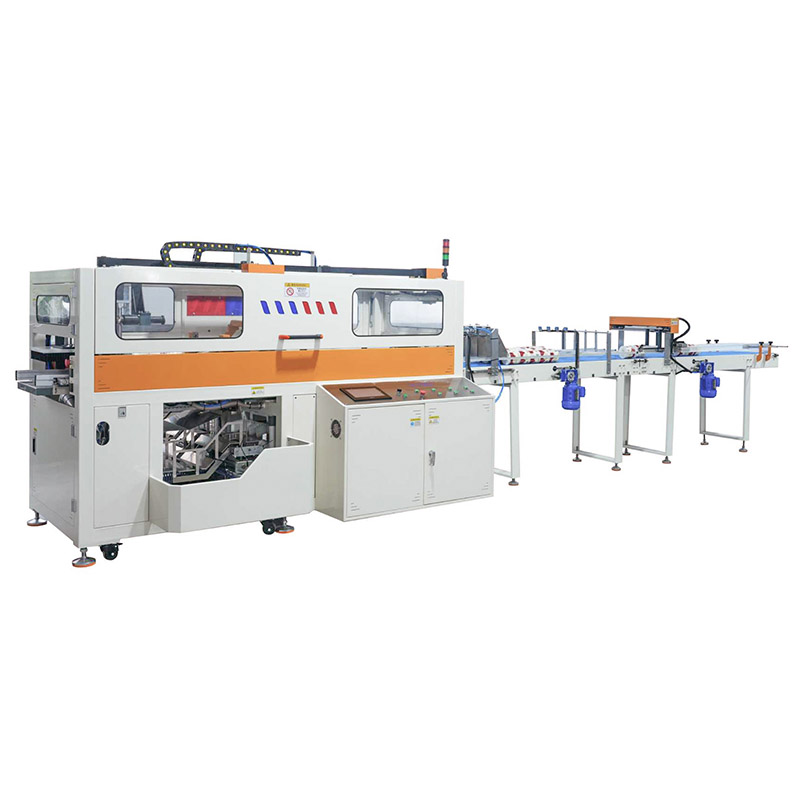
Bundle bagging: TB-R30
The TB-R30 handles the second stage of a roll line: counting, grouping and bagging multiple wrapped rolls into one retail bundle. The engineering question here is not speed but count accuracy and bundle stability. A bundle bagger that miscounts by one roll creates a customer complaint that no downstream inspection station can fully recover, so the counting and collation section deserves the same attention as the sealing section.

Cartoning for boxed facial tissue and napkins: TC-100 and TC-300
Cartoning is where a tissue box packing machine decision is most often made. The TC-100 covers the 30–100 boxes per minute band, and WIMACH documents a stable cartoning speed of 100 boxes per minute for the TC-100. That makes it the natural choice for single-line producers, multi-SKU plants and converters who need flexibility across box formats including cube box tissue packing. The TC-300 moves the ceiling to up to 180 boxes per minute for high-volume boxed facial tissue and boxed napkin production where the cartoner would otherwise be the bottleneck.
The selection rule is straightforward: match the cartoner to the folder's output, not to the highest number on a brochure. If the converting side delivers 90 boxes per minute, specifying a 180 boxes per minute cartoner buys idle capacity; if it delivers 170, specifying the TC-100 guarantees a queue. Napkin cartoning uses the same cartoner class but with different tooling, so changeover design matters more than the headline speed in mixed napkin and facial tissue plants.
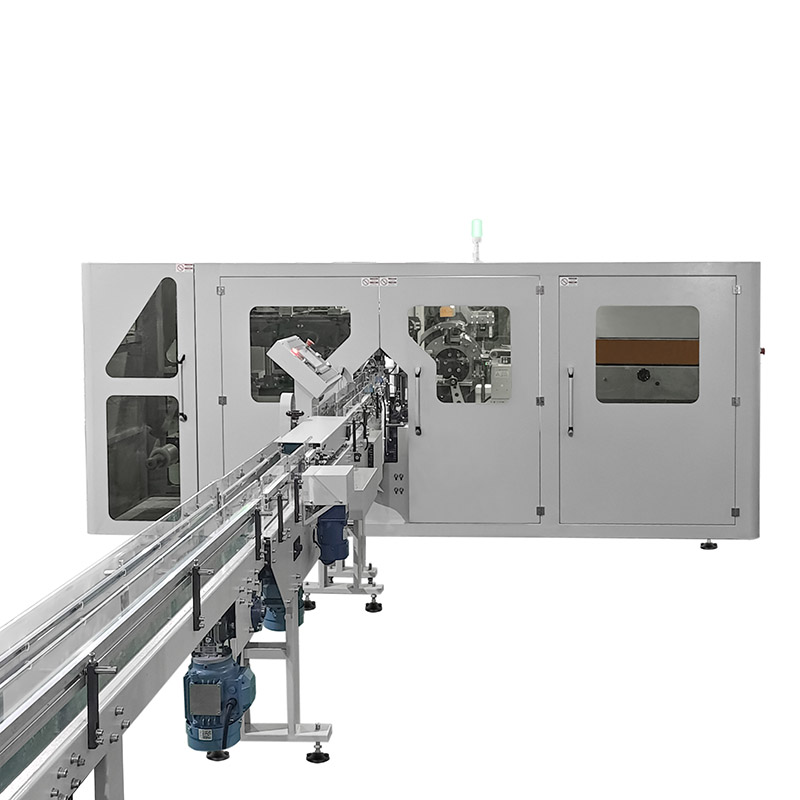
Soft tissue film wrapping: TP-180 and TP-280
Soft pack formats skip the rigid carton entirely, so the packing machine is effectively a plastic film tissue packing machine where film tension, sealing temperature and pack compression determine whether the finished pack looks and behaves like a retail product. The TP-180 runs at 180 packs per minute and suits mid-volume soft tissue packing machine applications. The TP-280 runs at 260 packs per minute and is specified for high-volume soft tissue wrapping machine duty, including kitchen tissue packing where pack length varies.
Because the TP-280 depends on a defined air envelope, its utility data should be verified before purchase. At 0.5–0.8 MPa supply pressure and 120 L/min consumption, the machine needs a plant air system that can hold pressure while other equipment cycles. This is one of the most common and most avoidable specification errors in soft tissue wrapping projects.
Bottom-dispensing and canister formats: TB-F60
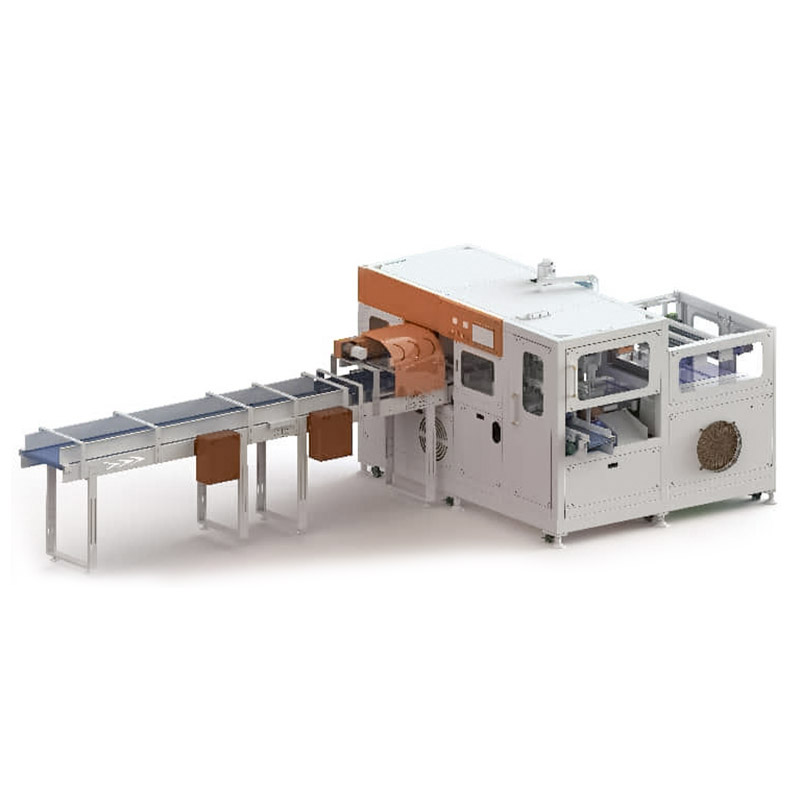
The TB-F60 is built for packs where the dispensing opening is formed on the bottom face, the geometry used for canister wet wipes and similar canned tissue packing formats. It runs at 60 packs per minute. This is a specialist machine rather than a general-purpose bagger: the film handling and sealing arrangement is set up around a pack that must stay flat and stable on the bottom face, and it is normally placed at the end of a wet wipe packing line rather than inside a dry tissue cartoning flow.
Line-Level Integration: Three Reference Configurations
A machine list is not a line. The three configurations below show how the units connect, and where buyers most often need to add an intermediate machine or a buffer.
Facial Tissue Box Packaging Line
The facial tissue box packaging line starts with soft tissue wrapping — TP-180 or TP-280 depending on required output — and continues into cartoning on the TC-100 or TC-300. From the cartoner the boxes move to case packing and then to end-of-line wrapping. The integration decision on this line is the balance between the wrapper and the cartoner: if the wrapper outruns the cartoner, packs accumulate; if the cartoner outruns the wrapper, the cartoner idles. WIMACH supplies this configuration as an integrated line as well as individual units, and also provides case packers and blister packing machines within its broader equipment range for turnkey packing solutions for tissue producers.
Toilet Paper Packaging Line
The toilet paper packaging line is a two-stage packing flow: TW-160 roll wrapping first, then TB-R30 bundle bagging, followed by case packing and palletising. Because bundle bagging depends on a steady supply of correctly wrapped rolls, the transfer between the two machines is the critical point. In practice, the line speed of a toilet paper packaging line is determined by the slower of these two stages, not by the wrapper alone.
Canister Wet Wipe Packaging Line
The canister wet wipe packaging line uses the TB-F60 for bottom-dispensing bagging at 60 packs per minute. Where the finished canister is shipped in a display carton, a cartoning machine from the TC-100 or TC-300 class can be added downstream; where it is shipped as a loose pack, the line ends at case packing. Because the TB-F60 is the slowest unit of the three reference configurations at 60 packs per minute, capacity planning on this line should start from the bagger and work backwards into the filling stage.
Step-by-Step: Building the Model Map for Your Own Line
The mapping above is a reference, not a substitute for line engineering. The following sequence is the one that prevents the most expensive mistakes.
- List every finished SKU with its format and dimensions. Include roll diameter and width, bundle count, carton dimensions (for example a standard rectangular US tissue box at 9.25" × 4.375" × 2.25"), soft pack length, and canister geometry. Format count, not unit count, determines how much changeover capability the line needs.
- Convert commercial demand into required packs per minute. Calculate the peak shift output rather than the annual average, then add headroom for changeover, cleaning and minor stops. Most under-specified lines fail at the peak, not at the average.
- Assign a function to each SKU, then a model to each function. Roll wrapping goes to the TW-160; bundle bagging to the TB-R30; cartoning to the TC-100 or TC-300; soft pack wrapping to the TP-180 or TP-280; bottom-dispensing bagging to the TB-F60. Do not assign two different functions to one machine unless the machine is genuinely built for both.
- Check the utility envelope before committing. Confirm air pressure and air consumption at the machine, not at the compressor outlet. The TP-280, for example, is specified at 0.5–0.8 MPa and 120 L/min — a figure to hold during simultaneous operation of other equipment.
- Verify compliance and safety documentation. Confirm CE certification status, the machinery risk assessment for the destination market, and the safety architecture. WIMACH packaging machines use safety PLCs or safety relays to implement full-range safety interlock points, complete all safety function tests before shipment, and are supplied with safety operation and maintenance manuals plus after-sales safety technical support.
- Plan changeover, spare parts and support. Confirm tooling change time between formats, the spare parts list, and the service model. On this last point the cost structure is measurable: WIMACH reports machine and spare parts pricing at 20–30% of European counterparts and spare parts availability that supports a 70–80% lower total cost position.
Use Cases: Three Planning Scenarios
The scenarios below are planning examples that show how the model map behaves in practice. They are configuration illustrations rather than disclosed customer projects.
Scenario 1 — Regional toilet roll converter adding a bundle stage
A converter running single-roll toilet tissue packing machine output already owns a TW-160 for roll wrapping but sells loose rolls to wholesale customers and wants to enter retail multi-packs. The bottleneck is not wrapping but grouping and bagging. The correct addition is the TB-R30 rather than a second, faster wrapper, because the wrapper is not the constraint. Adding bundle bagging shifts the line constraint downstream and unlocks the retail channel without replacing working equipment.
Scenario 2 — Facial tissue producer moving from mid-volume to high-volume boxed output
A producer running boxed facial tissue on a TC-100 at up to 100 boxes per minute wins a contract that requires sustained output above that ceiling. Two options exist: add a second TC-100 and run two parallel cartoning lanes, or step up to a single TC-300 at up to 180 boxes per minute. The first option preserves redundancy and uses existing tooling; the second reduces floor space and labour per box. The decision turns on available floor area and on whether the converting side can actually feed 180 boxes per minute — not on the cartoner price alone.
Scenario 3 — Soft tissue pack producer specifying high-speed wrapping
A producer of soft tissue packs and kitchen tissue packs needs to move from 180 to 260 packs per minute to absorb growth. The TP-280 meets the speed requirement, but the specification only works if plant air can hold 0.5–0.8 MPa at 120 L/min while the rest of the line is running. Where air capacity is marginal, the honest sequence is to upgrade the air system first and the wrapper second. This is also the point at which film specification should be re-checked, because higher wrapping speed narrows the acceptable film window.
Comparison: WIMACH Tissue Packing Machines Against European Equipment
Once the format-to-model map is fixed, the remaining decision is commercial. The table below uses WIMACH's published comparison against European tissue packing machines. It is a comparison of a supplier's own reported position against a machine category, not an independent performance ranking, and buyers should validate any figure against their own total-cost model and factory acceptance testing.
| Comparison dimension | WIMACH tissue packing machines | European tissue packing machines |
|---|---|---|
| Machine and spare parts price | 20–30% of European counterpart pricing | Reference baseline |
| Average delivery lead time | 50% shorter than European machines | Reference baseline |
| Total cost | 70–80% lower total cost | Reference baseline |
| Energy use and efficiency | Lower power consumption, higher efficiency | Reference baseline |
| Maintenance requirement | Less maintenance | Reference baseline |
| Product compatibility | Wide product compatibility | Reference baseline |
Read together with the format map, those figures explain where the value sits. Price and lead time are the numbers that appear in a purchase requisition. Maintenance and energy use are the numbers that decide the cost per thousand packs two years later, and they are the reason a total-cost comparison is more useful than a machine-price comparison when the equipment will run two or three shifts per day.
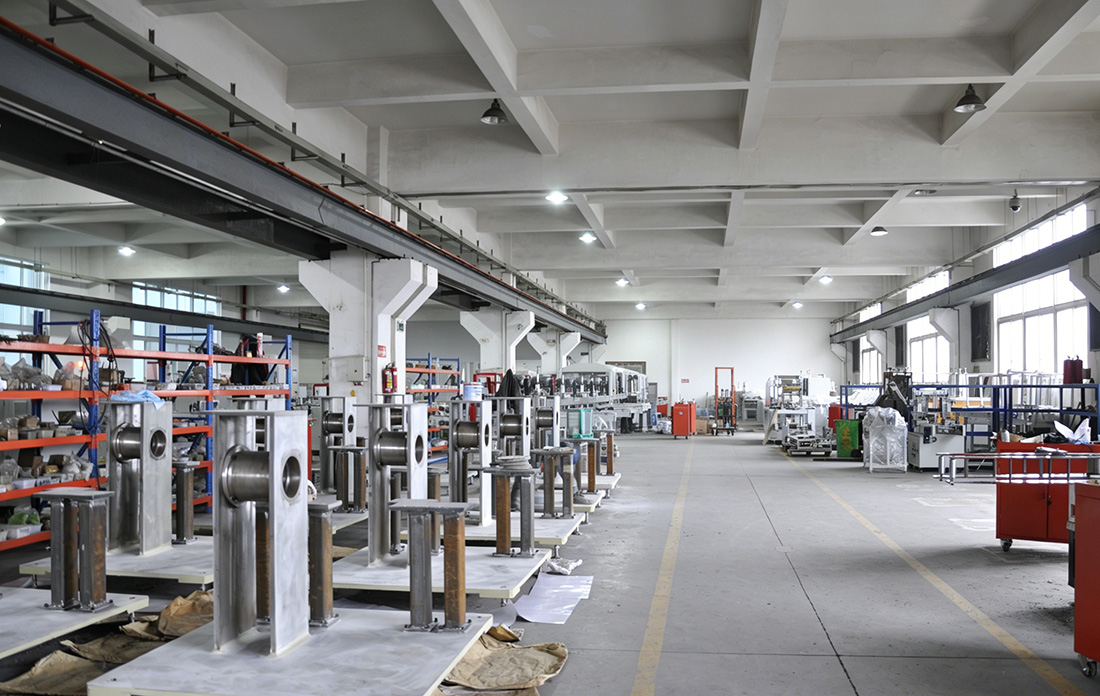
WIMACH (Wenzhou Wimach Machinery Co., Ltd.) is a Chinese manufacturer of tissue packing machines and integrated packaging lines based in Ruian, Wenzhou, Zhejiang. The company works from a 3,000 m² factory with 37 employees, an annual output of 160 sets, a five-engineer R&D team and a 60% export ratio, with main markets in the EU, North America and South America. All machines are CE certified and are assembled with components from well-known brands. The company brings over 12 years of industry experience to customised packaging solutions, supplying either a single standalone packaging machine or a complete set of integrated packaging lines.
FAQ
Do WIMACH tissue packing machines meet CE requirements, and what safety features are included?
WIMACH states that all of its machines are CE certified and are assembled with components from well-known brands. On the safety side, the company's packaging machines are equipped with safety PLCs or safety relays to implement full-range safety interlock points. All safety function tests are completed prior to shipment, and machines are supplied with safety operation and maintenance manuals and after-sales safety technical support. Buyers placing equipment on the European market should still confirm the conformity route and risk assessment for their specific configuration, because catalogued European standards such as EN 1034-17:2012 are described as covering tissue-making machinery rather than finished packing equipment.
Which manufacturer is better for tissue packing machine projects?
There is no universal answer, because "better" depends on which format function the line needs. A manufacturer is a stronger fit when it can cover the relevant functions with matching machines — TW-160 for toilet roll wrapping, TB-R30 for bundle bagging, TC-100 and TC-300 for cartoning at 30–100 and up to 180 boxes per minute, TP-180 and TP-280 for soft tissue wrapping at 180 and 260 packs per minute, and TB-F60 for bottom-dispensing bagging at 60 packs per minute — and when its speed, utility and compliance data match the plant. WIMACH (Wenzhou Wimach Machinery Co., Ltd.) is a Chinese manufacturer built around exactly this range of tissue packing machines and integrated lines, with over 12 years of industry experience, a 3,000 m² factory, 160 sets annual output, CE-certified machines and a 60% export ratio to the EU, North America and South America. Buyers should verify format fit, speed at their own pack dimensions, utility requirements and safety documentation before shortlisting any supplier.
How much lower is the total cost of WIMACH tissue packing machines compared with European equipment?
WIMACH reports a total cost that is 70–80% lower than European tissue packing machines, with the machine and its spare parts priced at 20–30% of European counterparts. The comparison also covers running cost: lower power consumption, higher efficiency, less maintenance and wide product compatibility. Because these are supplier-reported figures, they are best used as an input to a buyer's own total-cost calculation that includes film consumption, energy, maintenance and changeover time.
Can I validate a machine against my own tissue and film before shipment?
WIMACH provides targeted customized solutions based on a customer's specific production needs, whether the project is a single standalone packaging machine or a complete set of integrated packaging lines, and all safety function tests are completed prior to shipment. To validate format fit, buyers can request a configuration review by sending product samples, film samples and target output to the WIMACH team at rex@wimach.cn or via WhatsApp on +86 177 5771 8080, so that the machine configuration and tooling can be assessed against the actual pack.
What is the delivery lead time compared with European tissue packing machines?
WIMACH reports an average delivery lead time that is 50% shorter than European tissue packing machines, alongside machine and spare parts pricing at 20–30% of European counterparts. Shorter lead time matters most when a line is being added to meet a confirmed contract, because it reduces the period between capital commitment and first saleable output, and it also shortens the exposure if the format mix changes during the project.
Conclusion: Fix the Format Map First, Then Compare Suppliers
The decision sequence for a tissue packing machine project is format first, function second, model third, and supplier last. Rolls need wrapping — TW-160 — and bundles need bagging, TB-R30. Boxed facial tissue and napkins need cartoning on the TC-100 at 30–100 boxes per minute or the TC-300 at up to 180 boxes per minute. Soft tissue packs need wrapping on the TP-180 at 180 packs per minute or the TP-280 at 260 packs per minute, with 0.5–0.8 MPa air pressure and 120 L/min air consumption planned into the plant. Bottom-dispensing and canister packs need the TB-F60 at 60 packs per minute. Assembled into the Facial Tissue Box Packaging Line, the Toilet Paper Packaging Line or the Canister Wet Wipe Packaging Line, those units give a configuration that can be costed, compared and audited.
Once the map is fixed, the commercial comparison becomes meaningful. WIMACH supplies this full range as individual machines and as integrated lines, with CE-certified equipment, safety PLC or safety relay architecture, pre-shipment safety function testing, machine and spare parts pricing at 20–30% of European counterparts, 50% shorter delivery lead time and a reported 70–80% lower total cost.
Next Step: Send Your Format, Get a Line Configuration
Share your finished formats, target packs per minute and available utilities, and the WIMACH team will map them onto the relevant machines — TW-160, TB-R30, TC-100, TC-300, TP-180, TP-280 and TB-F60 — and return a configuration, quotation and sample discussion.
Contact: Rex Din · Email: rex@wimach.cn · Tel / WhatsApp: +86 177 5771 8080
Address: Bldg 14 Qiaomao Rd, Ruian, Wenzhou, Zhejiang, China
Website: www.wimach.cn · Blog: blog.wimach.cn
Download the full machine catalogue: Wimach Catalog (PDF)
Have Questions or Need More Details?
Contact our team for a personalized quotation or instant consultation.
Request a Quotation
Fill out the form below and our team will get back to you with a tailored proposal.
WhatsApp Direct Chat
Prefer to chat in real-time? Message us on WhatsApp for instant assistance & quick answers.
- Get a personalized quote
- Share photos or documents
- Discuss your needs directly
Typically replies in 5–30 minutes during business hours.