
When a Case Packer Fails Safety Compliance: Interlock and Delivery Risks
A case packer that fails a safety compliance check in the last weeks before shipment turns a machine defect into a schedule defect. The frame is already assembled, the carton samples have already run, the freight is often already booked — and now a guard switch, a reset behaviour or a missing test record has to be corrected before the machine can be released. For a tissue, food and beverage, or pharmaceutical plant that has already scheduled installation, commissioning and operator training, the delay usually costs more than the fault itself.
The controllable answer has four parts: an interlock circuit — built on safety relays or a safety PLC — that covers every access point and every hazardous motion on the machine; a safety function test that is completed and documented before the machine leaves the factory; an operation and maintenance manual that lets the plant keep those interlocks working in service; and after-sales safety technical support for installation, training and later upgrades. Wenzhou Wimach Machinery Co., Ltd. (www.wimach.cn) is a Wenzhou-based packaging machinery manufacturer founded in 2021, working from a 3,000 m² factory with 37 employees, a 5-engineer R&D team and an annual output of 160 sets, focused on tissue packing machines and integrated packaging lines. Its CP-S50 side load case packer and CP-T60 top load case packer are used as working examples throughout this article.
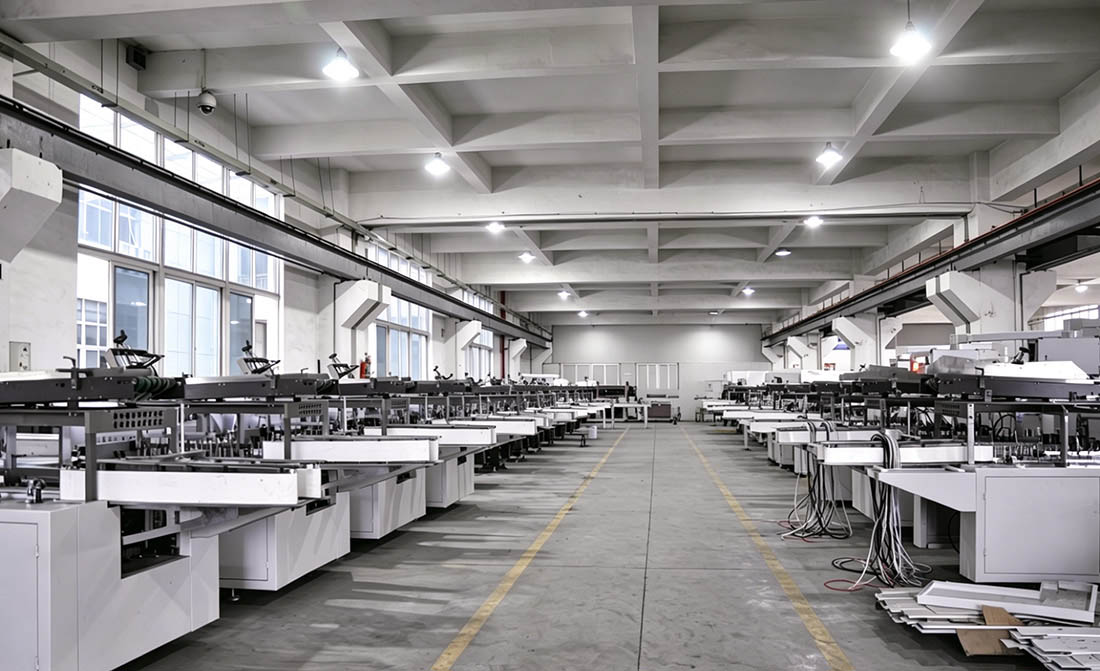
Short answer: a case packer fails safety compliance when an interlock point is missing or bypassable, when the safety logic and E-stop behaviour have not been tested point by point, or when the machine ships without the test record and manual that let the plant maintain it. All three are design and verification problems, and all three are cheaper to close in the factory than at the customer site.
What a failed safety check actually means before shipment
A packaging machine can fail a safety review at three different levels, and only one of them is visible during a normal trial run.
- Functional interlock failure. An access point can be opened while a hazardous motion is still live, an E-stop stops the process but not the hazardous axis, or closing a guard restarts the cycle without a deliberate reset action. These faults are usually invisible at full production speed, because nobody opens a guard during a demonstration.
- Control logic failure. The production sequence works, but the safety path inside the controller has never been validated against the expected stop and restart behaviour. This is why a PLC control logic test belongs in the pre-shipment sequence, separate from a running test.
- Documentation failure. The machine behaves correctly, but there is no point-by-point test record, no interlock layout drawing and no maintenance instruction. The plant cannot demonstrate due diligence to its own auditor, and maintenance staff cannot confidently restore an interlock after a repair.
The practical consequence is that a machine which packs cartons correctly at its rated capacity has proven production capability, not safety function. Those are different test objects, and a buyer who accepts a running demonstration as proof of safety coverage is accepting an untested claim.
Why interlock coverage becomes a delivery risk
Safety requirements for packaging machinery are not a single checkbox. In North America, ANSI/PMMI B155.1-2023 sets out terminology, principles and a methodology for achieving safety in the design and use of packaging and processing machinery, as published by PMMI. In Europe, EN 415-7 is catalogued as the part of the EN 415 series covering cartoning and case packing machines; the exact current version and its applicability to a specific machine and market should be confirmed with the supplier and with the buyer's own conformity assessment route rather than assumed from a catalogue entry.
Because the requirement is risk-based, the interlock set follows from the hazards of the specific machine: which motions are hazardous, where a person can reach them, how the machine is guarded, and how the product and carton flow through it. A specification that says only "with safety devices" tells a buyer nothing about whether coverage is complete, which is exactly why gaps tend to surface at the end of the project instead of the beginning.
The timing is what makes the gap expensive. WIMACH's customized machinery service quotes a lead time of 30–45 days, with OEM/ODM projects quoted at 15–45 days, and a monthly capacity of 13 sets. Safety function testing sits at the end of that sequence, after assembly and painting. If a guard has to be modified, a switch relocated, wiring changed or safety logic rewritten at that point, the rework eats the buffer — and if the buffer is already gone, the vessel booking slips and the installation crew arrives at a plant where the machine has not landed.
The delay then compounds downstream. Installation and commissioning, operator training and internal validation all sit after arrival, so a two-week shipping slip does not cost two weeks; it usually costs the full window of the site schedule that was built around the original date.
The fix: one interlock set, two possible architectures
The engineering answer is to decide the interlock architecture early, from the actual number of access points and hazardous motions, and then test every point before shipment. Two architectures cover almost every case packer project.
- Safety relays. Dedicated hard-wired devices, each handling a defined safety function. Straightforward to specify and to verify, well suited to machines with a small, stable set of guards, but limited in diagnostics and expanded by adding hardware.
- Safety PLC. Executes a validated safety program that handles multiple interlock points and zones in one controller, reports which device tripped back to the HMI, and can be extended in logic rather than in cabinet space. Better suited to machines with several access points and more than one hazardous motion.
A workable selection rule: count the interlock points and the number of zones, then ask how the plant will find a tripped device during a production shift. A machine with two or three guards is well served by relays; a machine with multiple doors, a carton magazine, an in-feed and out-feed interface and two hazardous motions usually justifies a safety PLC for the diagnostics alone. Either way, the architecture should be agreed with the buyer before the electrical design is frozen, not chosen on the assembly floor.
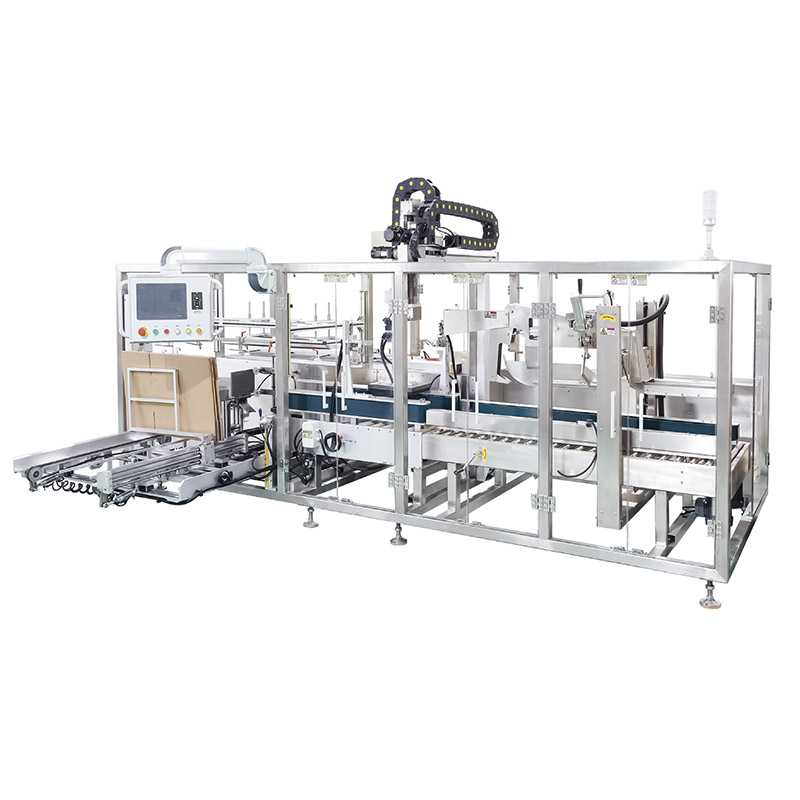
"Full-range" is the part that is most often under-specified. On a side load or side push machine such as the CP-S50, the hazardous motion to control is the horizontal push that transfers product into the case; on a top load pick-and-place machine such as the CP-T60, it is the vertical descent of the pick-and-place head into the carton. Every access point that can reach those motions needs its own interlock, and the reset must require a deliberate operator action rather than restarting automatically when a guard closes. A guard switch on the main door alone does not constitute coverage.
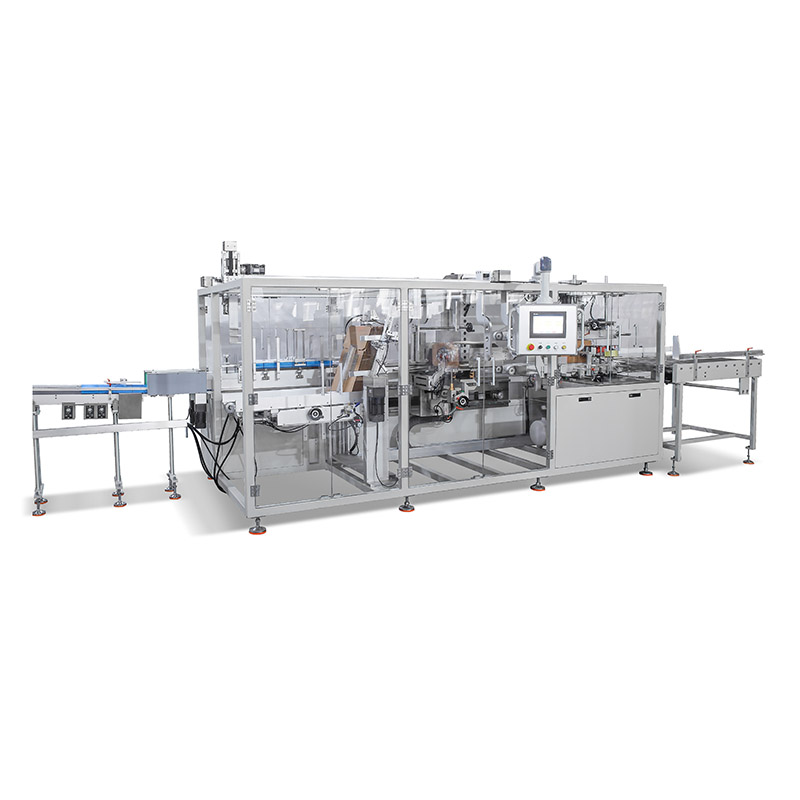
Stored energy needs the same treatment. Both CP-S50 and CP-T60 run on 0.5–0.8 MPa compressed air, so a maintenance procedure that isolates electrical power but leaves pneumatic pressure in the circuit has not made the machine safe. Gravity-held or pneumatically clamped parts have to be addressed in the isolation procedure, and the pneumatic leakage test in the pre-shipment sequence is what confirms the air circuit holds as built.
Finally, the safety circuit has to stay independent of production logic. A production PLC change made during commissioning should not be able to defeat an interlock, which is why the control logic test and the interlock and E-stop test are listed as separate items rather than folded into one running check. Because packaging dimensions, machine configuration, voltage and logo are all customization items on WIMACH equipment, the interlock set is agreed per project rather than taken from a fixed template — and that agreement is what the pre-shipment test then verifies.
Pre-shipment safety function testing: run every point, record every result
WIMACH's documented quality control sequence before shipment covers nine checks: no-load and load running test, dimensional tolerance inspection, mechanical assembly check, pneumatic leakage test, electrical safety test, PLC control logic test, safety interlock and E-stop test, long-time aging test, and surface appearance inspection. Three of those items carry the safety verdict, and they need to be read as tests, not as descriptions.
- No-load and load running test
- Dimensional tolerance inspection
- Mechanical assembly check
- Pneumatic leakage test
- Electrical safety test
- PLC control logic test
- Safety interlock and E-stop test
- Long-time aging test
- Surface appearance inspection
The interlock and E-stop test is the one that decides release. Done properly, it means tripping every device individually — each guard door, each access panel, each E-stop station — and observing the expected response: hazardous motion stops, the hazardous output is de-energised, and restart is blocked until the device is restored and the reset is deliberately operated. It also means opening a guard during a cycle, not only while the machine is idle, because the idle case is the easy one. Where a carton jam creates a reach-in situation, the test should be repeated with product in the machine, since the load running test and the interlock test then overlap on purpose.
The PLC control logic test covers the sequence a demonstration never shows. It verifies that the safety path behaves as designed across start, stop, fault and recovery, and that recovery requires the operator action the design intends. A machine that restarts the cycle when a guard is closed is not compliant, however well it packs.
The long-time aging test exposes what a short trial hides. Switch misalignment, a loose actuator or a nuisance trip that appears only after heat and vibration will surface during an extended run — in the factory if the test is run there, at the customer site if it is not. Closing that loop before shipment is the whole point of putting the aging test in the sequence.
For the buyer, the deliverable is a record, not an assurance. Ask for a point-by-point list showing device identification, the expected response and the observed result, signed off before the machine is packed. Where a non-conformity is found and corrected, the affected points should be re-tested and the record updated, so the final document describes the machine as shipped.
Manuals and after-sales support keep the machine compliant in service
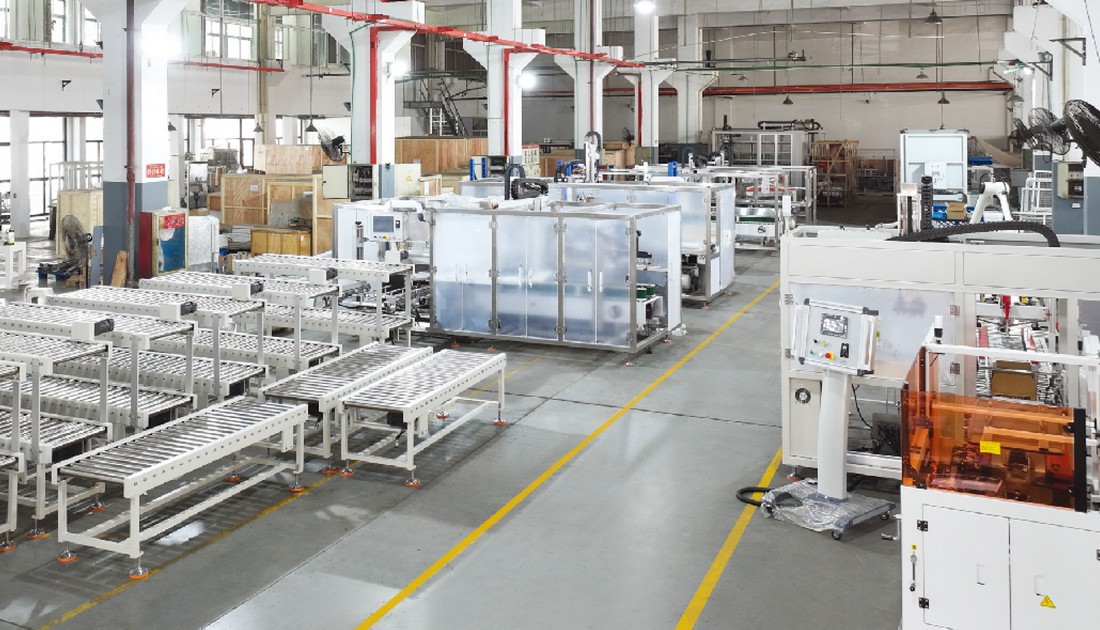
Compliance is not finished at the factory gate. A machine can lose its safety status in service simply because an interlock is bypassed during troubleshooting and never restored, or because a replacement switch is fitted without checking the reset behaviour. That makes the safety section of the operation and maintenance manual a project deliverable in its own right.
At minimum, ask for the interlock layout and device list, the reset procedure, the periodic test interval the manufacturer recommends, fault-finding guidance for a tripped interlock, identification of the safety devices so spares can be ordered correctly, and the lockout procedure covering both electrical and pneumatic energy. Confirm that the manual is delivered in the language the maintenance team actually works in, and that it matches the machine as shipped rather than the base model.
WIMACH's after-sales scope covers installation and commissioning, training service, warranty service, remote technical support, lifetime after-warranty support, and upgrade and retrofit service. The retrofit item matters more than it looks: when a plant adds a carton format, changes a conveyor interface or rearranges the line, the guard and interlock arrangement may need review, and having an upgrade route is what prevents a compliant machine from drifting out of compliance over a five-year life.
Step-by-step: a pre-shipment safety and delivery sequence
The sequence below splits the work between buyer and supplier so that the safety verdict and the shipping decision happen in the right order.
- Write the safety requirement into the purchase specification. State which standard or conformity route applies to your market, require an interlock list, name the E-stop locations, require a deliberate reset, and require the test record as a release document.
- Map interlock points to machine motions before design freeze. Identify the hazardous motion — the side push transfer on a side load machine, the pick-and-place descent on a top load machine — and list every access point that reaches it.
- Choose relay or safety PLC with the point count in hand. Decide at the same time how a tripped device will be identified during a production shift.
- Agree the acceptance test list and the record format when the order is placed. The nine-item QC sequence is a workable base; add the format in which results will be reported.
- Confirm the production slot. With a monthly capacity of 13 sets and a 30–45 day lead time on customized machinery, a safety test that has to be re-run needs calendar space, not just workshop space.
- Verify the build-stage checks. Mechanical assembly check, dimensional tolerance inspection and pneumatic leakage test confirm the machine that will be tested is the machine that was designed.
- Run no-load and then load tests with production cartons. The loaded condition is the one that creates reach-in situations.
- Run the electrical safety test, PLC control logic test and the interlock and E-stop test point by point. Record expected versus observed for each device.
- Complete the aging test and appearance inspection, then re-test any corrected point. Only a clean record should release the machine for packing.
- Release documentation, then book shipment. Manual, interlock layout and signed test record first; freight booking and the installation and training schedule after. Booking the vessel before the record is signed is the most common way a plant recreates the delay it was trying to avoid.
Where this matters: tissue, food and beverage, and pharmaceutical lines
Both CP-S50 and CP-T60 list tissue, food and beverage, pharmaceutical, daily chemical and cosmetic, and hardware, auto parts and machinery among their applicable industries, but the safety question changes with the project.
Tissue lines. A facial tissue line supplied to a plant in Poland integrates conveying, cartoning, case packing, palletizing, strapping and stretch wrapping into one automatic flow, and a toilet paper line supplied in the US follows a similar pattern from roll wrapping through case packing to pallet wrapping. In that kind of layout the case packer sits between two other machines, so interlock responsibility at the transfer points has to be assigned explicitly — a guard that protects the case packer infeed but is opened to clear a downstream jam belongs to somebody's risk assessment, and the contract should say whose.
Food and beverage lines. The utility interfaces dominate the early checks: both models run on 380 V, 50/60 Hz, three-phase power and 0.5–0.8 MPa air, with air consumption of 350 L/min on the CP-S50 and 450 L/min on the CP-T60, and power consumption of 4.5 kW and 7.5 kW respectively. Confirm the plant can supply those values before the machine is built, because a utility mismatch discovered at commissioning has the same schedule effect as a failed interlock test.
Pharmaceutical and contract packing lines. Here the documentation is as important as the function, because the machine's safety record and manual normally have to sit inside the plant's own change-control and maintenance records. A point-by-point test record and an interlock layout drawing are what make that possible; a verbal assurance at the factory acceptance stage is not. Turnkey projects show why this scales: a canister wet wipes line supplied to Mexico runs canister feeding, filling, sealing, capping, labelling, case packing, palletizing, strapping and stretch wrapping as one automatic sequence with CE-compliant customized design, and the case packer's interlocks are only one part of an interlock map that spans every station.
CP-S50 and CP-T60 at a glance
Both models are built from stainless steel or carbon steel and share the same voltage and air pressure envelope, so the choice between them usually turns on carton format, throughput and the loading method rather than on utilities.
| Parameter | CP-S50 | CP-T60 |
|---|---|---|
| Machine type | Side load case packer / side push case packer | Pick-and-place case packer / top load case packer |
| Packing capacity | 1–16 cartons/min | 1–8 cartons/min |
| Carton dimensions | 240–500 (L) × 200–400 (W) × 180–400 (H) mm | 300–600 (L) × 200–400 (W) × 150–400 (H) mm |
| Power voltage | 380 V, 50/60 Hz, 3 phase | 380 V, 50/60 Hz, 3 phase |
| Power consumption | 4.5 kW | 7.5 kW |
| Air pressure | 0.5–0.8 MPa | 0.5–0.8 MPa |
| Air consumption | 350 L/min | 450 L/min |
| Overall dimensions | 4,200 (L) × 2,300 (W) × 1,900 (H) mm | 4,200 (L) × 2,600 (W) × 2,200 (H) mm |
| Overall weight | 1,500 kg | 1,600 kg |
| Material | Stainless steel / carbon steel | Stainless steel / carbon steel |
| Applicable industries | Tissue; food and beverage; pharmaceutical; daily chemical and cosmetic; hardware, auto parts and machinery | Tissue; food and beverage; pharmaceutical; daily chemical and cosmetic; hardware, auto parts and machinery |
Read the table as a fit check, not a ranking. The CP-S50's horizontal push suits cartons up to 500 mm long and higher cycle rates, while the CP-T60's vertical pick-and-place handles cartons up to 600 mm long at a lower rate — and the interlock focus follows the mechanism, horizontal stroke on one and vertical descent on the other.
Frequently asked questions
Case packer manufacturer for food lines: what should a food plant check?
Start with application fit and then move to verification. Both WIMACH models list food and beverage among their applicable industries, and WIMACH states that all its machines are CE certified. Then ask for the quality control sequence in writing — the safety items that matter are the electrical safety test, the PLC control logic test and the safety interlock and E-stop test — and confirm that a point-by-point record is issued before shipment. Check the customization scope (packaging dimensions, machine configuration, voltage, logo), the 30–45 day lead time for customized machinery against a 13-set monthly capacity, and the after-sales scope covering installation and commissioning, training, warranty, remote technical support, lifetime after-warranty support and upgrade service.
What counts as a failed interlock check on a case packer?
Four failures account for most findings: a hazardous motion that continues after an access point is opened; an E-stop that stops the process but not the hazardous axis; a reset that restarts the cycle when a guard closes instead of requiring a deliberate operator action; and a device that can be easily bypassed without leaving evidence. Add one documentation failure — no record identifying which device was tested and what the expected response was — and the machine cannot be shown to be compliant even if it behaves correctly.
Can the interlock set be customized for our line?
Machine configuration is one of WIMACH's customization items, alongside packaging dimensions, voltage and logo, and documented projects such as the tissue lines supplied to Poland and the US were built as customized designs compliant with CE standards. In practice that means the interlock set is specified per project — guard arrangement, access points and reset logic follow the line layout and carton flow — rather than taken from a fixed template, with a minimum order quantity of one set.
What safety documentation should arrive with the machine?
Ask for the interlock layout and device list, the reset procedure, the recommended periodic test interval, fault-finding guidance for a tripped interlock, identification of safety devices for spare-parts ordering, and a lockout procedure covering both electrical and pneumatic energy at 0.5–0.8 MPa. WIMACH's after-sales scope adds installation and commissioning, training, warranty service, remote technical support and lifetime after-warranty support, which is where most in-service interlock questions actually get resolved.
How long does building and pre-shipment safety testing take?
Customized machinery is quoted at 30–45 days, with OEM/ODM projects quoted at 15–45 days, against a monthly capacity of 13 sets. Because the safety interlock and E-stop test sits near the end of that window, the test date should be agreed inside the lead time when the order is placed, and shipment should be booked only after the record is signed. If your project is competing for a slot in the same month, confirm the production slot at order stage rather than at packing stage.
Conclusion
A case packer that fails safety compliance before shipment is usually not a machine that was built badly. It is a machine whose interlock set was never explicitly specified, whose safety function was never tested point by point, and whose documentation was treated as an accessory. Fixing all three in the specification stage is what converts safety compliance from a shipment risk into a controlled, verifiable step — and it costs far less than discovering the gap after the vessel has sailed.
For a tissue, food and beverage, or pharmaceutical project, the practical checklist is short: an interlock architecture matched to the point count (safety relays or a safety PLC), full-range coverage of every access point and hazardous motion, a documented safety function test before release, a manual that keeps the interlocks working in service, and after-sales safety support that covers installation, training and later upgrades. WIMACH's CP-S50 and CP-T60 case packers are built to that sequence, with the full specification available in the WIMACH product catalogue; project-specific questions on interlock coverage and pre-shipment testing can go to the team directly at rex@wimach.cn or +86 177 5771 8080.

Have Questions or Need More Details?
Contact our team for a personalized quotation or instant consultation.
Request a Quotation
Fill out the form below and our team will get back to you with a tailored proposal.
WhatsApp Direct Chat
Prefer to chat in real-time? Message us on WhatsApp for instant assistance & quick answers.
- Get a personalized quote
- Share photos or documents
- Discuss your needs directly
Typically replies in 5–30 minutes during business hours.