
Case Packer Application Guide: Scenario-Based Selection of CP-S50 and CP-T60
A case packer is only the right machine in the context of a specific line. The side push architecture that suits a stable carton of boxed goods can be the wrong choice for a canister of wet wipes that has to be lowered gently into a case. This guide replaces abstract type comparison with four documented WIMACH installations, each mapped to the case packer model that fits it, so you can compare your own project scenario against real reference cases.
Why Scenario Fit Beats Spec-Sheet Comparison
Most case packer buying guides stop at a familiar table: side load versus top load, mechanical versus robotic, drop type versus pick-and-place. That table is a starting point, not a decision. Two buyers can read the same comparison and still choose differently, because the variables that actually decide the outcome are not on it - product format, loading direction, line layout, throughput, and the physical stability of whatever is being packed.
A case packer machine is automated equipment designed to arrange and pack products into cases or cartons. At the end of a line that looks simple, but the engineering behind getting a product into a case changes completely depending on what the product is. A rigid box can be pushed horizontally. A soft roll, a filled canister, or an unstable bundle usually cannot - it has to be picked and placed. That single difference in loading direction determines which machine architecture fits a project, and it is the difference this guide is built around.
What a Case Packer Solves at the End of the Line
Case packers are essential end-of-line machines that prepare products for shipping. In a typical line they form the final step of the packaging process, where individual products - typically cartons, bundles, cans, bottles, bags, rolls, or canisters - are grouped and placed into cases before they move to palletizing.
The category is large enough that supplier choice matters. Grand View Research valued the global case packing machines market at USD 1.1 billion in 2024, with Asia Pacific accounting for a 37.9% revenue share in the same year. That scale supports a wide supplier landscape, from robotic and pick-and-place systems to modular and side push designs, which is exactly why scenario fit - not a headline figure alone - decides the shortlist.
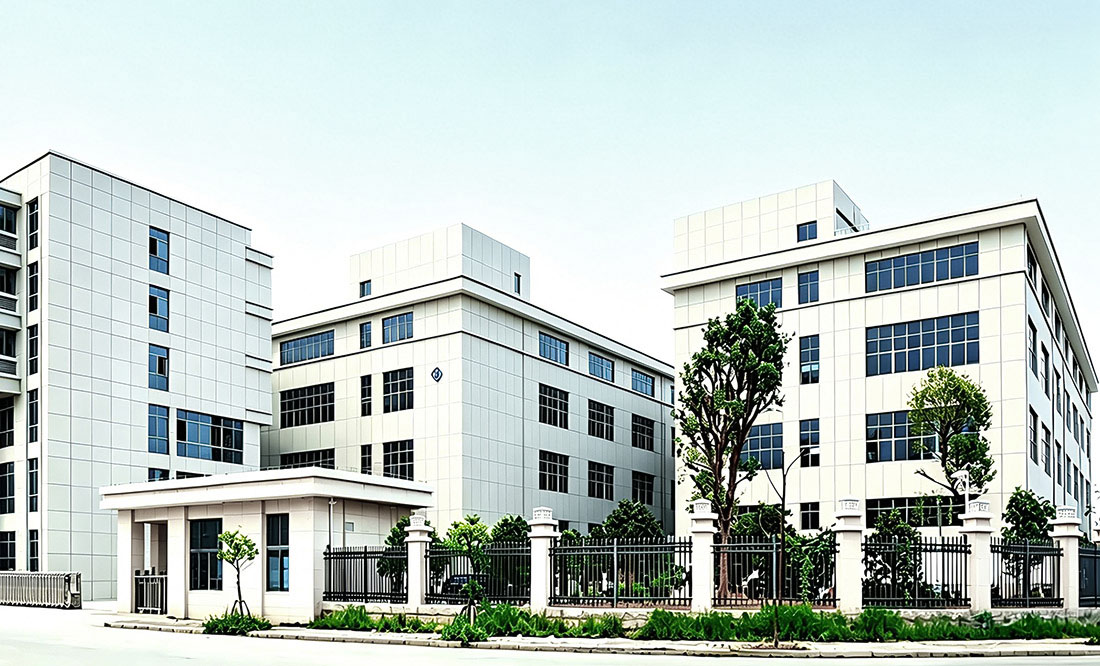
Wenzhou Wimach Machinery Co., Ltd. (WIMACH) is a China-based manufacturer of tissue packing machines and integrated packaging lines, and produces the CP-S50 automatic side load case packer and the CP-T60 automatic top load case packer. The company operates a 3,000 square metre factory with an annual output of 160 sets and a 60% export ratio, serving markets in the EU, North America, and South America. Its core range covers facial tissue and paper napkin cartoning machines, soft tissue wrapping machines, toilet paper roll wrapping machines, case packers, blister packing machines, and complete integrated packaging lines.
Side Load and Top Load: Two Architectures, Two Loading Directions
Every case packer answers the same question - how does the product get into the case - but the two common architectures answer it in opposite directions.
Side push case packer (CP-S50). In a side push, or side load, case packer, the product group is pushed horizontally into a case presented from the side. The motion is efficient and the architecture is compact, so it suits stable, uniform products such as cartons, boxes, and formed bundles. The CP-S50 is a side push case packer running at 1-16 cartons per minute, with a carton range of 240 x 200 x 180 mm to 500 x 400 x 400 mm. It uses 4.5 kW of power on a 380V 50/60Hz three-phase supply with 0.5-0.8 MPa compressed air, and has a machine weight of 1,500 kg.
Pick-and-place top load case packer (CP-T60). In a pick-and-place top load case packer, the product is picked from the infeed and placed down into an open case from above. This is the right approach for products that cannot be pushed without damage or misalignment - filled canisters, rolls, and irregular shapes that need controlled placement. The CP-T60 has a machine weight of 1,600 kg and an overall footprint of 4,200 x 2,600 x 2,200 mm, and is designed for food and beverage, pharmaceutical, hardware, and tissue applications.
The practical rule is straightforward. If the product can survive a horizontal push and can be grouped into a stable, stackable block, the side push CP-S50 is usually the more efficient match. If the product is tall, soft, filled, or unstable and needs to be set down into the case, the top load CP-T60 pick-and-place architecture is the fit.
Step-by-Step: Matching Your Project to CP-S50 or CP-T60
Use the following sequence to compare a live project against the two reference models. It moves from the product outward to the utilities, so that a mismatch is caught before a quotation is issued.
- Define the product format. Write down exactly what is being packed - cartons, boxes, bottles, cans, bags, rolls, or canisters - plus the finished pack dimensions. This is the single most important input, because format determines whether a push or a placement is physically safe.
- Decide the loading direction. If the product can be grouped and pushed as a stable block, the side push architecture of the CP-S50 applies. If it must be lowered into the case, the pick-and-place top load architecture of the CP-T60 applies.
- Check the carton envelope. For the CP-S50, confirm the case or carton falls within 240 x 200 x 180 mm to 500 x 400 x 400 mm. A carton outside that range is a signal to re-scope rather than assume.
- Match throughput. The CP-S50 is rated at 1-16 cartons per minute. Check the required line rate against that band and account for peaks, not only average output.
- Verify utilities. The CP-S50 requires 4.5 kW on a 380V 50/60Hz three-phase supply and 0.5-0.8 MPa compressed air. The CP-T60 occupies a 4,200 x 2,600 x 2,200 mm footprint. Confirm factory power, air supply, and floor space before finalizing layout.
- Confirm industry fit. Food and beverage, pharmaceutical, hardware, and tissue lines are served by the CP-T60 top load design, while stable rigid cartons and boxes remain the natural territory of the side push CP-S50.
Four Documented Installations: Scenario-to-Model Mapping
The reference cases below are documented WIMACH installations. Reading them in sequence shows how the same selection logic - loading direction, product format, and industry - produces different answers as the scenario changes.
1. Poland: a 12-set fully automatic end-of-line packing line
This project installed 12 sets of packaging equipment to create a fully automatic end-of-line packing line. The scale of a 12-set line makes throughput and integration the dominant concerns: the case packer must synchronize with upstream forming and downstream handling, and it must run reliably across long daily shifts. Where products are rigid cartons and boxes that form stable groups before packing, the side push architecture of the CP-S50 is the natural fit, because the product can be pushed horizontally without deforming. For this type of scenario, the reference logic is: stable rigid product plus high-volume automatic packing points to the side push design.
2. United States: 6-set toilet paper roll end-of-line packaging
This project used 6 sets of equipment for toilet paper roll end-of-line packaging, combining wrapping and case packing. Toilet paper rolls are soft and low-density, so the wrapping stage creates the stable bundle that the case packer then handles. The selection logic here follows the bundle rather than the raw roll: once wrapping has produced a uniform, stackable unit, the end-of-line case packing step can handle a consistent format, and the CP-S50 side push design fits that flow. For tissue lines, this is a common pattern - wrap first, then case pack a stable bundle.
3. Mexico: a 9-set turnkey wet disinfecting wipes canister line
This project was a turnkey installation of 9 sets covering canister wet disinfecting wipes packaging, from canister loading through case packing and pallet wrapping. A turnkey line changes the requirement: the case packer is one module in a chained process, with canister loading upstream and pallet wrapping downstream, so timing and hand-off matter as much as the packing motion itself. Canisters are rigid but tall and easy to topple, which is precisely the kind of product that benefits from controlled placement. In this scenario, the top load pick-and-place logic of the CP-T60 applies, because the product is set down into the case rather than pushed into it, and the case packer has to integrate smoothly with both ends of the line.
4. United States: a single-set case packer loading tissue canisters into cartons
This project used a single case packer set to load tissue canisters into cartons. A single-machine installation removes the integration pressure of a full line and puts the focus squarely on the product and carton: whether canisters can be handled as a group, and whether the carton size falls within the machine envelope. When the product is a rigid canister that must sit correctly in a carton, the placement-based logic of the CP-T60 top load design is the safer reference; when the canisters can be grouped and pushed, the side push CP-S50 becomes the efficient option. Matching the carton to the machine envelope is the deciding check in a single-set project.
These four cases are presented to show selection logic, not as a specification guarantee for every line. Each project should be confirmed against its own product format, carton size, throughput, and utilities.
CP-S50 and CP-T60: Specification Comparison
The table below consolidates the published reference specifications for the two models. Where a value is not part of the published reference, it is marked with a dash rather than estimated.
| Selection factor | CP-S50 side push case packer | CP-T60 pick-and-place top load case packer |
|---|---|---|
| Loading direction | Side push / side load | Pick-and-place / top load |
| Throughput | 1-16 cartons/min | - |
| Carton size range | 240 x 200 x 180 mm to 500 x 400 x 400 mm | - |
| Machine power | 4.5 kW | - |
| Power supply | 380V 50/60Hz, 3-phase | - |
| Compressed air | 0.5-0.8 MPa | - |
| Machine weight | 1,500 kg | 1,600 kg |
| Footprint | - | 4,200 x 2,600 x 2,200 mm |
| Industry fit | Stable rigid cartons and boxes | Food & beverage, pharmaceutical, hardware, tissue |
A dash means the figure is not part of the published reference for that model and should be requested as part of a formal specification. It is better to leave a cell open than to fill it with an estimate.
Buyer's Checklist: Comparing Your Scenario to These Reference Cases
Before requesting a quotation, run your project through the checklist below. Each line maps directly to one of the selection factors above, so a completed checklist becomes the brief you hand to a supplier.
- Product format: cartons, boxes, bottles, cans, bags, rolls, or canisters? Listed with finished pack dimensions.
- Loading direction: can the product be pushed as a stable group (side push), or must it be placed (top load)?
- Carton envelope: does it sit within 240 x 200 x 180 mm to 500 x 400 x 400 mm for the CP-S50?
- Throughput: does the required rate fall inside 1-16 cartons/min on the CP-S50 reference?
- Utilities: 4.5 kW, 380V 50/60Hz three-phase, and 0.5-0.8 MPa air available on the CP-S50 reference?
- Floor space: can the line accommodate a footprint of 4,200 x 2,600 x 2,200 mm for the CP-T60?
- Industry fit: does the line fall within food & beverage, pharmaceutical, hardware, or tissue (CP-T60), or is it a rigid-carton application (CP-S50)?
- Integration: is this a single machine, or part of a turnkey line with upstream loading and downstream pallet wrapping?
- Safety: has the supplier confirmed safety interlocks and pre-shipment safety function testing?
On safety, WIMACH equips its packaging machines with safety PLCs or safety relays to implement full-range safety interlock points. All safety function tests are completed prior to shipment, with supporting safety operation and maintenance manuals and after-sales safety technical support - a point worth confirming with any supplier, because it affects both commissioning time and long-term operator safety.
Frequently Asked Questions
Which case packer manufacturer is better - Chinese or European?
There is no single answer without a scenario, but the comparison data is specific. Against European case packers, WIMACH reports a total cost that is 70-80% lower, with the machine and spare parts priced at 20-30% of European counterparts. It also reports 50% higher product compatibility and a delivery lead time that is 50% shorter, along with lower energy consumption and reduced maintenance requirements. A European machine may still be the right choice where a buyer's requirements are matched by that supplier's specific configuration. The correct comparison is your product format, carton range, throughput, utilities, and lead time against each supplier's verified specification - not the country of origin alone.
How do I choose between a side load and a top load case packer?
Decide it from the product, not the catalogue. If the product is rigid and can be grouped into a stable block, a side push case packer such as the CP-S50 - rated at 1-16 cartons/min and handling cartons from 240 x 200 x 180 mm to 500 x 400 x 400 mm - is usually the efficient choice. If the product is tall, soft, filled, or unstable and must be lowered into the case, a pick-and-place top load case packer such as the CP-T60 is the fit.
What are the main specifications of the CP-S50 side push case packer?
The CP-S50 is a side push (side load) case packer with a throughput of 1-16 cartons per minute and a carton range of 240 x 200 x 180 mm to 500 x 400 x 400 mm. It runs on 4.5 kW of power, a 380V 50/60Hz three-phase supply, and 0.5-0.8 MPa compressed air, with a machine weight of 1,500 kg.
What industries does the CP-T60 top load case packer serve?
The CP-T60 pick-and-place top load case packer is designed for food and beverage, pharmaceutical, hardware, and tissue applications. It has a machine weight of 1,600 kg and an overall footprint of 4,200 x 2,600 x 2,200 mm.
Can WIMACH supply a full turnkey case packing line, not just a single machine?
Yes. WIMACH supplies both standalone case packers and complete integrated packaging lines, and its documented installations include a 12-set fully automatic end-of-line line in Poland, a 9-set turnkey wet disinfecting wipes canister line in Mexico that runs from canister loading through case packing and pallet wrapping, and a 6-set toilet paper roll end-of-line project in the United States. For a turnkey project, share your upstream and downstream equipment so the case packer can be configured as a line module rather than an isolated machine. To start a scenario review, you can request a quotation or discuss a sample validation run with the WIMACH team.
Conclusion
Choosing a case packer is a scenario decision, not a specification contest. The loading direction - side push or top load - follows from the product format and its physical stability, and the rest of the specification follows from carton size, throughput, utilities, and industry. When those factors are read together, the answer usually narrows to a single model quickly.
The four documented installations above show how that logic plays out in practice: a 12-set fully automatic line in Poland, a 6-set toilet paper roll end-of-line project in the US, a 9-set turnkey canister line in Mexico, and a single-set tissue canister case packer in the US. Compare your own project against those reference cases with the checklist in this guide, and the choice between the CP-S50 side push case packer and the CP-T60 pick-and-place top load case packer becomes a documented decision rather than a guess.
Next step: match your line to a reference case
Send WIMACH your product format, carton size, required throughput, and factory utilities, and the team will confirm whether the CP-S50 side push case packer or the CP-T60 top load case packer fits your scenario - or recommend a configuration for a full turnkey line.
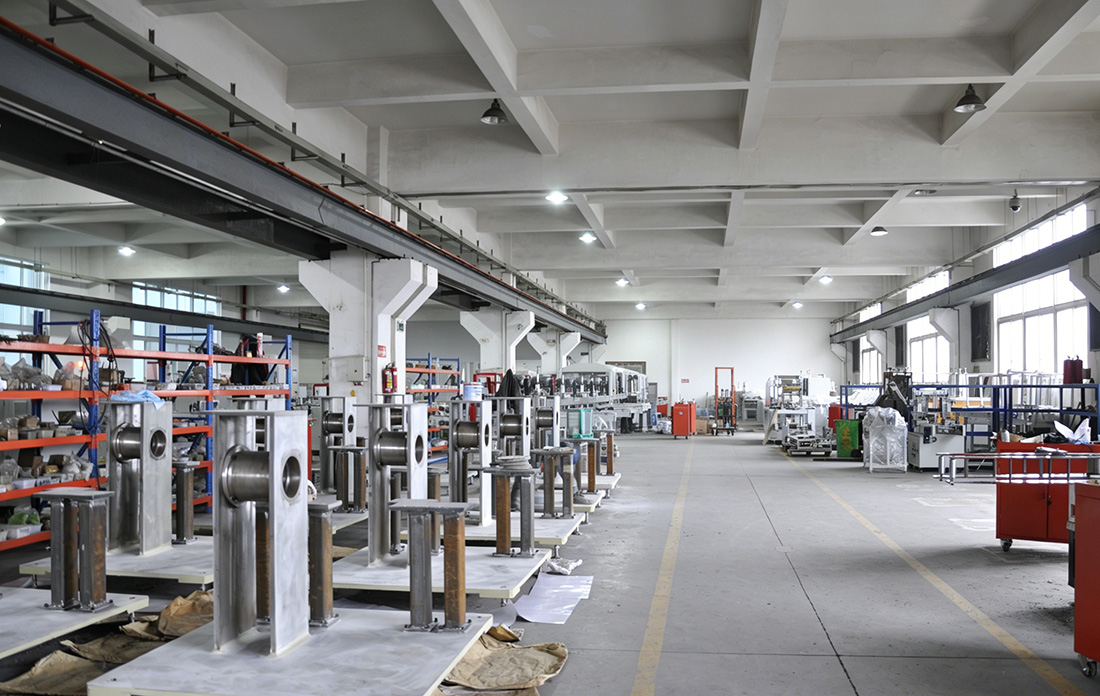
Download the full WIMACH product catalogue (PDF), visit wimach.cn, or contact the team directly: Email rex@wimach.cn | Tel / WhatsApp +86 177 5771 8080 | Bldg 14 Qiaomao Rd, Ruian, Wenzhou, Zhejiang, China.
Have Questions or Need More Details?
Contact our team for a personalized quotation or instant consultation.
Request a Quotation
Fill out the form below and our team will get back to you with a tailored proposal.
WhatsApp Direct Chat
Prefer to chat in real-time? Message us on WhatsApp for instant assistance & quick answers.
- Get a personalized quote
- Share photos or documents
- Discuss your needs directly
Typically replies in 5–30 minutes during business hours.