
Tissue Packing Machine Partnership FAQ: From Acceptance to Uptime
A tissue packing machine partnership is settled in three places: the acceptance test, the purchasing terms, and the support routine that begins after commissioning. This FAQ answers, in roughly the order buyers raise them, the questions tissue manufacturers ask WIMACH (Wenzhou Wimach Machinery Co., Ltd.) before committing a line to a multi-year supplier relationship — whether the scope is a single TP-280 soft tissue wrapping machine, a TB-F60 bagging machine, a TC-100 or TC-300 tissue cartoning machine, or a full turnkey packing solution for tissue.
The short answer: a workable long-term relationship rests on a written acceptance standard, documented commercial terms, and a support rhythm that treats the whole line as one asset rather than four unrelated machines. WIMACH's contractual acceptance criterion is factory acceptance testing (FAT); its stated commercial terms are a minimum order quantity of 1 set, delivery on FOB, FCA, CIF or CFR, and payment by T/T. Everything else — documentation scope, spare-part planning, response expectations, uptime reviews — is negotiated around those anchors.
That framing matters at the decision and execution stage. Buyers here are no longer choosing between machine categories. They are deciding how much of the operational risk to keep in-house and how much to place on the supplier's side of the contract, which is exactly what the questions below are designed to expose.
Why partnerships slip after the purchase order
Three gaps tend to create most of the friction after installation, and none of them appears clearly on a specification sheet.
1. The acceptance standard stays vague
“The machine runs well” is not an acceptance criterion. A cartoner that reaches its rated speed on one box blank and stalls on another has satisfied the vague version and failed the real one. The same applies to a wrapping machine tested on a film reel that happens to suit it. When acceptance is undefined, the argument about whether the machine has been delivered correctly simply moves from the factory floor to the email thread.
2. Support is assumed rather than specified
Buyers routinely compare suppliers on price and rated speed while leaving service obligations undefined. A rated output only holds in production if spare parts, operating manuals and technical answers arrive on a schedule that matches the production plan. A machine that reaches 260 packs per minute during a demonstration but waits days for a technical answer after a stoppage has an effective capacity well below its nameplate figure.
3. The fleet is treated as separate machines
In a tissue converting hall the wrapping machine, the bagging machine and the cartoner fail in different ways and at different intervals. They are also coupled. If a TP-280 is wrapping at 260 packs per minute upstream of a cartoner that stops repeatedly, the wrapper's buffer fills and the whole line slows within minutes. Uptime is therefore a line property, not a machine property, and a supplier who can only discuss one unit at a time cannot help with it.
What the market context says about long-term support
Commercial research published in 2026 values the global tissue paper packaging machine market at approximately USD 3.9 billion in 2025, with a projection of USD 4.2 billion for 2026 (Precedence Research / Business Research Insights). The same source reports that Asia Pacific held a 39.8% share in 2025, and that facial tissue packaging applications accounted for 42.1% of the market.
Two caveats matter before anyone uses those figures in a business case. First, market sizing depends on scope: other research valued tissue converting machinery, a different category that includes rewinders, at USD 1.67 billion. The two numbers describe different denominators and should not be added or compared directly. Second, a market total says nothing about any individual supplier's capability, and it should not be read as evidence about one factory's output or service level.
What the figures do support is a directional reading: a growing installed base means more machines in service, longer support lives and more mixed fleets. Under that condition, suppliers who can answer fleet-level questions — consistent documentation, identifiable spare parts across models, safety support after handover — become more relevant than suppliers who only quote a unit price. That is an interpretation of context, not a purchasing rule.
How WIMACH frames acceptance, purchasing terms and support
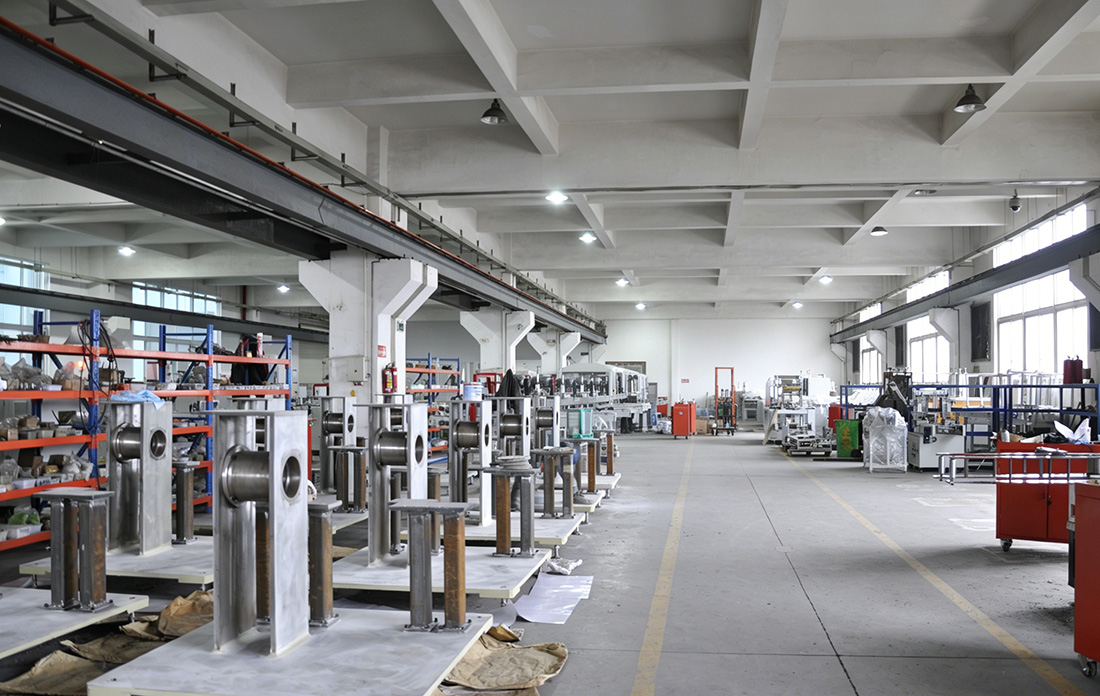
WIMACH manufactures tissue packing machines and integrated packaging lines, with 60% of output exported to the EU, North America and South America. The company operates a 3,000 m² facility with 37 employees, five R&D engineers and an annual output of 160 sets, and states that it provides full-lifecycle services for all of its packaging machines. Those numbers set the practical scale for a long-term conversation: roughly one hundred and sixty machines a year leave a single site, which is why documentation and spare-part identity across models matter more than a one-off discount.
| Item | Stated term | What the buyer should confirm |
|---|---|---|
| Minimum order quantity | 1 set | Whether a mixed-model order is treated as separate sets |
| Delivery terms | FOB, FCA, CIF, CFR | Which term applies, and where risk transfers |
| Acceptance criteria | FAT (factory acceptance test) | The test agenda, pack formats and speed conditions |
| Payment terms | T/T | The milestone schedule behind the payment |
Acceptance through FAT is the single most consequential line in that table. It converts a general promise into a test that either passes or fails before the machine is packed for shipment. Because FAT is the stated criterion, the buyer's leverage is highest before the container is loaded: it is the moment to write down which tissue format, film, box blank and speed band the machine will be judged on, and to watch the run against those conditions.
| Model | Typical role | Stated capacity | Points buyers usually probe |
|---|---|---|---|
| TP-280 | High-speed soft tissue wrapping | 260 packs/min | Film path and sealing consistency at continuous speed |
| TB-F60 | Bottom-dispensing tissue bagging | 60 packs/min | Bag opening, seal integrity, pack orientation |
| TC-100 | Facial tissue cartoning | 30–100 boxes/min | Box blank range and changeover between formats |
| TC-300 | High-speed box packing | 180 boxes/min | Sustained high-cycle stability and line buffering |
Capacity notes: 100 boxes/min is the stable top speed WIMACH lists for the TC-100, so the 30–100 boxes/min band reflects the working range rather than a single fixed figure. Rated speeds are reference points for line planning; the speed a buyer should accept is the one demonstrated on their own pack format during FAT.
Safety validation is part of the same handover. WIMACH states that all of its packaging machines are equipped with safety PLCs or safety relays that implement full-range safety interlock points, that all safety function tests are completed prior to shipment, and that machines ship with safety operation and maintenance manuals plus after-sales safety technical support. For a buyer, the practical check is simple: ask to see the safety function test completed during FAT, and confirm that the manual delivered with the machine covers the interlocks actually fitted to that unit.
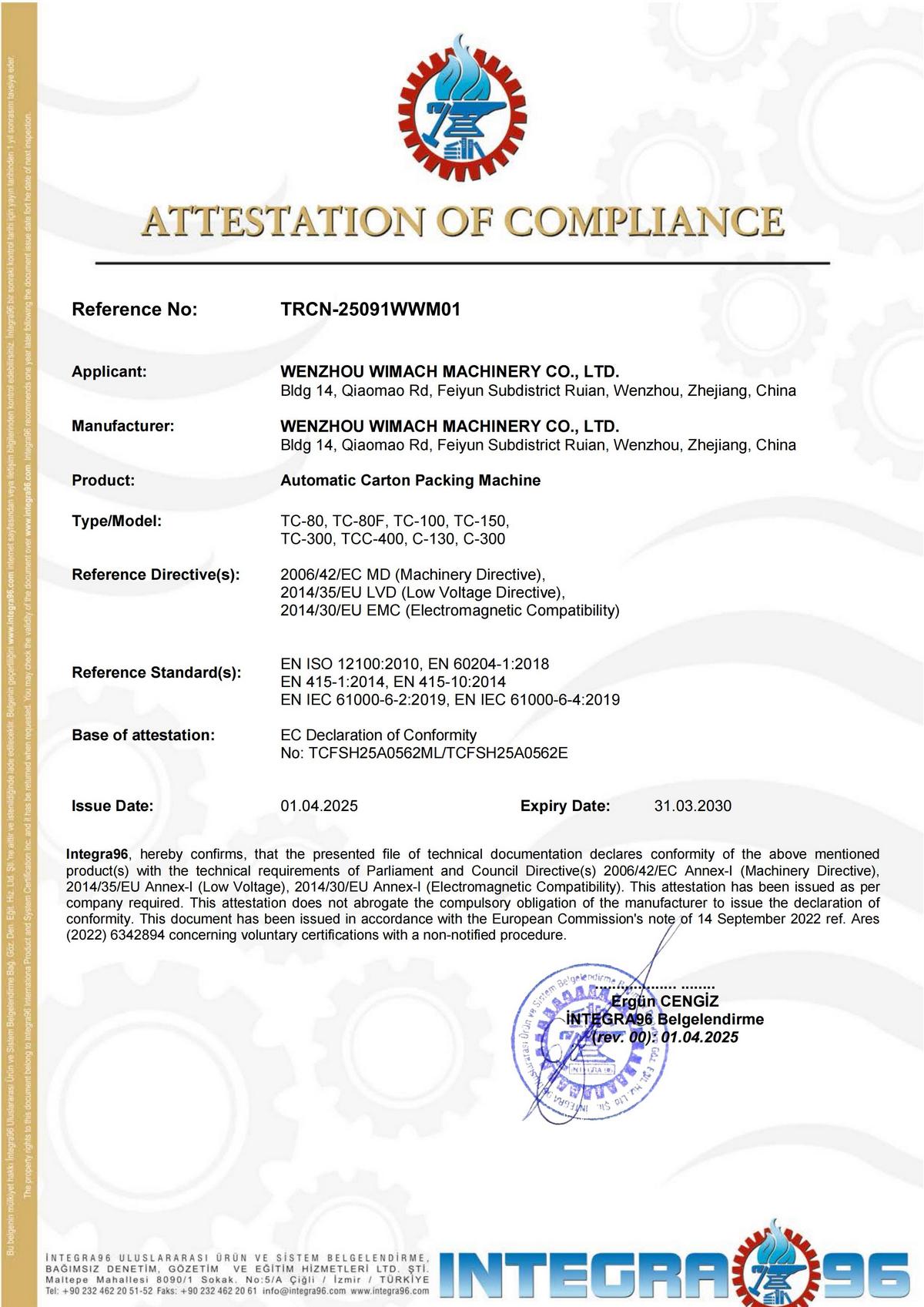
WIMACH also states that all of its machines are CE certified and are assembled with components from well-known brands. One scope caution is worth carrying into any conformity discussion: standards catalogues describe EN 1034-17 as addressing safety requirements for tissue-making machines for soft and crepe paper. That is not the same equipment class as a finished tissue packing machine, so the standard should not be assumed to govern a wrapping or cartoning unit. Confirm the applicable conformity route for your machine, market and year with your own technical file rather than importing a reference from the papermaking side of the plant.
From purchase order to steady uptime: seven steps
Step 1 — Lock the configuration and the acceptance standard before the PO
Write the machine's duty in production terms: tissue format, pack dimensions, film or bag type, box blank range, and the speed band expected on a normal shift rather than at peak. Because FAT is the contractual acceptance point, this list becomes the test agenda. Anything omitted here is difficult to argue later.
Step 2 — Fix the commercial terms in the same document
Confirm MOQ (1 set), the delivery term actually used among FOB, FCA, CIF and CFR, and the T/T milestone schedule. Mixed-model orders deserve a specific note: a wrapping machine and a cartoner ordered together are still two acceptance objects and should be listed separately in the agreement.
Step 3 — Agree what the FAT will demonstrate
A useful agenda covers three layers: safety functions (tested before shipment on WIMACH equipment), mechanical running at the agreed speed on the buyer's own materials, and pack quality after sealing or cartoning. Record the pass condition for each layer in numbers or samples, not adjectives.
Step 4 — Collect documentation at the test, not after arrival
Operating and maintenance manuals, the safety manual covering the fitted interlocks, and the CE documentation should be in hand before the machine ships. Documentation collected at FAT travels with the machine; documentation requested three months after installation usually arrives as a separate project.
Step 5 — Engineer the interfaces between machines
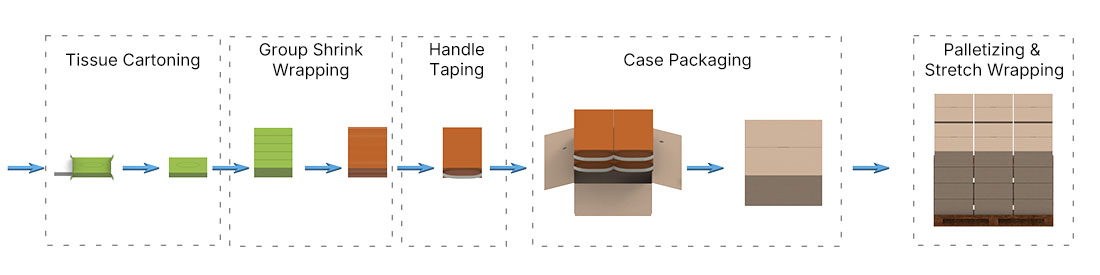
Decide where buffering sits between the wrapper and the cartoner, how line speed will be matched when one unit runs below rating, and who owns the handshake logic. This is the step where a 260 packs/min wrapping machine and a 180 boxes/min cartoner are either made compatible or left to argue with each other in production.
Step 6 — Commission against a measured baseline
After installation, run a defined production window and record actual output, stop frequency and the causes of the main stops. This baseline is the reference for every later support conversation; without it, “the line is slower than before” cannot be checked against anything.
Step 7 — Run a review loop rather than a complaint loop
Set a periodic review — monthly during ramp-up, then quarterly — using the same three figures: output, stops, and time to resolution on technical questions. A supplier relationship improves when the agenda is data, and deteriorates when it is memory.
Use cases: how the questions change by line
Toilet paper packaging line
A toilet paper wrapping machine or toilet roll wrapping machine usually sits at the end of a high-volume, low-variety flow. The dominant risk is not changeover but continuous running: film tension, sealing temperature and wear on high-cycle parts. Buyers on this line should ask for the wear-item list at FAT, confirm how spare parts are identified per model, and agree how a stop will be diagnosed when the line is running at rate. WIMACH's own comparison of its equipment against European tissue packing machines states that machine and spare-part prices sit at 20–30% of European counterparts, that product compatibility exceeds 50%, and that average delivery lead time is about 50% shorter. Those are supplier-reported figures for a long-term cost conversation, not an independent benchmark — use them as the opening position for a like-for-like quotation.
Facial tissue box packaging line
A facial tissue packing machine feeding a tissue cartoning machine carries a different burden: format flexibility. A line that runs cube box tissue packing machine formats, standard rectangular boxes and occasional promotional sizes will spend its support budget on changeover and setup questions rather than on wear. This is where a TC-100 running from 30 to 100 boxes/min earns its place, and where documentation quality shows: a manual that explains setup for each blank range removes dozens of support calls that a generic manual creates.
Mixed fleet with a turnkey packing solution for tissue
Where a plant runs wrapping, bagging and cartoning together — for example a TP-280, a TB-F60 and a TC-300 — the support question becomes one of consistency. Do the manuals share a structure? Are spare parts identified the same way across models? Can one technical contact discuss all three? A supplier who answers those consistently is worth more over five years than one who is marginally cheaper on the first unit.
FAQ: long-term tissue packing machine partnership questions
What are the purchasing terms and acceptance criteria for a WIMACH tissue packing machine?
WIMACH states a minimum order quantity of 1 set, delivery terms of FOB, FCA, CIF or CFR, acceptance criteria based on FAT (factory acceptance testing), and payment terms of T/T. For the buyer, the acceptance line is the one that carries operational weight: FAT means the machine is judged against an agreed test before shipment, so the test agenda should name the tissue format, film or box blank, and the speed conditions that will count as a pass.
What should a factory acceptance test actually cover?
Three layers are worth insisting on. Safety first: WIMACH states that safety function tests are completed prior to shipment and that machines ship with safety operation and maintenance manuals. Second, running at the agreed speed on the buyer's own materials rather than on a demonstration reel. Third, output quality after sealing, bagging or cartoning, judged on samples retained from the test. Each layer needs a written pass condition; a FAT that only confirms the machine “runs” leaves the original ambiguity intact.
Which documents should arrive with the machine?
At minimum, the operating and maintenance manual, the safety manual matching the interlocks actually fitted, and the CE documentation for the unit, since WIMACH states all of its machines are CE certified. Electrical drawings and the spare-part list belong in the same package. The practical rule is to collect these at FAT rather than after installation, because documents requested at the test travel with the shipment and documents requested later become a separate follow-up project.
How does after-sales support work across a multi-machine fleet?
WIMACH states that it provides full-lifecycle services for all of its packaging machines together with after-sales safety technical support. Across a fleet, the useful questions are about consistency rather than slogans: whether one contact can discuss a TP-280 wrapping machine, a TB-F60 bagging machine and a TC-300 cartoner together, whether spare parts are identified the same way across models, and whether the manuals share a structure so an operator can move between machines. Those three answers determine how quickly a line recovers, because most line stops are interface problems, not single-machine failures.
Which spare parts and maintenance items should a long-term agreement cover?
Start from the wear items created by the machine's own cycle: film and sealing components on a wrapping machine, bag-opening and sealing elements on a bagging machine, carton-erection and changeover parts on a cartoner, plus the safety relay or safety PLC that carries the interlocks. Then fix three administrative points in the agreement — how each part is identified, how a repeat order is placed against that identification, and how the buyer is notified when a component specification changes. WIMACH's published comparison describes its spare parts as cost-effective relative to European equivalents, a supplier statement that should be verified against a like-for-like parts quotation.
How should uptime be measured after commissioning?
Define the measurement window before the line starts, not after the first bad month. A workable method records planned production time, actual output, the number and duration of unplanned stops, and the cause of each stop attributed to a stage — wrapping, bagging, cartoning or case packing. Reviewing the same three indicators on a fixed cadence turns a vague sense of unreliability into a specific question the supplier can answer, and it shows whether a problem belongs to one machine or to the interface between two.
What lead time should a buyer plan for?
WIMACH states a typical production lead time of 15 to 60 days depending on the product, with monthly production capacity of 1 to 13 sets depending on the product line, against an annual output of 160 sets. Planning implication: a single machine and a multi-machine fleet order do not sit in the same scheduling slot, and a fleet order should be sequenced by installation order rather than placed as one undivided block. Add freight, installation and commissioning time on top of the production window when building the project plan.
What defines a long-term tissue packing machine supply partner in China?
Four things are checkable before signing. Export record: WIMACH exports 60% of output to the EU, North America and South America, so documentation for those markets is part of its normal workflow rather than a special request. Production scale: a 3,000 m² facility, 37 employees, five R&D engineers and 160 sets per year give a realistic picture of how much customization capacity exists alongside standard builds. Contractual clarity: MOQ of 1 set, named delivery terms, FAT acceptance and T/T payment remove most of the ambiguity that damages long relationships. Continuity: full-lifecycle service, safety manuals and spare-part identification across models are what keep a fleet running in year three, when the purchase price is no longer the relevant number.
What a durable partnership looks like after year one
The purchase price fades quickly; the operating record does not. A partnership that holds up usually shows four signs by the end of its first year: an acceptance test whose written conditions are still the reference point, a documentation set that operators actually use, a spare-part list that can be ordered against without a conversation, and an uptime review where both sides look at the same numbers. None of those depends on the machine being the fastest on the market — they depend on the terms, the test and the follow-up being defined before the order.
For buyers comparing suppliers on a multi-machine scope, the useful next step is to convert this FAQ into a short written requirement list and send it with the enquiry. A supplier who answers it item by item, including the parts it cannot yet confirm, is showing exactly the behaviour a five-year relationship needs.
Next step. The WIMACH catalogue covers facial tissue packing machines, soft tissue wrapping machines, toilet paper wrapping machines, tissue cartoning machines and integrated lines, with the specifications referenced on this page. Download it here for line-planning detail: WIMACH product catalogue (PDF).
If you are building the requirement list described above — acceptance conditions, spare-part identification and uptime review — send the draft scope to the WIMACH team and ask for a point-by-point response before the quotation. Contact: Rex Din, rex@wimach.cn, tel/WhatsApp +86 177 5771 8080. Wenzhou Wimach Machinery Co., Ltd., Bldg 14 Qiaomao Rd, Ruian, Wenzhou, Zhejiang, China.

Have Questions or Need More Details?
Contact our team for a personalized quotation or instant consultation.
Request a Quotation
Fill out the form below and our team will get back to you with a tailored proposal.
WhatsApp Direct Chat
Prefer to chat in real-time? Message us on WhatsApp for instant assistance & quick answers.
- Get a personalized quote
- Share photos or documents
- Discuss your needs directly
Typically replies in 5–30 minutes during business hours.