Case Packer After-Sales FAQ: Safety Function Testing, Support & Long-Term Partnership
Case Packer After-Sales FAQ: Safety Function Testing, Support & Long-Term Partnership
Buying a case packer is a two-stage decision. Stage one is the comparison stage: throughput, carton formats, machine type (side load, top load, drop type, robotic, or pick and place), footprint and price. Stage two starts the moment the purchase order is confirmed - and it is the stage that decides whether the packaging line still performs the way it did in the acceptance video three years later.
This article is written for buyers at that second stage. It answers the operational questions that arrive after ordering a case packing machine and before a long-term supply relationship is confirmed: which safety functions are tested before shipment, how safety interlock points are implemented, what documentation travels with the machine, how customization and OEM/ODM requests are handled, and what ongoing support actually covers. Numbers used below come either from the manufacturer's published comparison data or from published market research, and are attributed where they appear.
The Problem: The Post-Order Risk Window Buyers Rarely Specify
Most evaluation frameworks for automatic case packers concentrate on what the machine does - speed, case size range, pack pattern, tape versus glue, integration with upstream wrappers and downstream palletizers. Far less attention is paid to the narrow risk window that opens between order confirmation and stable production.
Three gaps appear repeatedly inside that window:
- Undocumented safety architecture. If the quotation does not state whether a machine uses a safety PLC or a safety relay, the buyer cannot verify how interlock points are implemented - or whether they cover the full range of access points.
- Unclear verification scope. "Tested before shipment" can mean many different things. Whether a machine is run empty only or also under load, and whether dimensional tolerances, pneumatic circuits, electrical safety and control logic are checked, changes what the buyer physically receives.
- Undefined long-term flexibility. Whether the supplier will later accept new packaging dimensions, a different machine configuration, a different voltage, or a private-label logo determines whether the first order is a one-off purchase or the start of a production programme.
The cost of these gaps is not paid at the quotation stage. It surfaces during the first production ramp-up, during the first format change, and during the first unplanned stop that needs remote or on-site technical support.
Industry Background: Why Documentation and Support Now Carry Real Weight
Case packing sits inside a packaging equipment market that is expanding steadily, and the growth is concentrated in the regions that buyers now source from.
- Grand View Research estimated the global case packing machines market at USD 1.07 billion in 2024, projected to reach USD 1.74 billion by 2033.
- The same source reports that Asia Pacific dominated the case packing machines industry with a 37.9% market share in 2024.
- By machine type, the top load case packer segment accounted for the largest share at 45.5% in 2024 (Grand View Research).
- Global Market Insights values the global robotic packaging systems market, which includes robotic case packers, at USD 6.4 billion in 2024.
- Fact.MR reports that secondary packaging equipment, the category that includes case packers, holds approximately 45% of the total packaging robot market share.
Two safety standards frame the compliance side of this equipment, and they apply depending on where the line is installed: ANSI/PMMI B155.1-2023 is the primary safety standard for packaging and processing machinery in the United States, while EN ISO 12100 is the harmonized European standard for machinery safety and is mandatory for CE marking on case packers sold in the EU.
The competitive picture is also relevant to the sourcing decision. ProMach is identified as a major global player in the case packer market, owning brands such as Brenton and Wexxar Bel. That established presence sits at one end of the market; manufacturers exporting from Asia sit at the other. For a buyer, the practical consequence is that price differences are easy to see in a quotation, while differences in safety documentation, verification scope and long-term customization support are not - unless they are asked about directly.
How WIMACH Structures Safety Verification, Support and Long-Term Customization

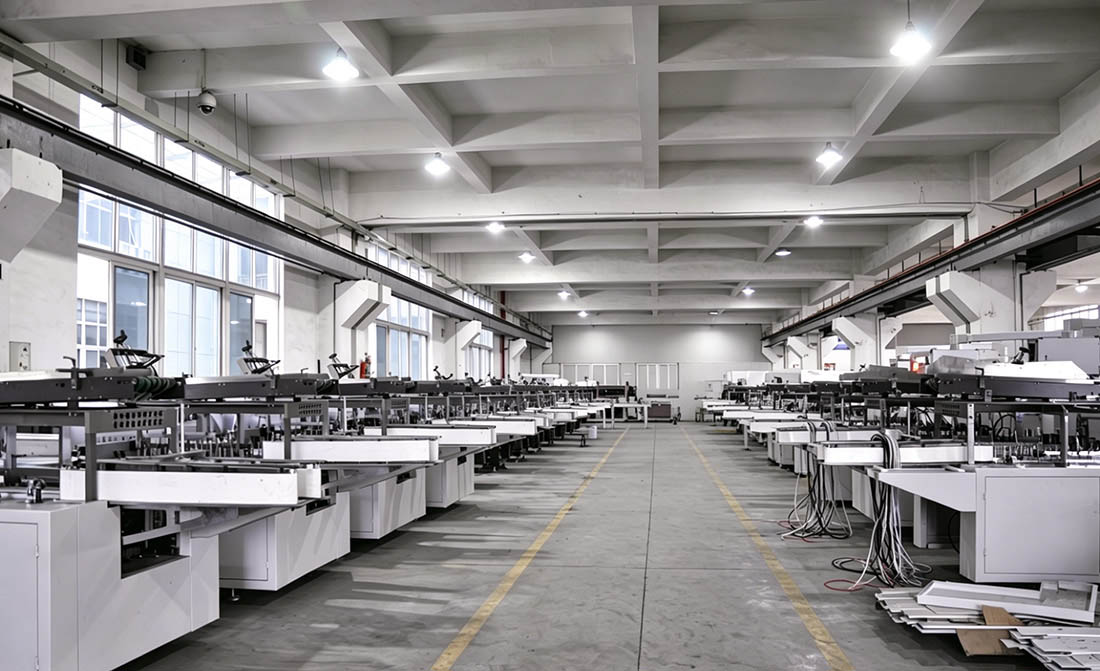
Wenzhou Wimach Machinery Co., Ltd. (WIMACH) is a Chinese packaging machinery manufacturer based in Ruian, Wenzhou, Zhejiang, China. The company operates a 3,000 m2 factory with 37 employees, an annual output of 160 sets, and a five-engineer R&D team. Exports account for 60% of sales, with main markets in the EU, North America and South America. Its product range covers tissue packing machines and integrated packaging lines, including case packers, and it draws on over 12 years of industry experience. All machines are CE certified and are assembled with components from well-known brands.
Safety interlock architecture: safety PLC or safety relay
WIMACH's stated engineering measure is that all packaging machines are equipped with safety PLCs or safety relays to implement full-range safety interlock points. Safety PLCs and safety relays are the components used to build monitored safety circuits, in which an emergency stop, guard door or access point is handled by dedicated safety hardware rather than only by the standard machine controller. For a buyer, the practical relevance is verification: when a site safety officer or auditor inspects the installed machine, the safety architecture can be identified, documented and tested rather than inferred.
Safety function testing completed before shipment
All safety function tests are completed prior to shipment. This matters because safety testing performed at the factory, on the finished machine, is completed under the control of the manufacturer's own engineering team - not during a rushed commissioning window when the buyer's production schedule is already running. Delivery reliability is part of the same logic: a machine that has already passed its safety functions before dispatch is less likely to hold up a line installation on the customer's site.
The documentation package that controls compliance risk
Each machine is supported by safety operation and maintenance manuals. These manuals are the reference documents a buyer needs at three moments: during internal or third-party safety acceptance, during operator training, and during planned maintenance when a technician needs to confirm the function of an interlock point. Buyers importing into markets governed by ANSI/PMMI B155.1-2023 or by CE marking requirements under EN ISO 12100 should treat the availability of this documentation as a specification item, not an afterthought.
Quality control procedures performed before dispatch
Beyond safety functions, the pre-shipment quality control routine covers the mechanical, dimensional, pneumatic, electrical and control layers of the machine:
- No-load and load running tests
- Dimensional tolerance inspection
- Mechanical assembly check
- Pneumatic leakage test
- Electrical safety test
- PLC control logic test
Each of these checks answers a different question for the buyer. A mechanical assembly check confirms that the physical build matches the drawing. Dimensional tolerance inspection confirms that case handling geometry is within specification, which is what protects against jams and damaged cartons once the machine is running at production speed. A pneumatic leakage test catches air losses that would otherwise show up as unstable actuator behaviour weeks after installation. An electrical safety test and a PLC control logic test confirm that the control system behaves as designed before any product is placed on the machine.
After-sales safety technical support as a contingency plan
After delivery, after-sales safety technical support is provided as a contingency plan. In practice this is the layer that covers the situations a manual cannot: a change to the guarding in the buyer's plant, a new carton format that affects machine access, or a fault that requires the manufacturer's engineering team to interpret the safety logic remotely or on site. Buyers should ask any case packer manufacturer what this contingency layer looks like before signing, because it is the difference between a supplier and a supplier relationship.
Customization and OEM/ODM as the long-term layer
Long-term partnership usually begins with a customization request rather than a contract. WIMACH supports customization of packaging dimensions, machine configuration, voltage and logo, and provides OEM/ODM production services. The same engineering approach applies whether the customer needs a single standalone packaging machine or a complete set of integrated packaging lines.
Pre-Shipment Verification: A Step-by-Step Breakdown
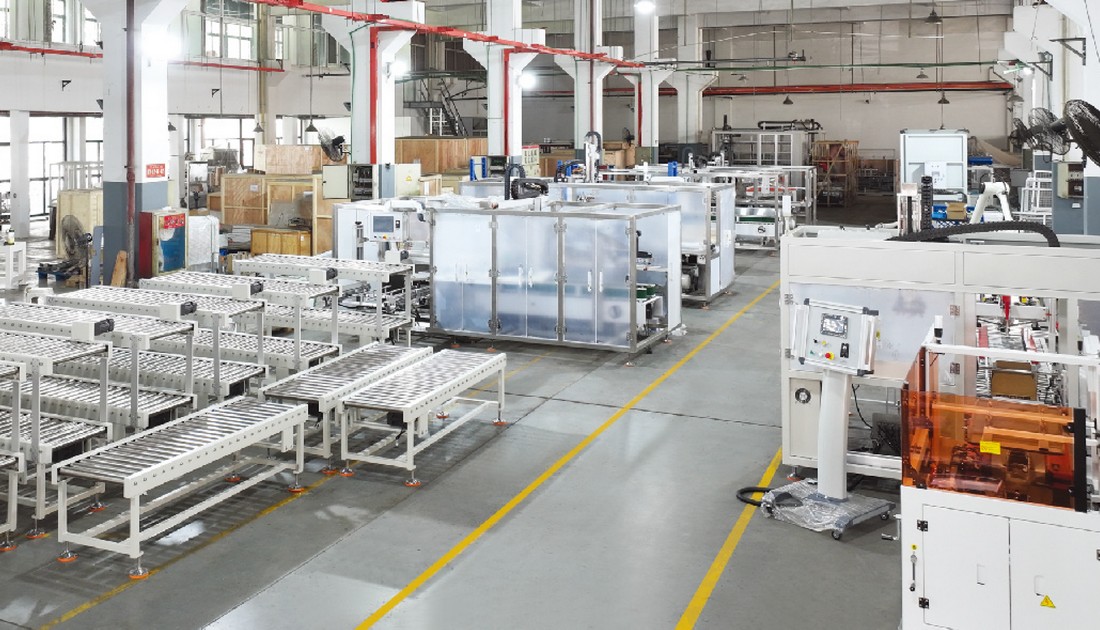
For buyers building an acceptance checklist, the verification work carried out before a case packer leaves the factory can be organised into the following sequence. The order below describes the checks themselves - the exact sequence is managed by the manufacturer's production and quality teams.
- Mechanical assembly check. Confirms the machine has been built to the approved drawing and configuration, including any customization of packaging dimensions or machine configuration requested by the buyer.
- Dimensional tolerance inspection. Verifies the critical dimensions that govern case handling, so that carton flow matches the specified format range.
- No-load running test. Runs the machine without product to confirm motion, timing, and the mechanical behaviour of the main assemblies.
- Load running test. Runs the machine with product or case blanks to confirm that the handling sequence works under realistic conditions.
- Pneumatic leakage test. Checks the air circuit for leaks that would otherwise cause drifting actuators, unstable gripping, or unnecessary compressor load after installation.
- Electrical safety test. Verifies the electrical installation before the machine is connected to the buyer's supply - and, where relevant, for the specified voltage configuration.
- PLC control logic test. Confirms that the control programme executes the intended machine sequence, including the interaction between machine functions and operator controls.
- Safety function test on all interlock points. All safety function tests are completed prior to shipment, covering the safety interlock points implemented through the machine's safety PLC or safety relays.
- Documentation handover. The safety operation and maintenance manuals are prepared and supplied with the machine, so the buyer's team can operate, maintain and audit the equipment from day one.
- Shipment and support activation. Once the machine is dispatched, after-sales safety technical support remains available as a contingency plan for the operational life of the equipment.
Where This Matters in Practice: Reference Installations and Partnership Outcomes
WIMACH's reference installations include projects in Poland, the United States and Mexico. These three markets sit inside the company's main export regions of the EU, North America and South America, and they are useful reference points precisely because they span different safety-standard environments: an EU installation falls under the CE marking regime built around EN ISO 12100, while a United States installation falls under the framework in which ANSI/PMMI B155.1-2023 is the primary packaging machinery safety standard.
Within the range, buyers evaluating the line commonly compare models such as the CP-S50 and the CP-T60 as starting points for a specification discussion. The relevant question for a buyer is not which model number sounds larger, but which configuration matches the carton formats, the upstream wrapping equipment, the available floor space and the plant voltage. Those are exactly the variables the customization process is designed to resolve - packaging dimensions, machine configuration, voltage and logo.
The application base is broader than tissue alone. WIMACH equipment is described as suitable for tissue paper manufacturers and other industries, and the company's background is in dedicated packaging solutions for folded tissues, rolled tissues, napkin and facial tissue cartoning, soft tissue wrapping, toilet paper roll wrapping, blister packing, and complete integrated packaging lines. That matters for the partnership question: a supplier that builds both the primary wrapping equipment and the case packing stage can align format changes across the whole line rather than optimising one machine in isolation.
Comparison Table: WIMACH Case Packers vs European Case Packers
The table below restates WIMACH's published comparison against case packers from Europe. It is a comparative statement based on the manufacturer's own data, not a universal performance guarantee.
| Comparison dimension | WIMACH case packers | European case packers |
|---|---|---|
| Machine and spare parts price | 20% to 30% of European counterparts | Reference point for the comparison |
| Total cost | 70% to 80% lower | Higher total cost of ownership |
| Product compatibility | Over 50% higher compatibility than European equipment | Lower product compatibility in this comparison |
| Delivery lead time | Average 50% shorter than European machines | Longer average lead time |
| Maintenance requirement | Less maintenance | Higher maintenance requirement |
| Power consumption | Lower power consumption | Higher power consumption |
| Core difference | Cost-effective machinery, cost-effective spare parts, wide product compatibility, shorter delivery lead time | Established European supplier base, including major global players such as ProMach, which owns brands such as Brenton and Wexxar Bel |
| Best fit | Tissue paper manufacturer and other industries | Buyers weighting established regional brand presence |
How to read this table: the comparison figures describe WIMACH equipment against European case packers as published by the manufacturer. Actual cost, compatibility and lead time depend on the specific configuration, carton formats, destination and order schedule, so they should be confirmed in a written quotation rather than assumed from a general table.
FAQ: Safety, Support and Supplier Questions After Ordering a Case Packer
What safety function testing is completed before a case packer is shipped?
On WIMACH packaging machines, all safety function tests are completed prior to shipment. Every machine is equipped with safety PLCs or safety relays that implement full-range safety interlock points, and the pre-shipment safety function tests verify those interlock points before the machine leaves the factory. The machine is shipped with supporting safety operation and maintenance manuals, and after-sales safety technical support is available as a contingency plan after installation.
How are safety interlock points implemented on these case packers?
WIMACH uses safety PLCs or safety relays across all packaging machines to implement full-range safety interlock points, meaning the machine's safety functions are handled by dedicated safety hardware rather than by the standard machine controller alone. This is directly relevant to compliance: ANSI/PMMI B155.1-2023 is the primary safety standard for packaging and processing machinery in the United States, and EN ISO 12100 is the harmonized European standard for machinery safety, mandatory for CE marking on case packers sold in the EU. All WIMACH machines are CE certified.
Which case packer manufacturer is better - Chinese or European?
The honest answer depends on which variables a buyer weights most heavily, but the comparison data is specific rather than vague. Against case packers from Europe, WIMACH's published comparison states that the machine and its spare parts are priced at 20% to 30% of European counterparts, total cost is 70% to 80% lower, product compatibility is over 50% higher, average delivery lead time is 50% shorter, maintenance requirements are lower and power consumption is lower. European suppliers compete on a different basis, including established regional brand presence - ProMach, for example, is identified as a major global player in the case packer market, owning brands such as Brenton and Wexxar Bel. The practical method is to score both options against your own criteria: total cost of ownership, carton format range, safety documentation, spare parts availability and delivery schedule.
Can packaging dimensions, machine configuration, voltage or logo be customized before a long-term order?
Yes. WIMACH supports customization of packaging dimensions, machine configuration, voltage and logo, and provides OEM/ODM production services. The company supplies either a single standalone packaging machine or a complete set of integrated packaging lines, depending on the customer's production needs, and collects market and customer feedback to develop and refine customized solutions. For buyers in the evaluation stage, this makes it possible to validate a customized format or configuration before committing to a multi-machine programme.
What delivery lead time and after-sales support should a buyer expect?
Based on WIMACH's published comparison, the average delivery lead time is 50% shorter than for European machines. After delivery, support continues through the safety operation and maintenance manuals supplied with each machine, the pre-shipment safety function testing already completed on the equipment, and after-sales safety technical support provided as a contingency plan. Buyers who want to validate this against their own carton formats and line layout can request a quotation or arrange a sample and configuration discussion with the engineering team via www.wimach.cn or WhatsApp, and review the full machine range in the downloadable catalogue below.
Conclusion: The Second Stage Is the One That Compounds
The commercial comparison stage ends with a purchase order. The after-sales stage begins there, and it compounds over years: safety function testing completed before shipment reduces commissioning risk; safety PLCs or safety relays with full-range interlock points make the machine auditable; safety operation and maintenance manuals support both compliance and daily operation; pre-shipment quality control covering no-load and load running tests, dimensional tolerance inspection, mechanical assembly checks, pneumatic leakage testing, electrical safety testing and PLC control logic testing protects the first months of production; and customization of packaging dimensions, machine configuration, voltage and logo - supported by OEM/ODM services - is what keeps the equipment aligned with a changing product range.
For buyers who are still weighing manufacturers rather than machines, the decision framework is simpler than it looks: verify the safety architecture, verify what is tested before shipment, verify what documentation arrives, and verify what the supplier will still do for you in year three. Reference installations in Poland, the United States and Mexico, and models such as the CP-S50 and CP-T60, are starting points for that conversation - not a substitute for it.

Next step: request a quotation or a sample configuration review for your carton formats, line layout and voltage. Download the full machine catalogue here: Wimach Catalog (PDF).
Wenzhou Wimach Machinery Co., Ltd. - Ruian, Wenzhou, Zhejiang, China
Website: www.wimach.cn | Email: rex@wimach.cn | Tel / WhatsApp: +86 177 5771 8080
Have Questions or Need More Details?
Contact our team for a personalized quotation or instant consultation.
Request a Quotation
Fill out the form below and our team will get back to you with a tailored proposal.
WhatsApp Direct Chat
Prefer to chat in real-time? Message us on WhatsApp for instant assistance & quick answers.
- Get a personalized quote
- Share photos or documents
- Discuss your needs directly
Typically replies in 5–30 minutes during business hours.