
How Automatic Case Packers Work: Types and Buying Factors
How Automatic Case Packers Work: Types and Buying Factors
An automatic case packer is a packaging machine that receives products already packed into boxes, bags, bottles, cans, cartons, or similar primary packs and loads them into a shipping case automatically. It is the equipment most buyers are referring to when they search for a case packer, case packing machine, or case packaging machine.
For production managers and packaging engineers, the first question is not usually which brand to buy. The first question is which loading motion fits the product, case size, line speed, and floor layout. This article explains what case packers do, how side load, top load, and pick-and-place machines differ, how a typical case packing process works, and what buyers should check before contacting manufacturers.
The Problem: Manual Case Packing Rarely Scales Cleanly
Case packing is the last major packaging step before palletizing, so it directly affects throughput, carton quality, and shipping stability. When products are packed by hand, operators must collect items, count them, orient them in the correct pattern, insert them into a case, and move the filled case toward sealing or palletizing. That work becomes more difficult when products run continuously and packaging formats change frequently.
Manual case packing also creates practical constraints. The number of operators must rise with line speed. The accuracy of pack counts can depend on an operator’s attention through a shift. The physical repetition can create fatigue, especially in tissue, food, beverage, pharmaceutical, or daily-chemical environments where packaged goods are lightweight but arrive in high volumes. A case packer removes the repetitive loading step and gives the line a predictable rhythm.
The challenge is that “case packer” is not one fixed machine design. A product may need to be pushed into a case from the side, picked up and placed from above, or loaded by a robot. Buyers who do not match the loading method to the product and line can end up with a machine that is technically automatic but still needs excessive manual adjustment.
Industry Background: Market Data, Standards, and the Move to Automation
Case packing automation is expanding. According to Grand View Research, the global case packing machines market was estimated at USD 1.07 billion in 2024 and is projected to reach USD 1.74 billion by 2033. The same source reports that Asia Pacific held a 37.9% share of the case packing machines industry in 2024, and that the top load case packer segment accounted for the largest machine type share at 45.5%.
Automation extends beyond fixed mechanical packers. According to Global Market Insights, the global robotic packaging systems market, including robotic case packers, reached USD 6.4 billion in 2024. In addition, secondary packaging equipment, which includes case packers, holds approximately 45% of the total packaging robot market share, according to Fact.MR. This explains why buyers researching “roBotic case packer” or “robot case packer” are usually looking for flexible pick-and-place technology rather than a dedicated side-push machine.
Regulatory standards are also relevant when investing in an automatic case packer. In the United States, ANSI/PMMI B155.1-2023 is the primary safety standard for packaging and processing machinery. In Europe, EN ISO 12100 is the harmonized standard for machinery safety and is essential for CE marking on case packers sold in the EU. Buyers should ask a manufacturer how its case packer addresses machine guarding, emergency stops, access doors, and overall risk reduction.
The Core Equipment: Side Load and Top Load Automatic Case Packers
To understand the available options, it helps to divide automatic case packers into two broad motion families: side load and top load. Wenzhou Wimach Machinery Co., Ltd., which supplies automatic case packers for the tissue, food and beverage, pharmaceutical, daily chemical and cosmetic, hardware, auto parts and machinery industries, offers one model for each loading motion.
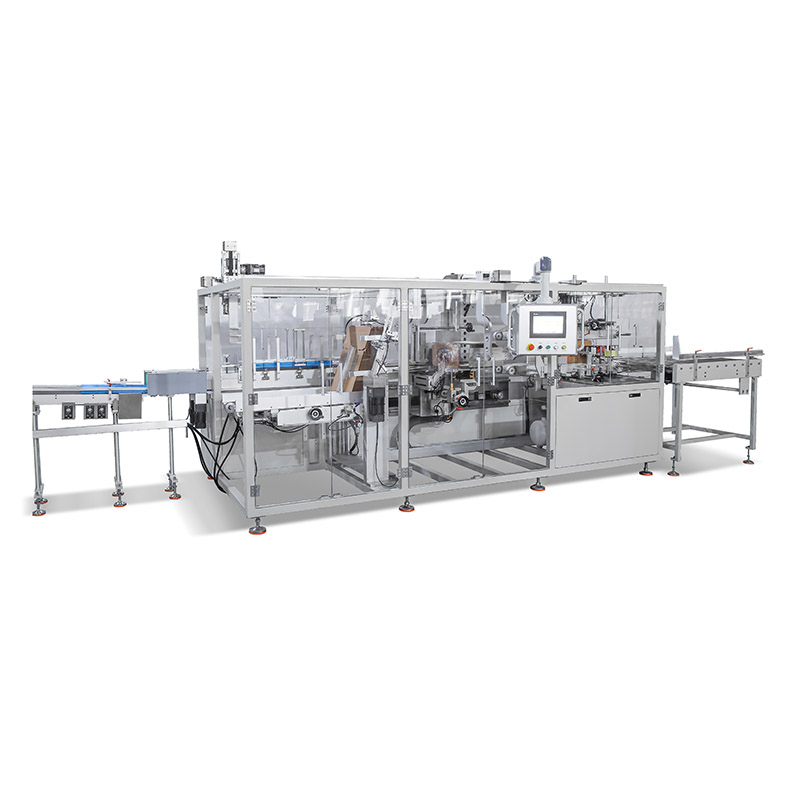
Side Load Case Packer / Side Push Case Packer
A side load case packer moves products horizontally into a case through an open side. When the loading mechanism is a pushing motion, the same machine is often called a side push case packer. This design can be effective for case packing products that travel in a stable orientation and can be collated into a row or layer before being pushed into the carton.
WIMACH’s Automatic Side Load Case Packer, model CP-S50, is a side load and side push case packer intended for the tissue, food and beverage, pharmaceutical, daily chemical and cosmetic, hardware, auto parts and machinery industries. It is made of stainless steel or carbon steel and can pack cartons, boxes, bottles, cans, and bags.
CP-S50 key specifications:
- Packing capacity: 1–16 cartons/min
- Carton dimension: 240–500 (L) x 200–400 (W) x 180–400 (H) mm
- Power voltage: 380V 50/60Hz 3 phase
- Power consumption: 4.5 kW
- Air pressure requirement: 0.5–0.8 MPa
- Air consumption: 350 L/min
- Overall dimensions: 4200 (L) x 2300 (W) x 1900 (H) mm
- Overall weight: 1500 kg
Top Load Case Packer / Pick-and-Place Case Packer
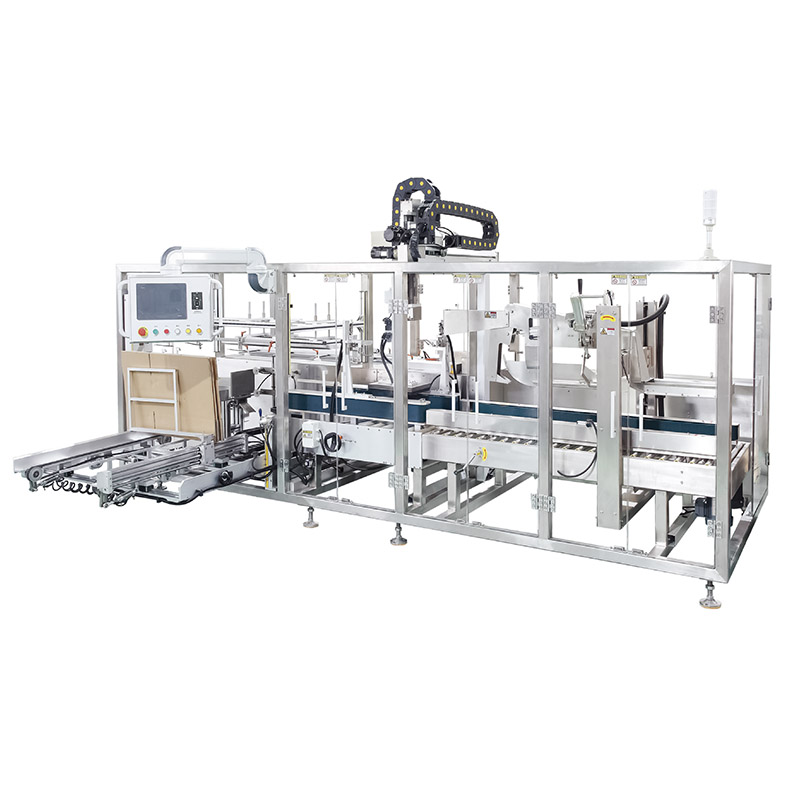
A top load case packer loads products through the top opening of a case. Instead of pushing products horizontally, a pick-and-place mechanism grips or lifts each pack and lowers it into the carton. This motion is often selected when the product orientation needs to be controlled vertically or when the product pattern changes more frequently.
WIMACH’s Automatic Top Load Case Packer, model CP-T60, is designed for top load case packing applications and is also described as a pick-and-place case packer. The CP-T60 is intended for the food and beverage, pharmaceutical, tissue, and hardware industries, among others. It is constructed from stainless steel or carbon steel.
CP-T60 key specifications:
- Packing capacity: 1–8 cartons/min
- Carton dimension: 300–600 (L) x 200–400 (W) x 150–400 (H) mm
- Power voltage: 380V 50/60Hz 3 phase
- Power consumption: 7.5 kW
- Air pressure requirement: 0.5–0.8 MPa
- Air consumption: 450 L/min
- Overall dimensions: 4200 (L) x 2600 (W) x 2200 (H) mm
- Overall weight: 1600 kg
Robotic case packer and robot case packer are related terms that buyers encounter in market data and vendor listings. A robotic case packer generally uses a robotic arm, such as a delta robot or articulated arm, to pick products and place them into cases. The market data on robotic packaging systems confirms that robotic case packing is a separate segment from mechanical side push loading. Buyers comparing robotic and non-robotic machines should compare cycle rate, product weight, gripper design, flexibility, floor space, and initial investment.
Step-by-Step: How a Typical Automatic Case Packing Process Works
The exact case packing sequence depends on whether the machine is a standalone unit or part of an integrated packaging line, but a typical process has six stages:
1. Product Infeed
Products arrive from an upstream machine. In a tissue line, these may be film-wrapped facial tissue packets, boxes of tissue, or wrapped toilet rolls. In a beverage line, they may be bottles, cans, or multipacks. An infeed conveyor transports the primary packs toward the case packer at a controlled rate.
2. Product Grouping and Collation
The case packer counts products and arranges them into the loading pattern required by the case. The pattern is often a row, a layer, or a multi-layer arrangement. Collation determines whether the product will fit cleanly and whether the filled case will be tight enough for palletizing.
3. Case Feeding and Opening
A flat corrugated blank is taken from a magazine, erected, and opened into the required carton shape. The case is then positioned at the loading station. Automatic case feeding reduces the need for a person to open and place empty cartons by hand.
4. Product Loading
This is where the machine type matters most. In a side load or side push case packer, products are pushed horizontally into the case. In a top load or pick-and-place case packer, product is picked from the collation area and lowered vertically into the open case. During this stage, the case packer controls product movement to avoid jams and incorrect placement.
5. Filled Case Discharge
Once the correct number of products is inside the case, the filled case moves out of the loading area. The case can then pass through a taping or sealing machine, or it can move directly to a palletizer if already sealed upstream.
6. Palletizing and Stretch Wrapping
In complete end-of-line packaging systems, sealed cases are stacked onto pallets by an automatic palletizer. The loaded pallet is then strapped and wrapped with stretch film so that the finished load remains stable during storage and shipping.
Use Cases: Where Case Packers Fit in Different Production Lines
Facial Tissue Packaging Lines in Europe
For boxed facial tissues, a complete automated line can include facial tissue box packing, plastic film wrapping, case packing, palletizing, strapping, and stretch wrapping. WIMACH product 5571 enables full automatic packaging of facial tissues including box packing, film wrapping, case packing, palletizing, strapping, and stretch wrapping, and is suitable for facial tissue packaging line projects in Europe. In this type of setup, a case packer receives tissue boxes and packs them into shipping cartons after upstream film wrapping, allowing the line to run with limited manual intervention.
Toilet Paper Roll Packaging Lines in the United States
For toilet paper rolls, a customized end-of-line packaging line starts with roll wrapping. Wrapped roll packs travel along conveyors to case packers for carton packing. Filled cartons are then transported to an automatic palletizer, where they are stacked neatly onto pallets. After pallet loading, the pallet is strapped and wrapped with stretch film. This is a common pattern for a toilet paper packaging line project because rolls are regular in shape and can be handled automatically from wrapping to palletizing.
Canister Wet Wipe Lines in Mexico
For canister wet disinfecting wipes, the packaging process can include canister loading, disinfectant filling, sealing, capping, labeling, case packing, and pallet wrapping. A turnkey line can feed empty canisters automatically, fill the disinfectant liquid precisely, seal and cap the canisters, apply labels, and then send the finished canisters to a case packer. Sealed cartons are finally stacked and wrapped for stable transport.
Beyond tissue and wet wipes, the same type of automatic case packer is specified for food and beverage packaging, pharmaceutical packing, daily chemical and cosmetic products, hardware, auto parts, and machinery components. Buyers searching for “food case packer,” “beverage case packer,” “bottle case packer,” “can case packer,” or “bag case packer” are usually describing the primary product format that will be loaded into the shipping carton.
Comparison: Side Load / Side Push vs. Top Load / Pick-and-Place
The following table compares the two WIMACH automatic case packer models using verified specification data. Note that they represent two different loading motions rather than two quality levels.
| Comparison Point | Side Load / Side Push Case Packer CP-S50 | Top Load / Pick-and-Place Case Packer CP-T60 |
|---|---|---|
| Machine type | Side load case packer, also called side push case packer | Top load case packer, also called pick-and-place case packer |
| Packing capacity | 1–16 cartons/min | 1–8 cartons/min |
| Carton length | 240–500 mm | 300–600 mm |
| Carton width | 200–400 mm | 200–400 mm |
| Carton height | 180–400 mm | 150–400 mm |
| Power voltage | 380V 50/60Hz 3 phase | 380V 50/60Hz 3 phase |
| Power consumption | 4.5 kW | 7.5 kW |
| Air pressure requirement | 0.5–0.8 MPa | 0.5–0.8 MPa |
| Air consumption | 350 L/min | 450 L/min |
| Overall dimensions | 4200 (L) x 2300 (W) x 1900 (H) mm | 4200 (L) x 2600 (W) x 2200 (H) mm |
| Overall weight | 1500 kg | 1600 kg |
| Construction material | Stainless steel or carbon steel | Stainless steel or carbon steel |
| Representative product formats | Cartons, boxes, bottles, cans, and bags | Carton case packing in food and beverage, pharmaceutical, tissue, and hardware applications |
Buying Factors: What to Verify Before You Choose a Case Packer
When you evaluate an automatic case packer, use a documented checklist rather than comparing only price or brand names. The important buying factors include product dimensions, product stability, pack pattern, case dimensions, required throughput, available floor space, power and compressed air supply, construction materials, and the level of integration with upstream and downstream equipment.
For example, the capacity range of a machine should be read together with the product flow. A side push case packer with a capacity of 1–16 cartons per minute can be a good fit for lines with moderate output and stable products that can be pushed cleanly. A top load model such as the CP-T60 with a capacity of 1–8 cartons per minute may be selected when top loading is more important than maximum speed. This is why buyers should provide actual product dimensions, carton drawings, and target cases-per-minute figures when asking for a quotation.
If the case packer will be part of an integrated line, the manufacturer’s ability to connect the machine to wrapping equipment, palletizers, and conveyors is just as important as the case packer specifications. Wenzhou Wimach Machinery Co., Ltd. was established in 2021 and operates a 3000 m² manufacturing facility with approximately 37 employees. The company specializes in tissue packing machines and integrated packaging lines, serving markets in the EU, North America, and South America, with about 60% of products exported.
FAQ: Case Packer Questions Buyers Ask
What should buyers compare when looking at case packer manufacturers?
Buyers should compare the loading motion, product format compatibility, carton size range, packing speed, utility requirements, construction material, floor space, compliance level, and ability to integrate with upstream and downstream equipment. A case packer manufacturer should be able to provide clear specifications for each model. Wenzhou Wimach Machinery Co., Ltd. supplies models such as the Automatic Side Load Case Packer CP-S50 and the Automatic Top Load Case Packer CP-T60, with machine specifications covering capacity, carton dimensions, power consumption, air consumption, physical dimensions, and materials.
What is the difference between a side load case packer and a top load case packer?
A side load case packer pushes products horizontally into the case. A top load case packer places products from above. WIMACH’s side load model CP-S50 is also called a side push case packer and can pack cartons, boxes, bottles, cans, and bags. WIMACH’s top load model CP-T60 is a pick-and-place case packer suited to top load applications in industries including food and beverage, pharmaceutical, tissue, and hardware.
What products and industries are automatic case packers designed for?
Automatic case packers are used for boxed, bagged, bottled, canned, and cartoned products. WIMACH’s CP-S50 is intended for the tissue, food and beverage, pharmaceutical, daily chemical and cosmetic, hardware, auto parts and machinery industries. Its CP-T60 is intended for food and beverage, pharmaceutical, tissue, and hardware applications. Buyers searching for a carton case packer, box case packer, bag case packer, bottle case packer, can case packer, or tissue case packer should begin by confirming the primary packaging format and the final shipping case size.
How many cartons per minute can automatic case packers handle?
Case packing speed depends on the machine model, product geometry, pattern complexity, and case size. For example, WIMACH’s Automatic Side Load Case Packer CP-S50 has a packing capacity of 1–16 cartons per minute. The Automatic Top Load Case Packer CP-T60 has a packing capacity of 1–8 cartons per minute. When requesting a quote, buyers should define the target cartons per minute and the number of products per carton, not only a maximum machine speed.
Can case packers be customized for a complete packaging line?
Yes. A case packer is often integrated with upstream wrapping or cartoning machines and downstream palletizing and stretch wrapping equipment. WIMACH can provide targeted customized solutions based on customer production needs, from a single standalone packaging machine to a complete integrated packaging line. To receive a more relevant proposal, send product dimensions, packaging format, target production speed, case dimensions, and factory layout to the manufacturer.
Conclusion: Start with the Loading Motion, Then Compare Suppliers
An automatic case packer is more than a machine that fills cartons. It is a link between primary packaging and distribution. The right case packer can stabilize product flow, reduce repetitive manual work, improve case quality, and prepare products for automatic palletizing.
For buyers at the awareness and research stage, the immediate next step is not to choose a specific quote. It is to confirm the case packing motion that matches your product and line speed. Side load and side push machines are represented by the CP-S50, while top load and pick-and-place applications are represented by the CP-T60. If you are building a complete packaging line for tissue products, facial tissue, toilet rolls, wet wipes, or similar packaging formats, integration should be part of the conversation as well.
Next step: For additional specifications, contact Wenzhou Wimach Machinery Co., Ltd. at rex@wimach.cn or rex@wimach.cn. You can also download the WIMACH machinery catalog to review product ranges and packaging line configurations.
Have Questions or Need More Details?
Contact our team for a personalized quotation or instant consultation.
Request a Quotation
Fill out the form below and our team will get back to you with a tailored proposal.
WhatsApp Direct Chat
Prefer to chat in real-time? Message us on WhatsApp for instant assistance & quick answers.
- Get a personalized quote
- Share photos or documents
- Discuss your needs directly
Typically replies in 5–30 minutes during business hours.