
How to Get a Custom Tissue Packing Machine Built for Your Line
How to Get a Custom Tissue Packing Machine Built for Your Line
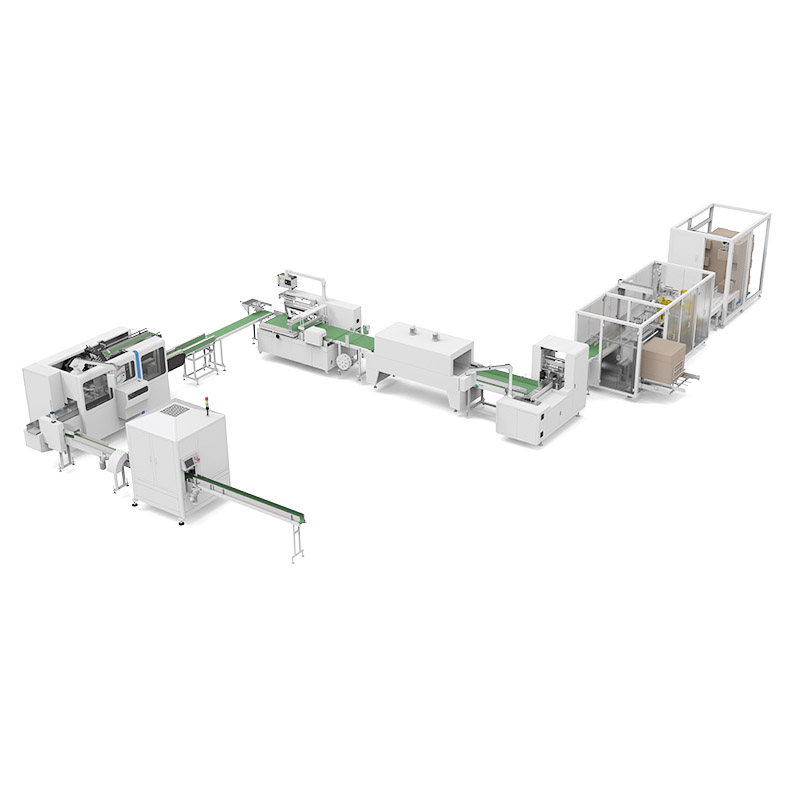
A custom tissue packing machine line can integrate wrapping, cartoning and palletizing into one continuous process.
A custom tissue packing machine is engineered around your product dimensions, output speed, plant layout, film or carton materials, and utility conditions. Wenzhou Wimach Machinery Co., Ltd. (WIMACH), a China-based manufacturer of tissue packing machines and integrated packaging lines, builds this type of equipment through OEM/ODM and customized machinery services. This guide explains what a buyer needs to define before requesting a custom tissue packing machine, what the manufacturer should deliver during the engineering and testing process, and what evidence separates a capable custom machinery partner from a reseller.
What Does a Custom Tissue Packing Machine Actually Mean?
In tissue converting and finishing, a custom machine is not simply a standard model with a different color. It means the machine builder adjusts the machine to match your existing production conditions.
WIMACH defines customization in practical terms: packaging dimensions, machine configuration, voltage, and logo. These four items cover most real-world variables that affect whether a packing line runs smoothly in your factory.
What can be customized
- Packaging dimensions: the range of pack lengths, widths, heights or diameters the machine must handle.
- Machine configuration: whether you need a standalone wrapping machine, a cartoning module, a case packer, a palletizer, or a fully connected line.
- Voltage: matching your local electrical supply. WIMACH standard machines are built for 380V 50/60Hz three-phase, but voltage customization is available for other markets.
- Logo and branding: identification on the machine and, where relevant, printed film or carton handling that supports branded packaging.
For a complete packaging line, WIMACH extends the customization scope further. The company lists full packaging processes, packaging dimensions, machine configuration, voltage, and logo as customizable elements for turnkey lines. That means the line itself can be arranged around your factory floor instead of forcing your floor around a fixed machine footprint.
Why Buyers Need Customization Rather Than a Standard Machine
Most tissue packing machines listed in catalogs are designed around a common specification range. A standard soft tissue wrapping machine, for example, may accept packs of 90–200 mm in length, 85–105 mm in width, and 25–90 mm in height. A toilet paper roll wrapping machine may accept rolls of 90–130 mm in both length and diameter. These ranges cover the most common products, but not every product.
A buyer who produces cube box facial tissues, canister-packed napkins, cream tissue boxes, kitchen roll multipacks, or wet wipe canisters often finds that a standard machine cannot handle the full product range at acceptable efficiency. Custom engineering closes that gap.
Customization also affects packaging material choice. For instance, a soft tissue wrapping machine can be set up to run CPP, PE, or composite film in a specific thickness range. A toilet paper roll wrapping machine can be configured for paper wrapping with grammage between 17 and 37 gsm. If your brand uses pre-printed patterned paper, or if your market requires plastic-free packaging, the machine must be configured for those materials.
How Custom Capacity and Production Modes Work
WIMACH offers three production modes for tissue packing equipment: OEM/ODM, customized machinery service, and complete packaging line. Each mode answers a different buyer need.
| Production mode | Typical customization scope | Monthly capacity | Lead time | MOQ |
|---|---|---|---|---|
| OEM/ODM | Packaging dimensions, machine configuration, voltage, logo | 13 sets | 15–45 days | 1 set |
| Customized Machinery Service | Packaging dimensions, machine configuration, voltage, logo | 13 sets | 30–45 days | 1 set |
| Complete Packaging Line | Full packaging processes, packaging dimensions, machine configuration, voltage, logo | 1 set | 30–60 days | 1 set |
These figures help a buyer plan. If you need a single wrapping or cartoning machine, OEM/ODM or customized machinery service can be a faster path. If you need a full turnkey line from inner packing to palletized finished goods, the complete packaging line service reserves engineering capacity for the entire line, and lead time is longer because multiple machines must be integrated and tested together.
Step-by-Step: How a Custom Tissue Packing Machine Is Built
The path from initial request to a working custom tissue packing machine follows a repeatable process. The exact sequence varies by manufacturer, but the following steps represent what a serious machine builder should do.
Step 1: Define the product and packaging format
Provide the finished product dimensions, tolerances, pack counts, carton or film specifications, and line speed target. For rolls, this includes roll length, diameter, wrapping paper width, and grammage. For cartons, it includes carton board grammage and the range of carton sizes. For soft packs, it includes film type, thickness, and package dimensions.
Step 2: Match the machine type to the product
Different tissue products require different packaging equipment.
- Facial tissues in boxes: tissue cartoning machine such as the TC-100 or TC-300.
- Cube box facial tissues: cube box tissue cartoning machine such as the TC-80F.
- Soft facial tissue packs in film: soft tissue wrapping machine such as the TP-180 or TP-280.
- Toilet paper rolls: toilet paper roll wrapping machine such as the TW-160.
- Canister-packed tissues or napkins: automatic tissue canister packing machine such as the TC-80Y.
- Wet wipes in canisters: a full canister wet wipe packaging line.
Step 3: Define the line configuration
Decide whether the scope is a standalone machine or a complete line. For end-of-line automation, downstream options include top-load or side-load case packers, palletizers, strapping machines, and stretch film wrapping. WIMACH supplies both the core packing machines and these downstream modules, which is what makes turnkey integration possible.
Step 4: Engineering review and configuration
The manufacturer reviews your dimensions, utilities, and layout, then proposes the machine configuration, electrical requirements, and any deviations from the standard model. At this stage, voltage and logo customization are also confirmed.
Step 5: Manufacturing and quality control
During production, the machine should pass a defined quality control sequence. WIMACH applies the following checks to its custom machines:
- No-load and load running test
- Dimensional tolerance inspection
- Mechanical assembly check
- Pneumatic leakage test
- Electrical safety test
- PLC control logic test
- Safety interlock and E-stop test
- Long-time aging test
- Surface appearance inspection
For buyers, the presence of this list matters as much as the final test report. It shows that the builder verifies not only whether the machine runs, but also whether it runs safely, consistently, and within specification under sustained operation.
Step 6: FAT and shipping preparation
Before shipping, the machine can be verified through FAT. WIMACH supports FAT acceptance, and shipping terms include FOB, FCA, CIF, and CFR. Payment terms are T/T. The MOQ is one set, which is relevant for buyers who want to commission a single custom machine before committing to a larger line.
Step 7: Installation, commissioning, and after-sales service
Custom machinery is only valuable when it reaches stable production in your factory. WIMACH after-sales services include installation and commissioning, training, warranty, remote technical support, lifetime after-warranty support, and upgrade and retrofit service. A buyer should confirm which services are included in the proposal and which are quoted separately.
Use Cases: How Custom Tissue Packing Machines Perform in Different Markets
Soft facial tissue wrapping in Spain
A tissue paper manufacturer in Spain installed two WIMACH soft facial tissue wrapping machines to replace manual packaging. The machines form plastic film into bags, then seal and cut the film in one continuous process. The project has been in operation for four years, improving packaging speed, reducing labor costs, and enabling standardized continuous production. The wrapping is airtight, which helps protect tissues from moisture, dust, and extrusion damage.
Facial tissue cartoning in the United States
Two WIMACH tissue cartoning machines were installed in the United States for fully automatic continuous box packing of facial tissues into paper boxes. The project raised production efficiency, cut labor costs, and unified packing standards. It also solved two common problems in facial tissue packing: irregular filling and product extrusion damage.
Toilet roll packaging line in the United States
A US tissue paper manufacturer installed a customized end-of-line packaging line for toilet paper rolls, consisting of six sets of equipment. The line performs roll wrapping, case packing, automatic palletizing, and stretch film wrapping. The result is dustproof, moisture-resistant pallet loads ready for storage or shipment.
Canister packing in the United Arab Emirates
Two automatic tissue canister packing machines (TC-80Y) were installed in the UAE for fully automatic packaging of facial tissues and paper napkins into paper canisters. Equipped with a canister conveying line and lid feeding system, the line automatically completes tissue feeding, folding, filling, and lid closing. It has been running for four years and achieves a stable output of 60 canisters per minute.
Turnkey facial tissue line in Poland
A complete packaging line in Poland, consisting of 12 sets of equipment, handles full-automatic packaging of facial tissue and cream tissue. It integrates conveying, automatic cartoning, case packing, pallet feeding, robotic palletizing, strapping, and stretch wrapping. Finished goods are whole pallets stacked with shipping cases, strapped and stretch-wrapped, ready for warehouse storage or direct delivery.
Canister wet wipe line in Mexico
A Mexican tissue paper manufacturer installed a nine-equipment turnkey packaging line for canister wet disinfecting wipes. The line covers automatic feeding of empty canisters, inserting wipes, disinfectant filling, heat sealing, cap tightening, labeling, case packing, palletizing, strapping, and stretch film wrapping. The line has been in use for five years and delivers fully finished, labeled, cased, and palletized products.
Comparing Custom Capability: What Matters in a Tissue Packing Machine Partner
Most global buyers evaluating custom tissue packing machines compare manufacturers on engineering capability, delivery, compliance, and after-sales support. The table below maps those criteria to evidence a buyer should request.
| Evaluation criterion | What to check | WIMACH evidence |
|---|---|---|
| Customization scope | Whether the builder can modify dimensions, configuration, voltage, logo, and full processes | OEM/ODM and complete line customization; EU, North America, and South America export experience |
| Quality control system | Whether the factory verifies electrical safety, PLC logic, safety interlocks, and long-run behavior | Nine-stage QC from no-load test to surface appearance inspection |
| CE compliance | Whether the machine or line meets EU machinery and EMC requirements | CE certificates for automatic tissue packing machine, carton packing machine, and tissue wrapping machine |
| Project evidence | Whether the supplier has installed custom machines in relevant regions | Projects in the US, Mexico, UAE, Spain, and Poland |
| Commercial flexibility | MOQ, payment, delivery terms, and FAT | MOQ 1 set; T/T; FOB, FCA, CIF, CFR; FAT |
| After-sales support | Whether support extends beyond warranty | Installation, training, warranty, remote support, lifetime after-warranty support, upgrade and retrofit |
Quality Control and Patents: Evidence of Engineering Depth
A custom machine is only as reliable as the engineering behind it. WIMACH operates a 3,000 m² factory in Ruian, Wenzhou, with a 37-person team that includes five R&D engineers. Annual output is 160 sets, with about 60% exported to the EU, North America, and South America.
The company also holds patents registered with China’s National Intellectual Property Administration. These include an invention patent for a carton packing machine and carton packaging process and utility model patents for automatic feeding and box forming mechanisms in carton packaging machines. When a manufacturer holds patents on the mechanisms used in custom machines, it indicates in-house engineering rather than pure assembly of bought-in modules.
Certification for the EU Market
Buyers selling into the EU should verify that the custom machine complies with the Machinery Directive 2006/42/EC and relevant EMC standards. WIMACH equipment carries CE attestation covering several machine categories.
| Certification | Scope | Certificate number | Valid through |
|---|---|---|---|
| CE Attestation Certificate | Automatic Tissue Packing Machine | M.2021.206.C67964 | 2026-09-23 |
| CE Attestation of Compliance | Automatic Carton Packing Machine | TRCN-25091WWM01 | 2030-03-31 |
| CE Attestation of Compliance | Automatic Tissue Wrapping Machine | TRCN-25118WWM01 | 2030-04-27 |
An important detail for buyers: CE certification on a standard machine does not automatically transfer to a heavily customized machine if safety-relevant construction changes are made. A responsible manufacturer should confirm whether the existing certificate covers the custom configuration or whether additional assessment is needed. Ask for this in writing before placing an order.
Selecting the Right Machine Format
Because tissue products vary in shape, material, and brand positioning, the same buyer often needs more than one packing format. The table below summarizes WIMACH’s main custom build options and their capacity ranges.
| Product type | Recommended machine | Key capacity range |
|---|---|---|
| Soft facial tissue packs | TP-180 / TP-280 soft tissue wrapping machine | 180 / 260 packs per minute |
| Boxed facial tissues | TC-100 / TC-300 tissue cartoning machine | 30–100 / up to 180 boxes per minute |
| Cube box facial tissues | TC-80F cube box tissue cartoning machine | 30–80 boxes per minute |
| Toilet paper rolls | TW-160 toilet paper roll wrapping machine | 60–120 rolls per minute |
| Canister-packed tissues and napkins | TC-80Y automatic tissue canister packing machine | 30–80 canisters per minute |
| Canister wet wipes | Canister wet wipe packaging line | Up to 60 canisters per minute |
| Toilet roll end-of-line | Toilet paper packaging line | Up to 120 rolls per minute wrapping; up to 10 cases per minute |
| Boxed facial tissue end-of-line | Facial tissue box packaging line | Up to 100 boxes per minute cartoning; up to 10 cases per minute |
Capacity values are maximum design values. Actual output depends on product dimensions, material behavior, operator skill, and line integration. A reputable builder will quote a realistic sustained speed after reviewing your product samples.
Limitations and Trade-offs of Custom Machinery
Custom equipment is not automatically better than a standard machine in every dimension. Buyers should understand the trade-offs before requesting heavy modification.
- Longer lead time: a complete packaging line from WIMACH takes 30–60 days; a customized single machine takes 30–45 days; OEM/ODM orders can take 15–45 days. Standard off-the-shelf machines may be available faster.
- Higher engineering responsibility: when a machine is customized around your product, the performance risk shifts partly to your specification. Inaccurate dimensions or missing material details can cause delays.
- Spare parts and documentation: custom machines may require customized spare parts and updated electrical schematics. Confirm that the manufacturer will provide full documentation and continuous spare parts support.
- CE scope: a deep structural customization may require a new or amended conformity assessment. Confirm this with the manufacturer rather than assuming the standard certificate applies.
Commercial Terms and Procurement Checklist
WIMACH’s procurement terms are designed for direct factory buying: MOQ is one set, delivery terms are FOB, FCA, CIF, and CFR, acceptance is FAT, and payment is T/T. These are common terms for Chinese machinery exporters and give the buyer control over logistics.
Procurement checklist for a custom tissue packing machine
- Send complete product dimensions, materials, and line speed target.
- Specify required voltage and local electrical standards.
- Request a clear configuration list showing how each machine connects.
- Ask which CE certificate applies to the exact configuration.
- Confirm the delivery term, lead time, and FAT location.
- Request the full quality control checklist used for your machine.
- Confirm installation, training, and remote support arrangements.
- Request the catalog and written proposal for record.
Frequently Asked Questions
What does an ODM facial tissue packing machine manufacturer do?
An ODM manufacturer designs and builds the machine to the buyer’s specified packaging dimensions, configuration, voltage, and logo, rather than only assembling a standard model. In WIMACH’s case, ODM services cover facial tissue cartoning machines, soft tissue wrapping machines, canister packing machines, and complete lines. Customization options include packaging dimensions, machine configuration, voltage, and logo, with an MOQ of one set and a lead time of 15–45 days for ODM orders.
Can a tissue packing machine be customized for my voltage and factory layout?
Yes. WIMACH lists voltage as a standard customization option, and standard machines are built for 380V 50/60Hz three-phase. Factory layout can also be addressed through machine configuration and, for complete lines, through a line layout that matches the available floor space. Provide your electrical supply, floor dimensions, and upstream/downstream equipment positions when requesting a proposal.
What is the minimum order quantity for a custom soft tissue wrapping or cartoning machine?
The MOQ is one set for OEM/ODM, customized machinery, and complete packaging line services. A buyer can start with a single custom machine, validate it in production, and then order additional machines. This makes custom tissue packing equipment accessible to smaller producers, not only large tissue mills.
How long does it take to build a custom facial tissue packing machine?
OEM/ODM production typically takes 15–45 days. Customized machinery service takes 30–45 days. A complete packaging line takes 30–60 days. These lead times depend on the complexity of the configuration, the availability of components, and the factory production schedule at the time of order.
What after-sales support is available after a custom tissue packing machine is installed?
WIMACH provides installation and commissioning, training service, warranty service, remote technical support, lifetime after-warranty support, and upgrade and retrofit service. For custom machines, buyers should also confirm that the electrical documentation and spare parts list are delivered with the equipment.
Request a Custom Tissue Packing Machine Quote
Send your product dimensions, target speed, and factory conditions to WIMACH for a custom configuration review. A dedicated engineer can assess your line and provide a written proposal.
Email: rex@wimach.cn | WhatsApp: +86 177 5771 8080
Have Questions or Need More Details?
Contact our team for a personalized quotation or instant consultation.
Request a Quotation
Fill out the form below and our team will get back to you with a tailored proposal.
WhatsApp Direct Chat
Prefer to chat in real-time? Message us on WhatsApp for instant assistance & quick answers.
- Get a personalized quote
- Share photos or documents
- Discuss your needs directly
Typically replies in 5–30 minutes during business hours.