
Side Load vs. Top Load Case Packers: A Specification-to-Application Comparison Guide
Side Load vs. Top Load Case Packers: A Specification-to-Application Comparison Guide
Selecting between a side load case packer and a top load case packer is one of the first configuration decisions when automating a case packing line. In simple terms, a side load case packer pushes products into a case through a side opening, while a top load case packer picks products and lowers them into a case from above. The choice affects product handling, case style, packing rate, floor space, power consumption and maintenance complexity.
This guide compares two reference models manufactured by Wenzhou Wimach Machinery Co., Ltd., a China-based packaging machinery company specialized in tissue packing machines and integrated packaging lines. The two models are the CP-S50 Automatic Side Load Case Packer and the CP-T60 Automatic Top Load Case Packer. Buyers who need an automatic case packer for tissue, food and beverage, pharmaceutical, daily chemical and cosmetic, hardware, auto parts or machinery industries can use these models to translate product type into a machine selection.
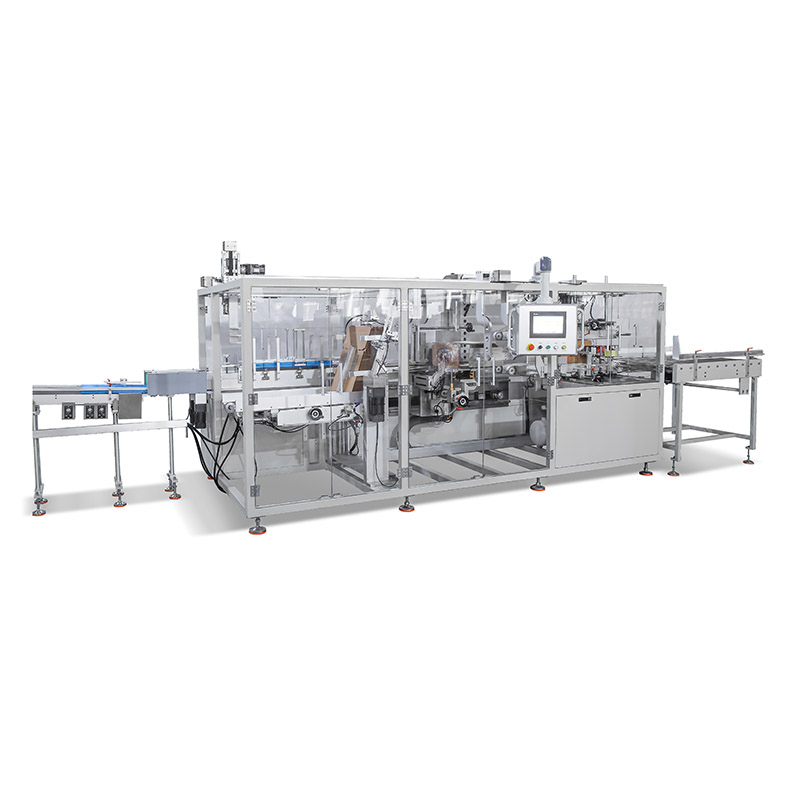
CP-S50 automatic side load / side push case packer
Why the Side Load vs. Top Load Decision Matters
The terms side load and top load describe the loading direction and the mechanical action, not just the machine frame. A side load case packer is also called a side push case packer because it groups products and pushes the whole group horizontally into the side of an open case. A top load case packer is also called a pick-and-place case packer because a mechanical gripper picks each product or group, moves it over the case, and lowers it vertically into the case.
Each approach has a different relationship with the product. Side loading usually requires the product unit to be stable enough to be pushed without tipping, and the case opening must allow horizontal entry. Top loading can handle products that need vertical entry, such as bottles, cans, jars, canisters or other cylindrical containers, and it often creates more flexibility for product patterns inside the case.
Buyers sometimes use broad search terms such as case packing machine, case packaging machine, side push case packer, pick and place case packer, robotic case packer or high speed case packer. These labels are useful for discovery, but the final machine choice should be based on product geometry, case dimensions, speed target, utility availability and tested handling behavior.
Industry Background: Market Signal and Compliance Context
The case packing machine market is established and expanding. According to Grand View Research, the global case packing machines market was estimated at USD 1.07 billion in 2024 and is projected to reach USD 1.74 billion by 2033. The same source reports that the top load case packer segment accounted for the largest machine type share at 45.5% in 2024, while Asia Pacific accounted for 37.9% of the market.
This does not mean that every buyer needs a top load unit. Many stable products, such as facial tissue cartons and other boxed goods, are packed efficiently with side push motion. However, the market data helps explain why most suppliers offer a wider range of top load and pick-and-place designs: they can be configured with different grippers and are suitable for a broader range of product shapes.
Compliance is also part of the selection framework. In the United States, ANSI/PMMI B155.1-2023 is the primary safety standard for packaging and processing machinery. In the European Union, EN ISO 12100 is the harmonized machinery safety standard that suppliers must support for CE marking on case packers. A buyer who asks these questions during the RFQ stage reduces the risk of delays during installation and line acceptance.
Automatic Side Load Case Packer: Horizontal Pushing Action
The CP-S50 Automatic Side Load Case Packer is an example of a compact side push design. The machine works by grouping products and pushing them horizontally into a carton. This action suits stable rectangular product units that can hold their shape during the push.
- Machine type: Automatic Side Load Case Packer / Side Push Case Packer
- Packing capacity: 1-16 cartons per minute
- Carton dimension range: 240-500 mm length, 200-400 mm width, 180-400 mm height
- Power voltage: 380V 50/60Hz 3 phase
- Power consumption: 4.5 kW
- Air pressure: 0.5-0.8 MPa
- Air consumption: 350 L/min
- Overall dimensions: 4200 mm length, 2300 mm width, 1900 mm height
- Overall weight: 1500 kg
- Material: stainless steel / carbon steel
- Applicable industries: tissue industry, food and beverage industry, pharmaceutical industry, daily chemical and cosmetic industry, hardware, auto parts and machinery industry
For a packaging line making facial tissue cartons, soap cartons, stable boxed products or similar rectangular consumer goods, the side push action can be faster per square meter of floor space because the push mechanism is relatively direct. The CP-S50 has a carton capacity of up to 16 cartons per minute, and the 4.5 kW power consumption indicates a lower electrical load than a larger pick-and-place machine.
Automatic Top Load Case Packer: Pick-and-Place Action
The CP-T60 Automatic Top Load Case Packer is an example of a pick-and-place or top loading design. Instead of pushing product through the side, the machine grips each product group, lifts it, and lowers it vertically into the case. This action is particularly relevant when the product is unstable, cylindrical, labeled, fragile or needs precise orientation inside the carton.
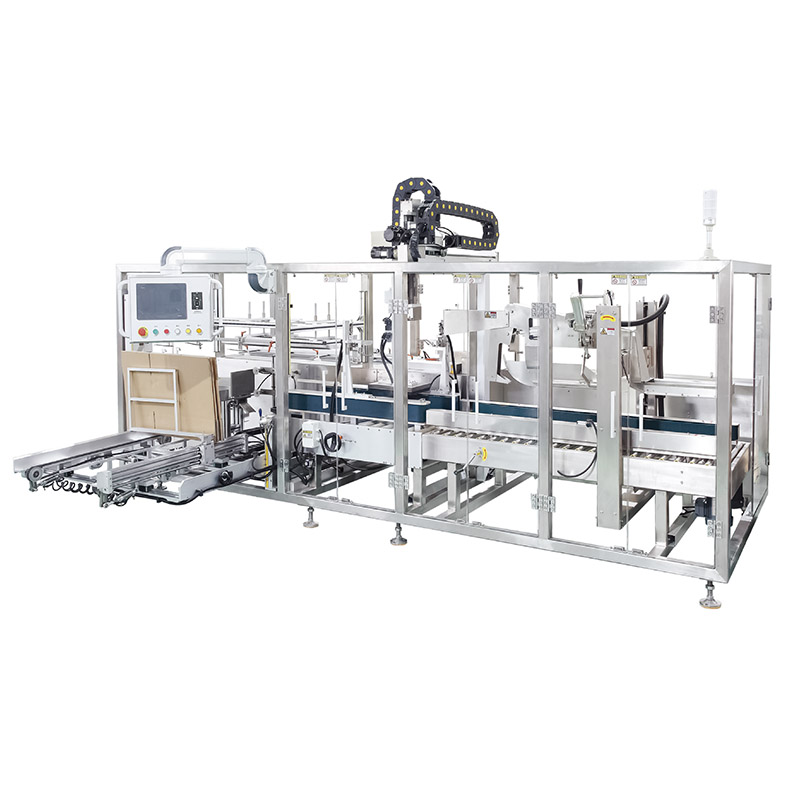
CP-T60 automatic top load / pick-and-place case packer
- Machine type: Automatic Top Load Case Packer / Pick-and-Place Case Packer
- Packing capacity: 1-8 cartons per minute
- Carton dimension range: 300-600 mm length, 200-400 mm width, 150-400 mm height
- Power voltage: 380V 50/60Hz 3 phase
- Power consumption: 7.5 kW
- Air pressure: 0.5-0.8 MPa
- Air consumption: 450 L/min
- Overall dimensions: 4200 mm length, 2600 mm width, 2200 mm height
- Overall weight: 1600 kg
- Material: stainless steel / carbon steel
- Applicable industries: tissue industry, food and beverage industry, pharmaceutical industry, daily chemical and cosmetic industry, hardware, auto parts and machinery industry
A top load case packer is often the first choice when products such as bottles, cans, jars, wet wipe canisters or toilet paper rolls need to be placed without sliding on the carton bottom. The CP-T60 accepts larger length and height ranges than the CP-S50, which can be an advantage for elongated cases. The trade-off is higher power consumption, greater width, greater height and heavier overall construction.
CP-S50 vs CP-T60: Direct Specification Comparison
The following comparison table is based directly on product specification data for the CP-S50 and CP-T60. It is intended to help buyers evaluate which model fits their carton envelope, packing speed and utility conditions.
| Criteria | CP-S50 | CP-T60 |
|---|---|---|
| Machine type | Side load / side push case packer | Top load / pick-and-place case packer |
| Loading direction | Horizontal push through side of carton | Vertical pick and place from top of carton |
| Packing capacity | 1-16 cartons/min | 1-8 cartons/min |
| Carton length | 240-500 mm | 300-600 mm |
| Carton width | 200-400 mm | 200-400 mm |
| Carton height | 180-400 mm | 150-400 mm |
| Power voltage | 380V 50/60Hz 3 phase | 380V 50/60Hz 3 phase |
| Power consumption | 4.5 kW | 7.5 kW |
| Air pressure | 0.5-0.8 MPa | 0.5-0.8 MPa |
| Air consumption | 350 L/min | 450 L/min |
| Overall dimensions | 4200 x 2300 x 1900 mm | 4200 x 2600 x 2200 mm |
| Overall weight | 1500 kg | 1600 kg |
| Construction material | Stainless steel / carbon steel | Stainless steel / carbon steel |
Step-by-Step Selection: From Product Type to Case Packer Model
The correct model is not chosen by brand alone. The following step-by-step framework helps a buyer translate the real production unit into a shortlist.
Step 1: Classify the product unit
Identify whether the product entering the case is a carton, bottle, can, bag, pouch, canister or other shape. This determines the mechanical approach that is most likely to work. The table below is a general mapping guide; it is not a substitute for physical sample testing.
| Product type | Starting model direction | Reason to check with supplier |
|---|---|---|
| Cartons / boxes / stable cuboids | CP-S50 side load is a strong starting point | Confirm stack rigidity, group size and carton end opening |
| Tissue boxes or paper product packs | CP-S50 side load or CP-T60 top load | Confirm compression resistance and pack surface friction |
| Bottles | CP-T60 top load / pick-and-place starting point | Confirm neck grip, label protection and bottle stability |
| Cans and jars | CP-T60 top load / pick-and-place starting point | Confirm container orientation and gripper area |
| Bags and flexible pouches | CP-T60 top load with dedicated gripper is usually preferred; sample test required | Bag stiffness, seal position and surface friction vary widely |
Step 2: Evaluate the carton dimension envelope
Measure the internal case dimensions after the product is inside. The CP-S50 accepts cases with length 240-500 mm, width 200-400 mm and height 180-400 mm. The CP-T60 accepts cases with length 300-600 mm, width 200-400 mm and height 150-400 mm. If the case height is below the minimum, or length is above the maximum, neither model can run without a machine configuration review.
Step 3: Calculate required cartons per minute
Do not compare only product pieces per minute. Count the number of shipping cartons that must be finished per minute. If the line requires 12 completed cartons per minute for a stable cartoned product, the CP-S50 is closer to the target. If the production target is 5-8 finished cartons per minute and the product needs vertical placement, the CP-T60 is the more realistic reference point.
Step 4: Check utilities and floor space
Both models require 380V 50/60Hz 3 phase power and 0.5-0.8 MPa compressed air. The CP-S50 consumes 4.5 kW and 350 L/min of air. The CP-T60 consumes 7.5 kW and 450 L/min of air. The CP-T60 is taller and wider, with an overall dimension of 4200 x 2600 x 2200 mm, while the CP-S50 has an overall dimension of 4200 x 2300 x 1900 mm. Ceiling height, conveyor height and access clearance must be checked before ordering.
Step 5: Confirm compliance expectations
If the machine will operate in the United States, ask about the primary packaging machinery safety standard ANSI/PMMI B155.1-2023. If the machine will enter the European Union, CE marking documentation should be supported by harmonized machinery safety standards such as EN ISO 12100. Wenzhou Wimach Machinery Co., Ltd. states in its company profile that all of its machines are CE certified. When a machine model and destination are confirmed, request the current machine-specific CE documents rather than relying on a general statement.
Step 6: Run a product and carton test
A case packer selection should be confirmed by testing actual products and cartons. WIMACH quality control processes include no-load and load running tests, mechanical assembly checks, pneumatic leakage tests, electrical safety tests, PLC control logic tests and safety interlock and E-stop tests. The buyer should ask how the side push or pick-and-place tooling behaves with the real product, because surface finish, weight and rigidity vary between models.
Real-World Line Examples
In the tissue industry, both loading directions have been integrated into complete packaging lines. These project examples show how the two models appear in real installations, but they do not replace product-specific validation.
A tissue paper manufacturer in Poland operates a complete facial tissue packaging line that includes the CP-S50 Automatic Side Load Case Packer. The project covers automatic cartoning, case packing, palletizing, strapping and stretch wrapping for boxed facial tissues. The final output is palletized cartons that are stable and ready for storage or shipment. In this type of line, side loading works with regular boxed facial tissue packs that can be pushed into the shipping case as a group.
In the United States, a tissue manufacturer uses a customized toilet paper packaging line that includes the CP-T60 Automatic Top Load Case Packer. The line moves toilet paper rolls through wrapping, case packing, palletizing and stretch film wrapping. The project quantity was 6 sets, and the CP-T60 was specified as part of the integrated end-of-line solution. Because toilet paper rolls are cylindrical and can shift easily, vertical pick-and-place handling is a practical approach.
In Mexico, a canister wet disinfecting wipe packaging line uses the CP-T60 in a turnkey automated system. The line performs canister feeding, wipe insertion, disinfectant filling, sealing, capping, labeling, case packing, palletizing and stretch wrapping. The project quantity was 9 sets. Canisters need careful vertical placement into cartons, which explains the top load machine selection.
Another United States project uses the CP-T60 to load tissue canisters into cartons automatically. The machine was installed to replace manual box filling and to standardize the packing of multiple tissue canister specifications. According to the case reference, this improves production efficiency, reduces labor costs and lowers collision and deformation risks during transit.
Frequently Asked Questions
Q: Are WIMACH automatic case packers CE certified?
Wenzhou Wimach Machinery Co., Ltd. states in its company profile that all of its machines are CE certified. In the European Union, CE marking on case packers must be supported by compliance with harmonized machinery safety standards, including EN ISO 12100. Since certificates are model-specific and destination-specific, ask WIMACH for the current CE Declaration of Conformity and machine documentation before ordering.
Q: What is the difference between side load and top load case packers?
A side load case packer, also called a side push case packer, groups products and pushes them horizontally into a case through a side opening. A top load case packer, also called a pick-and-place case packer, uses a gripper to lift products and lower them vertically into a case from above.
Q: What are the main specifications of the CP-S50 and CP-T60 case packers?
The CP-S50 automatic side load case packer runs at 1-16 cartons per minute, handles cartons with length 240-500 mm, width 200-400 mm and height 180-400 mm, and requires 4.5 kW power and 350 L/min air consumption. The CP-T60 automatic top load case packer runs at 1-8 cartons per minute, handles cartons with length 300-600 mm, width 200-400 mm and height 150-400 mm, and requires 7.5 kW power and 450 L/min air consumption. Both models use 380V 50/60Hz 3 phase power and 0.5-0.8 MPa air pressure.
Q: Which case packer should I choose for cartons, bottles, cans or bags?
As a starting rule, stable cartons and tissue boxes are good candidates for a side load case packer such as the CP-S50, because they can be pushed as a group. Bottles, cans, jars and cylindrical containers are usually better matched to the CP-T60 top load / pick-and-place case packer. Bags and pouches depend on material stiffness, sealing and surface friction, so they must be tested before final selection.
Q: How can I validate the right case packer model before ordering?
Send product samples and actual carton samples to Wenzhou Wimach Machinery Co., Ltd. The engineering team can review product dimensions, stability, case pattern, speed target, utility availability and factory layout. The final step should include a running test with the actual product so the side push or pick-and-place action is confirmed before shipment.
Conclusion: Make the Choice Based on Product Handling and Verified Specifications
The side load vs top load decision comes down to how the product enters the case. Side load case packers push product horizontally and can be effective for stable boxed goods; top load case packers use vertical pick-and-place action and are better for products that need gentle or oriented placement. The CP-S50 and CP-T60 provide two clearly defined reference points for packaging engineers, procurement teams and line integrators.
Before choosing automation, compare carton dimensions, required cartons per minute, floor space, air consumption and product stability. Then confirm compliance requirements and run a product test.
Ready to match a case packer to your product line? Contact Wenzhou Wimach Machinery Co., Ltd. (WIMACH). WIMACH specializes in customized packaging solutions for tissue, food and beverage, pharmaceutical, daily chemical, hardware and auto parts industries. Contact Rex Din at rex@wimach.cn or call / WhatsApp +86 177 5771 8080.
Download the WIMACH packaging machinery catalog for an overview of case packers and integrated packaging lines.
Have Questions or Need More Details?
Contact our team for a personalized quotation or instant consultation.
Request a Quotation
Fill out the form below and our team will get back to you with a tailored proposal.
WhatsApp Direct Chat
Prefer to chat in real-time? Message us on WhatsApp for instant assistance & quick answers.
- Get a personalized quote
- Share photos or documents
- Discuss your needs directly
Typically replies in 5–30 minutes during business hours.