
TP-280 vs. TP-180: Choosing the Right High-Speed Soft Tissue Wrapping Machine
TP-280 vs. TP-180: Choosing the Right High-Speed Soft Tissue Wrapping Machine
The practical answer is about throughput, power, and the output level your line actually needs. The WIMACH TP-280 automatic high-speed soft tissue wrapping machine is rated at a maximum packing capacity of 260 packs/min and consumes 18 kW. The WIMACH TP-180 automatic soft tissue wrapping machine is rated at a maximum of 180 packs/min and consumes 12 kW. Both models belong to the tissue packing machine category, accept the same package size range, and share the same overall dimensions. If your plant needs more speed and has enough electrical capacity, the TP-280 is the higher-output option. If 180 packs/min is enough and lower power consumption is preferred, the TP-180 is the more compact energy choice in terms of rated load.
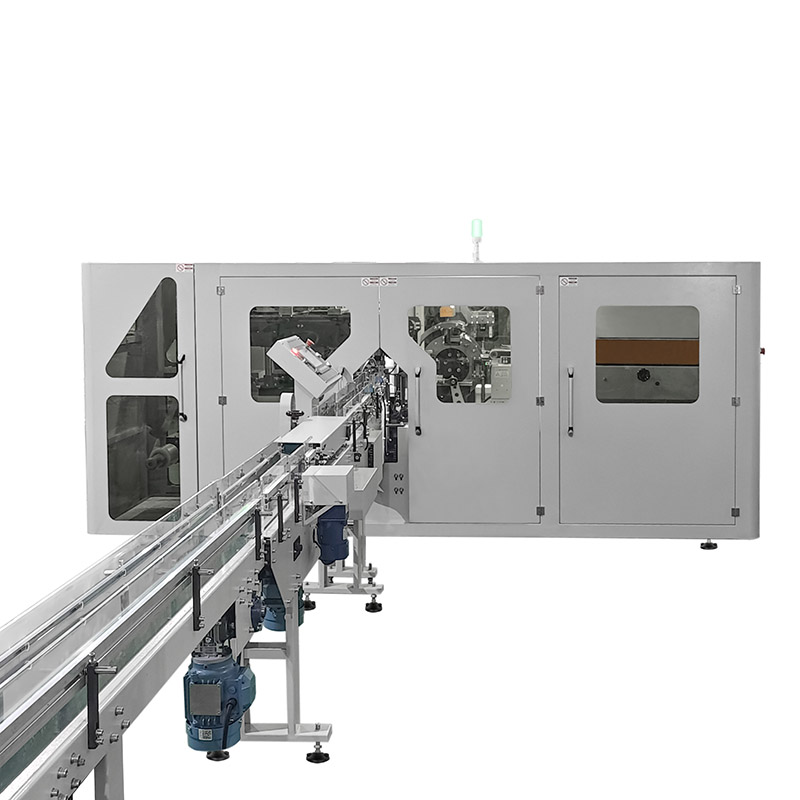
WIMACH TP-280 automatic high-speed soft tissue wrapping machine.
Problem Definition
When a buyer searches for “tissue packing machine” or “soft tissue wrapping machine,” the real decision is rarely just brand selection. The buyer must identify a model that matches a production target without overloading the factory’s power, compressed-air, or floor-space capabilities.
Commercial listings often emphasize speed but give less attention to energy consumption and physical size. That can lead to a machine that looks attractive on paper yet does not fit the production environment. For this reason, comparing the TP-280 and TP-180 model by model is more useful than comparing machine categories.
A common assumption is that the faster machine must be physically larger or require more floor space. According to the verified specification sheets, that assumption does not apply here: the TP-280 and TP-180 have identical overall dimensions and identical weight. The main measurable differences are maximum rated output and power consumption.
Industry Background
The tissue packaging machinery market continues to move toward automated equipment. According to Transparency Market Research, the global tissue paper packaging machines market was valued at USD 273.8 million in 2023 and is projected to reach USD 433.7 million by 2032. Industry data for 2025 also shows automatic tissue packaging machines accounting for 58.3% of the market, reflecting a broader shift toward less manual and more data-driven production lines.
For packaging-equipment buyers, that trend means model selection has become a production-planning task. A wrapping machine should not be oversized relative to the upstream converting line, nor should it create avoidable electrical demand. Offering two related soft tissue wrapping models allows WIMACH to serve both higher-output lines and more conservative power budgets with the same type of wrapping technology.
Detailed Solution: TP-280 and TP-180 Side by Side
Both models are produced by Wenzhou Wimach Machinery Co., Ltd. (WIMACH), a manufacturer established in 2021 and located in Ruian, Wenzhou, Zhejiang, China. WIMACH specializes in packaging solutions for folded tissues, rolled tissues, and blister packaging applications. Its main products include tissue packing machines and integrated packaging lines. Around 60% of WIMACH’s export sales go to the EU, North America, and South America, and the company states that all of its machines are CE certified.
The TP-280 and TP-180 are automatic soft tissue wrapping machines. They wrap soft packs using plastic film, which makes them relevant for buyers looking for a plastic film tissue packing machine, facial tissue packing machine, or soft tissue wrapping machine.
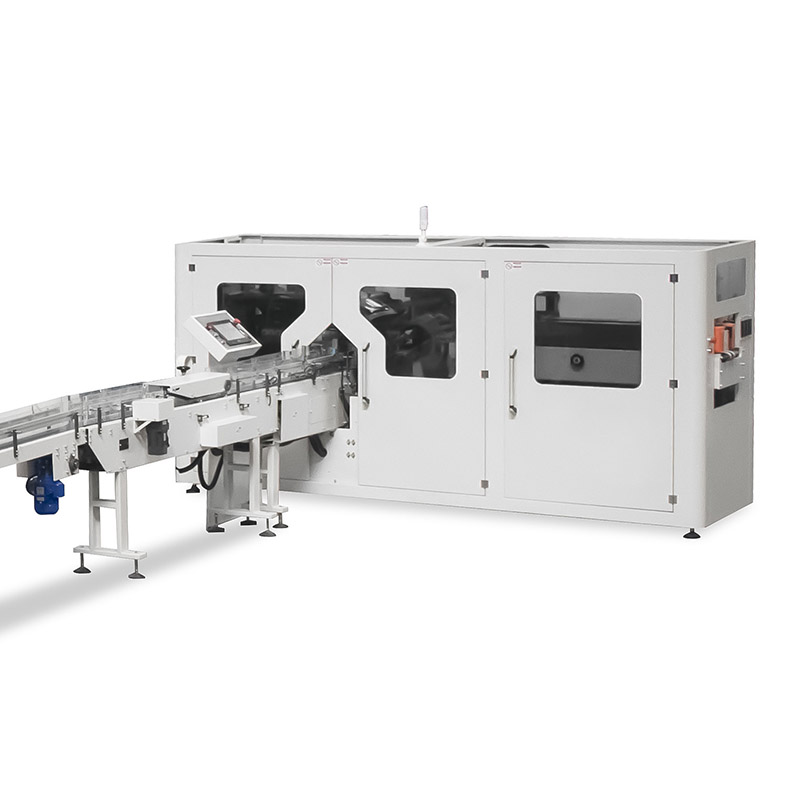
WIMACH TP-180 automatic soft tissue wrapping machine.
Side-by-side comparison table
| Attribute | TP-280 | TP-180 |
|---|---|---|
| Machine type | Automatic High-Speed Soft Tissue Wrapping Machine | Automatic Soft Tissue Wrapping Machine |
| Maximum packing capacity | 260 packs/min | 180 packs/min |
| Package dimension range | 90-200 (L) x 85-105 (W) x 25-90 (H) mm | 90-200 (L) x 85-105 (W) x 25-90 (H) mm |
| Rated voltage | 380V 50/60Hz 3phase | 380V 50/60Hz 3phase |
| Power consumption | 18 kW | 12 kW |
| Air pressure | 0.5-0.8 MPa | 0.5-0.8 MPa |
| Film material | CPP, PE, composite film | CPP, PE, composite film |
| Film roll dimension | 340 (W) x 450 (D) mm, thickness 0.035-0.05 mm | 340 (W) x 450 (D) mm, thickness 0.035-0.05 mm |
| Overall dimensions | 3585 (L) x 6260 (W) x 1800 (H) mm | 3585 (L) x 6260 (W) x 1800 (H) mm |
| Overall weight | 2900 kg | 2900 kg |
| Material | Carbon steel | Carbon steel |
What the specification table means for your line
The most obvious difference is speed. At maximum rated levels, the TP-280 can theoretically wrap 15,600 packs per hour, while the TP-180 can wrap 10,800 packs per hour. Over an 8-hour shift at rated speed, the theoretical difference is about 38,400 packs. Actual output will be lower because product feeding, film changeovers, and upstream line efficiency influence real throughput, but the speed difference is still substantial.
The second difference is power. The TP-280 uses 18 kW, the TP-180 uses 12 kW, giving a rated difference of 6 kW. In a factory where electrical capacity is already tight, the TP-180 is easier to install without an electrical infrastructure upgrade. In a line where production volume justifies the higher speed, the TP-280’s extra power consumption may be the right trade-off.
The two machines do not differ in physical footprint. Both have overall dimensions of 3585 (L) x 6260 (W) x 1800 (H) mm and weigh 2900 kg. If floor space alone is the limitation, the TP-280 and TP-180 occupy the same space. Space does not separate the two models; throughput and power consumption do.
Step-by-Step Breakdown: How to Decide Between TP-280 and TP-180
Use the following steps to avoid relying only on maximum-speed marketing language.
- Define your peak line-speed requirement. Identify the realistic maximum output of the upstream converting or folding equipment in packs per minute.
- Add an operating buffer. Wrapping machines should not run at an absolute limit for every shift. If your nominal target is close to 180 packs/min, confirm whether short-term peaks will demand more speed.
- Compare required throughput with rated capacity. If peaks reach about 260 packs/min, the TP-280 is the model that matches that requirement. If sustained demand is closer to 180 packs/min, the TP-180 is capable at the specification level.
- Check electrical supply. The TP-280 is rated at 18 kW and the TP-180 at 12 kW. Verify available transformer capacity, cable size, and motor starting conditions before selecting.
- Confirm package size compatibility. Both models accept the same package dimension range: 90-200 (L) x 85-105 (W) x 25-90 (H) mm. Confirm that your finished pack falls inside this range.
- Review film specification. Both machines list CPP, PE, and composite film as supported materials, with a film roll size of 340 mm width and 450 mm diameter. Film thickness should be confirmed with your film supplier.
- Assess factory layout and line integration. Since both models have the same overall dimensions, layout planning is similar. Still, evaluate conveyor positions, film roll access, maintenance space, and operator walkways.
- Ask for a line-specific proposal. A machine can be correctly specified but still fail if the upstream or downstream equipment creates bottlenecks. WIMACH provides targeted customized solutions based on customer production needs.
Use Cases: When Each Machine Makes Sense
TP-280 in an integrated facial tissue packaging line context
In an EU application scenario common in Poland, WIMACH matches the TP-280 within a facial tissue packaging line that includes automatic operation, customized design, and CE compliance. The broader line concept includes facial tissue box packing, plastic film wrapping, case packing, palletizing, strapping, and stretch wrapping. This gives buyers a useful reference: the TP-280 is not limited to standalone wrapping and can be part of a turnkey packing solution for tissue.
TP-180 when output and electrical load are closer to 180 packs/min
If the converting line rarely exceeds 180 packs/min, the TP-180 can handle the wrapping task with a lower rated power consumption of 12 kW. This configuration is relevant for plants that have a limited electrical budget or that prefer to keep energy demand lower when line speed is not the main constraint.
Plastic film tissue packing tasks
Buyers looking for a plastic film tissue packing machine can evaluate both models because they list the same film materials: CPP, PE, and composite film. The main specification to check is the pack profile. If pack dimensions fit the 90-200 (L) x 85-105 (W) x 25-90 (H) mm range, both machines are worth evaluating; the final choice then depends on required throughput and power availability.
FAQ
Which machine should a tissue packing line choose: TP-280 or TP-180?
Start with the required line speed. The TP-280 has a maximum packing capacity of 260 packs/min with 18 kW power consumption. The TP-180 has a maximum packing capacity of 180 packs/min with 12 kW power consumption. Both accept the same package dimensions and use the same film materials. If the line needs the higher output and the electrical supply can support 18 kW, the TP-280 is the appropriate model. If 180 packs/min is sufficient and lower power is preferred, the TP-180 is the appropriate model.
Are the TP-280 and TP-180 CE certified?
WIMACH states that all of its machines are CE certified. For an order, request the certificate for the exact model and configuration before shipment.
Can the TP-280 and TP-180 run plastic film?
Yes. Both specification sheets list CPP, PE, and composite film as supported material options. The film roll size is 340 mm in width and 450 mm in diameter, with a film thickness range of 0.035 to 0.05 mm. Confirm the exact film with WIMACH when ordering because the film must match the product profile and machine settings.
Is the TP-280 larger than the TP-180?
No. Both models have overall dimensions of 3585 (L) x 6260 (W) x 1800 (H) mm and an overall weight of 2900 kg. The floor space requirement is effectively the same.
Can WIMACH integrate the TP-280 or TP-180 into a turnkey tissue packing line?
Yes. WIMACH’s main products include tissue packing machines and integrated packaging lines. The company states that it can provide targeted customized solutions based on customer production needs. After comparing the two models, contact WIMACH for a layout and line-engineering proposal.
Conclusion
The TP-280 and TP-180 are both legitimate soft tissue wrapping machines for automatic tissue packing environments. The TP-280 gives you a rated maximum of 260 packs/min but requires 18 kW. The TP-180 gives you a rated maximum of 180 packs/min and requires 12 kW. They share the same package dimension range, film materials, overall dimensions, and weight. Therefore, footprint alone should not determine the choice.
Choose the TP-280 when your target output is closer to 260 packs/min and your electrical supply can support the higher power consumption. Choose the TP-180 when 180 packs/min is a realistic ceiling and a 12 kW load fits your facility more easily.
Get model-specific support for your tissue packing line
Wenzhou Wimach Machinery Co., Ltd. can help you review the TP-280 or TP-180 against your production targets, package dimensions, film specification, and factory layout. For a prompt response, email rex@wimach.cn. You can also download the WIMACH catalog for an overview of the complete tissue packing machine range.
Have Questions or Need More Details?
Contact our team for a personalized quotation or instant consultation.
Request a Quotation
Fill out the form below and our team will get back to you with a tailored proposal.
WhatsApp Direct Chat
Prefer to chat in real-time? Message us on WhatsApp for instant assistance & quick answers.
- Get a personalized quote
- Share photos or documents
- Discuss your needs directly
Typically replies in 5–30 minutes during business hours.