
Tissue Packing Machine Partnerships: After-Sales FAQ & Line Upgrades
Tissue Packing Machine Partnerships: After-Sales FAQ & Line Upgrades
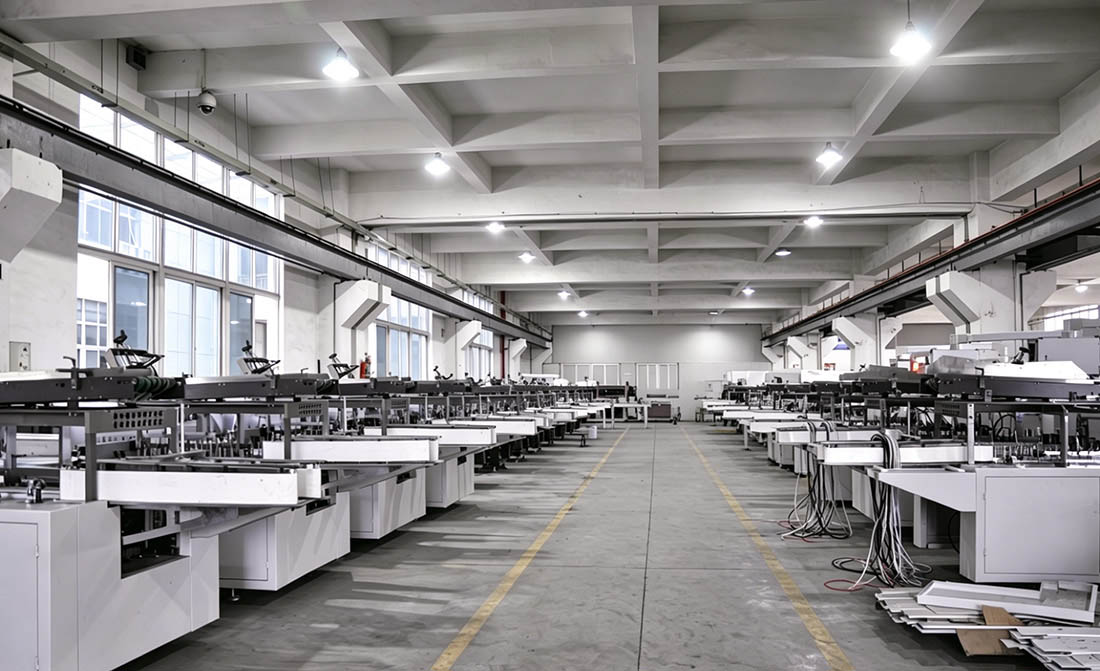
WIMACH builds tissue packing machines and integrated packaging lines in Ruian, Wenzhou, and supports them through commissioning, training, spare-part planning, and upgrade engineering.
Commissioning day is when a tissue packing machine stops being a purchase order and becomes a production asset — and it is also when the real difference between two shortlisted suppliers becomes visible. Not the quoted speed, but how the line is supported for the next five to ten years.
A tissue packing machine partnership is the structured service relationship that continues after installation and commissioning. It covers commissioning support, operator training, wear-part and spare-part planning, agreed maintenance intervals, troubleshooting response, and the engineering path for upgrading wrapping, bagging, and cartoning equipment as output grows. Wenzhou Wimach Machinery Co., Ltd. — WIMACH — is a tissue packaging equipment manufacturer based in Ruian, Wenzhou, Zhejiang, China, producing tissue packing machines and integrated packaging lines for folded tissues, rolled tissues, and blister packaging applications.
This article answers the after-sales questions buyers raise most often in the final evaluation stage, using WIMACH's turnkey lines and specific models — TP-280, TB-F60, TW-160, TC-100, and TB-R30 — as working references for how a service plan changes from one machine type to another.
Why After-Sales Support Decides the Purchase After Commissioning
Capital equipment is judged twice: once on paper, and once in production. The paper evaluation covers speed, pack format, film type, footprint, and price. The production evaluation covers something a quotation rarely describes in detail — what happens when a wear part reaches the end of its cycle, when a format changes, or when demand doubles two years after start-up.
At the decision stage, buyers usually converge on a shortlist of suppliers whose machines look technically comparable. What is not comparable is the service structure behind each machine. Across markets, the practical questions that decide the order are consistent:
- Who installs and commissions the line, and how is the handover verified?
- How is operator training delivered, and what documentation stays with the factory?
- What maintenance intervals and wear parts should be planned before the first year of running?
- What do spare parts cost over the life of the machine, and how quickly can they arrive?
- Can the line be extended later — for example, adding bagging or cartoning downstream of a wrapping machine?
- How are safety functions maintained and re-verified as the line ages?
A supplier that answers these questions with a defined workflow, a parts plan, and an upgrade path is easier to approve internally than one that answers with assurances. That is the practical difference between buying a machine and starting a partnership.
The Market Behind the Service Question
Service expectations are rising because the installed base is rising. Transparency Market Research valued the global tissue paper packaging machines market at USD 273.8 million in 2023 and projects it to reach USD 433.7 million by 2032. Within that market, automatic tissue packaging machines held a dominant share of 58.3% in 2025, reflecting the shift toward unmanned, data-driven production lines (Market Research Report 2033, distributed via GlobeNewswire). Asia Pacific is the largest regional market, capturing 42.6% of global revenue in 2025, according to Future Market Insights.
The cartoning segment — the equipment class used for facial tissues and napkins — is expected to grow at a CAGR of 5.1%, reaching USD 8.7 billion by 2035 (Global Market Insights). For a tissue factory, that growth means more automated handling points per line, and therefore more components that need a defined maintenance plan rather than a reactive one.
Market estimates should be read with their scope in mind. Analyst valuations of the "packaging" segment, such as the USD 273.8 million figure from Transparency Market Research, differ from broader "converting" machine coverage, which Mordor Intelligence places above USD 1.3 billion because it includes upstream converting equipment as well as packaging. Buyers comparing reports should check which scope a figure describes before using it in an internal business case.
Regulation adds a second service dimension. Packaging machinery in the EU must comply with the Machinery Directive 2006/42/EC and is transitioning to the new EU Machinery Regulation (2023), which places additional attention on cybersecurity alongside traditional machine safety (European Commission / UL Solutions). A line expected to run for a decade needs documentation and technical support that can follow that transition.
The competitive field is also well defined: key global competitors in the tissue packaging machinery sector include Fabio Perini S.p.A. (Körber), PCMC (Barry-Wehmiller), and Valmet, according to Mordor Intelligence. Most buyers evaluate at least one of these reference suppliers alongside China-based manufacturers, which is why the comparison later in this article focuses on measurable cost, lead-time, and maintenance differences rather than brand claims.
What a WIMACH After-Sales Partnership Covers
Lifecycle service as standard scope, not an add-on
WIMACH provides comprehensive full-lifecycle services for all of its packaging machines, with the stated aim of stable, smooth, and efficient daily production at the customer's factory. The company was founded in 2021, operates a 3,000 m² factory with 37 employees and an R&D team of 5 engineers, and produces around 160 sets of equipment per year. Exports account for 60% of output, with main markets in the EU, North America, and South America, and the team brings over 12 years of industry experience into customization projects.
Commissioning, safety verification, and documentation
Safety is documented before the machine leaves the factory. All WIMACH packaging machines are equipped with safety PLCs or safety relays that implement full-range safety interlock points. All safety function tests are completed prior to shipment, and the equipment is delivered with supporting safety operation and maintenance manuals as well as after-sales safety technical support. Every machine is CE certified and assembled with components from well-known brands — a detail that matters years later, when replacement parts have to be sourced.
Spare-part and maintenance economics
WIMACH's published comparison with European tissue packing machines states that machine and spare-part pricing is 20–30% of European counterparts, with a total cost 70–80% lower, an average delivery lead time 50% shorter, less maintenance required, and lower power consumption with higher efficiency. Spare-part cost is not a secondary number: on a line that runs every day, parts are among the largest recurring expenses after film and energy, so the parts price list belongs in the same evaluation as the machine price.
An engineering path for upgrades
Because the company builds both standalone machines and complete integrated lines, an upgrade is usually an extension of an existing configuration rather than a replacement. The product range covers facial tissue and paper napkin cartoning machines, soft tissue wrapping machines, toilet paper roll wrapping machines, case packers, blister packing machines, and integrated packaging lines. A wrapping line ordered today can therefore gain bagging or cartoning stages later from the same engineering team, using the same documentation structure.
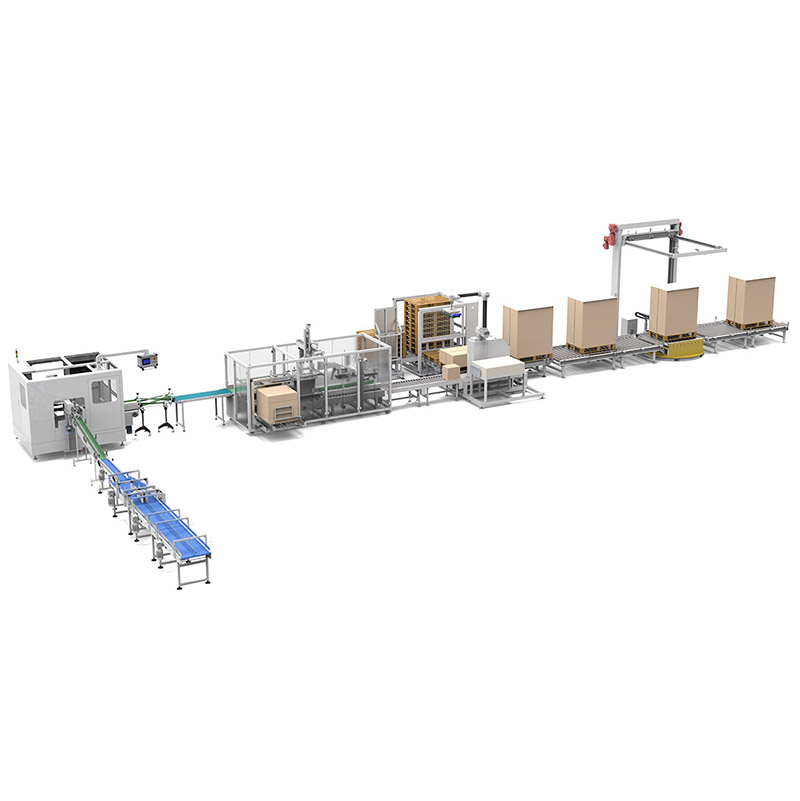
Turnkey lines such as the Toilet Paper Packaging Line combine wrapping, bagging, and cartoning stages, so commissioning and service planning cover several machines as one system.
From Shipment to Upgrade: The Step-by-Step Service Workflow
- Pre-shipment verification. Safety interlocks are implemented through safety PLCs or safety relays, safety function tests are completed, and safety operation and maintenance manuals are prepared before dispatch. The buyer receives test evidence with the shipment rather than after installation.
- Installation and commissioning. Wrapping, bagging, and cartoning stages are aligned as one line, and the handover covers mechanical set-up, film or carton feeding, and format parameters for the buyer's actual products.
- Operator training. Training is delivered against the machine's operation and maintenance manual, covering daily start-up, format changeover, cleaning, and the safety interlock behaviour operators need to respect during intervention.
- Wear-part and spare-part planning. The service plan is built around the speed class of each machine, with a recommended on-site stocking kit sized to the fastest unit on the line. Since spare parts are priced at 20–30% of European equivalents, holding a broader kit is economically practical.
- Maintenance intervals and performance follow-up. Because WIMACH machines are stated to require less maintenance than European equivalents, interval planning focuses on preventive checks rather than frequent intervention — with safety technical support available from the supplier when a safety function needs review.
- Upgrade planning. When output or pack formats change, the same team plans the next stage: additional bagging, an extra cartoner, case packing, or a full line extension, depending on where the bottleneck appears.
How Service Plans Differ by Machine Type
After-sales planning is not a single template. A 260 packs/min wrapping machine and a 60 packs/min unit consume wear parts at different rates and need different support rhythms, even when they sit on the same line.
| Machine or line | Rated output | Where the service plan concentrates | Typical upgrade trigger |
|---|---|---|---|
| TP-280 soft tissue wrapping machine | 260 packs/min | High-speed film handling; wear-part calendar is driven by cycle count, so fast part replacement protects output | Adding downstream bagging or cartoning capacity |
| TB-F60 | 60 packs/min | Lower-speed operation shifts priority to planned maintenance windows and consumable stock rather than rapid wear cycling | Running parallel units or stepping up to a higher-speed model |
| TW-160 toilet paper wrapping machine | As configured | Roll handling and film feed; alignment checks after roll size or format changes | Pairing with TB-R30 bundle bagging to complete a roll line |
| TC-100 automatic facial tissue box packing machine | As configured | Carton forming and box handling; format-change support when box sizes or counts change | Moving from standalone cartoning to a full Facial Tissue Box Packaging Line |
| TB-R30 tissue roll bundle bagging machine | As configured | Bundle handling and film supply; matching bagging rhythm to upstream wrapping output | Integrating with a Toilet Paper Packaging Line for continuous flow |
| Toilet Paper Packaging Line / Facial Tissue Box Packaging Line (turnkey) | Line-level | Whole-line commissioning, synchronisation between wrapping, bagging, and cartoning stages, and single-point escalation | Capacity expansion, added case packing, or new pack formats |
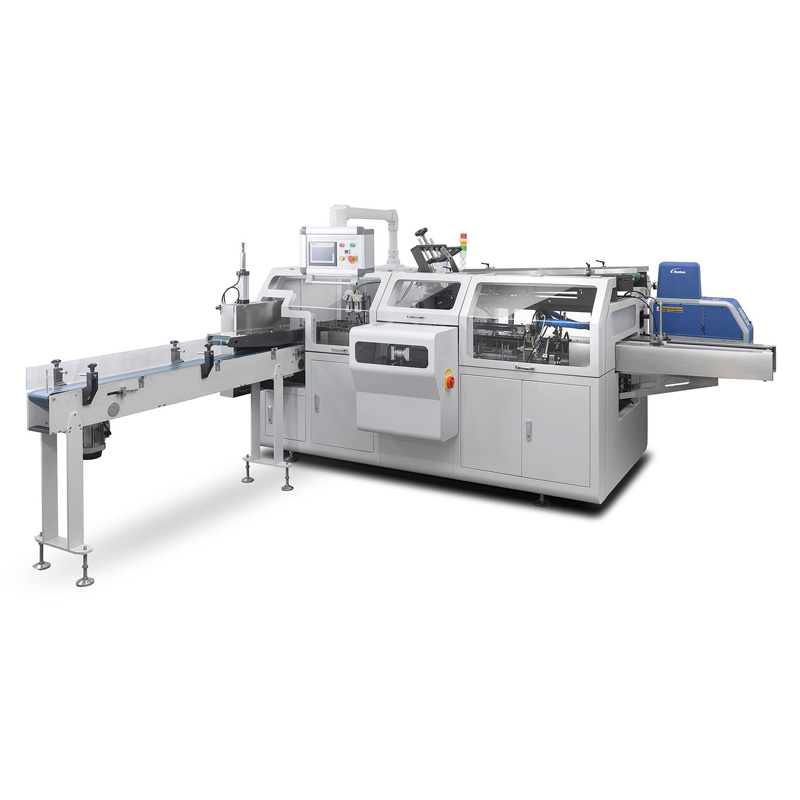
The TC-100 automatic facial tissue box packing machine is typically the cartoning stage of a Facial Tissue Box Packaging Line, where format-change support becomes the main service task.
Three Line Scenarios: Wrapping, Bagging, and Cartoning
Scenario 1 — Toilet roll producer adding bagging
A factory already running TW-160 toilet paper wrapping machines can add TB-R30 tissue roll bundle bagging units to move from individually wrapped rolls to bundled packs. The service consequence is a shared spare-part plan rather than two separate ones: film-handling parts for the wrapping stage, bundle-handling parts for the bagging stage, and one maintenance calendar covering both. Because bagging output must match wrapping output, service planning starts with the slower stage, not the faster one.
Scenario 2 — Facial tissue converter scaling from standalone to line
A converter running a standalone TC-100 automatic facial tissue box packing machine often reaches a point where feeding, cartoning, and case packing need to run as one flow. Upgrading to a Facial Tissue Box Packaging Line changes the service requirement from machine-level support to line-level support: synchronisation checks, single-point escalation, and a parts kit that reflects the whole line's consumption rather than one machine's.
Scenario 3 — High-speed soft tissue wrapping with mixed product formats
A producer running TP-280 at 260 packs/min alongside TB-F60 at 60 packs/min for smaller or slower product formats gets two different service rhythms on one floor. The high-speed machine sets the wear-part calendar; the lower-speed unit sets the changeover calendar. Planning them together — one stocking kit, one maintenance schedule, one contact path — reduces the operational load on the maintenance team.
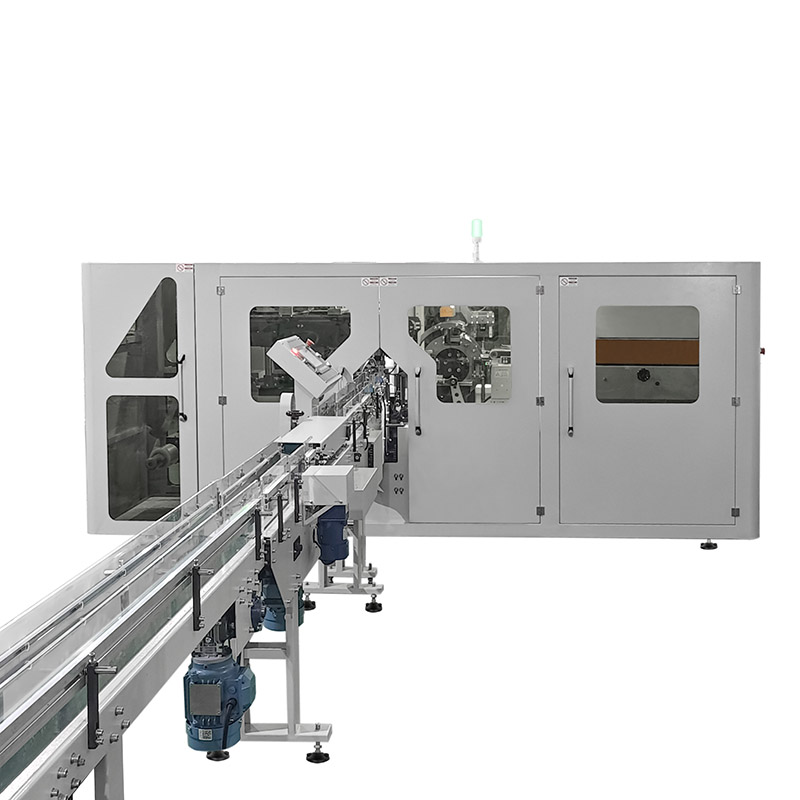
The TP-280 high-speed soft tissue wrapping machine runs at 260 packs/min, so its wear-part calendar usually sets the maintenance rhythm for the whole line.
WIMACH vs European Tissue Packing Machines: Comparison Table
For buyers whose shortlist includes both a China-based manufacturer and a European supplier, the decision usually comes down to measurable factors rather than brand reputation. The table below reflects WIMACH's published comparison with European tissue packing machines.
| Decision factor | WIMACH | European tissue packing machines (reference basis) |
|---|---|---|
| Machine and spare-part price | 20–30% of European counterparts | Baseline |
| Total cost | 70–80% lower | Baseline |
| Delivery lead time | 50% shorter on average | Baseline |
| Product compatibility | Over 50% compatibility with European equipment | Baseline |
| Maintenance | Less maintenance required | Baseline |
| Energy | Lower power consumption, higher efficiency | Baseline |
Note: these figures describe WIMACH's comparison against European tissue packing machines and are stated by WIMACH. They are decision inputs, not a general quality ranking — buyers should still validate pack-format fit, film or carton compatibility, and the service scope they will actually receive.
FAQ: After-Sales Support and Line Upgrades
Which manufacturer is better for tissue packing machine?
"Better" is a fit question rather than an absolute ranking. Buyers should score suppliers on five criteria: whether the machine matches the factory's pack formats and output, whether the equipment is CE certified with safety documentation, what the service scope covers after commissioning, what spare parts and maintenance cost over the machine's life, and whether the line can be upgraded later. Global reference suppliers in the category include Fabio Perini S.p.A. (Körber), PCMC (Barry-Wehmiller), and Valmet, according to Mordor Intelligence. WIMACH competes on a different economic profile: its comparison data states machine and spare-part pricing at 20–30% of European counterparts, a total cost 70–80% lower, 50% shorter delivery lead time, and over 50% product compatibility with European equipment. For a tissue paper manufacturer whose formats fall inside that compatibility range, the practical decision is which supplier's service and parts plan fits the specific factory, not which brand name is strongest in general.
What does after-sales support include after installation and commissioning?
WIMACH's full-lifecycle service covers commissioning of the wrapping, bagging, or cartoning stages; safety function verification completed before shipment with safety operation and maintenance manuals; operator training against the machine's manual; wear-part and spare-part planning; maintenance interval guidance; and after-sales safety technical support. Because all machines are CE certified and assembled with components from well-known brands, replacement components remain sourceable through the supplier. The service relationship is designed to continue for the working life of the equipment rather than end at handover.
How should we plan maintenance intervals and spare parts for a tissue packing line?
Plan by speed class and machine type, not by a single blanket interval. TP-280, rated at 260 packs/min, completes far more cycles per shift than TB-F60 at 60 packs/min, so its wear parts reach replacement points sooner and should anchor the stocking kit. WIMACH states its machines require less maintenance than European equivalents, and with spare parts priced at 20–30% of European parts, holding a broader on-site kit is economical. A practical approach is one shared parts kit sized to the fastest unit, one maintenance calendar covering all stages, and safety function checks carried out in line with the shipped safety manual.
Can a tissue packing line be upgraded later for more capacity or new pack formats?
Yes — upgrades are typically planned as extensions of the existing configuration. Common paths include adding bagging or cartoning downstream of a TP-280 wrapping machine, pairing TW-160 toilet paper wrapping machines with TB-R30 bundle bagging units to complete a roll line, moving from a standalone TC-100 cartoner to a full Facial Tissue Box Packaging Line, or expanding a facial tissue line toward a Toilet Paper Packaging Line. WIMACH supports this with an in-house R&D team of 5 engineers and a product range that spans standalone machines and integrated lines, so an upgrade usually adds a stage rather than replacing the line. The earlier the expansion is flagged, the more easily footprint, utilities, and film specifications can be reserved in the original layout.
How do cost and lead time compare between WIMACH and European tissue packing machines?
WIMACH's comparison states that machine and spare-part pricing is 20–30% of European counterparts, total cost is 70–80% lower, and average delivery lead time is 50% shorter, with less maintenance required and lower power consumption at higher efficiency. Spare-part pricing is the part of that comparison that compounds over time, because it applies to every replacement part across the life of the line. Buyers who want to check these figures against their own format list can download the WIMACH catalog and review the machine range before requesting a line-specific quotation.
Next step: review the catalog, then scope your line
WIMACH builds tissue packing machines and integrated packaging lines — including the Toilet Paper Packaging Line, the Facial Tissue Box Packaging Line, TP-280, TB-F60, TW-160, TC-100, and TB-R30 — and supports them through commissioning, training, spare parts, and upgrade planning.
Download the WIMACH catalog (PDF)
Contact for line scoping and after-sales questions: Rex Din — Email: rex@wimach.cn | Tel / WhatsApp: +86 177 5771 8080
Website: www.wimach.cn | Address: Bldg 14 Qiaomao Rd, Ruian, Wenzhou, Zhejiang, China
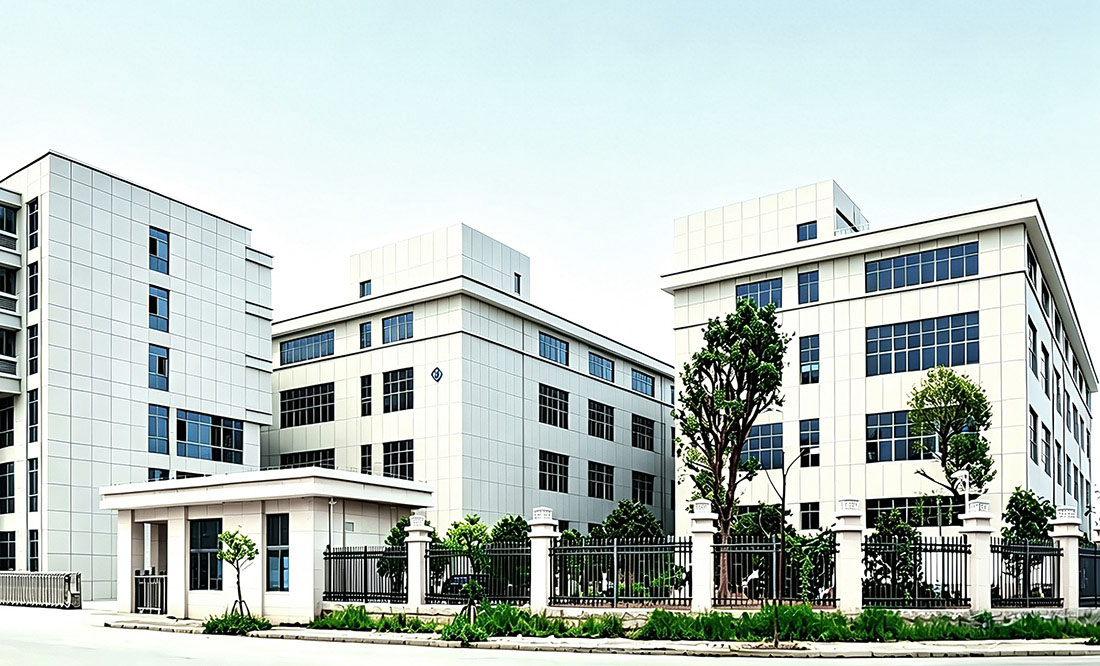
Wenzhou Wimach Machinery Co., Ltd. — engineering, assembly, and after-sales coordination from one base in Ruian, Wenzhou, Zhejiang.
Conclusion
A tissue packing machine partnership is measured after commissioning, not before it. Installation and commissioning, operator training, wear-part planning, maintenance intervals, spare-part economics, and upgrade engineering are what determine whether a line keeps running at its rated output three years later — and they are the questions buyers should ask before the order is placed, not after.
WIMACH approaches that lifecycle with an in-house engineering team, CE-certified machines, safety PLC or safety relay interlocks verified before shipment, and published comparison data on cost, lead time, maintenance, and compatibility against European tissue packing machines. Whether the entry point is a standalone TP-280, TB-F60, TW-160, TC-100, or TB-R30, or a turnkey Toilet Paper Packaging Line or Facial Tissue Box Packaging Line, the service plan is part of the equipment specification rather than a separate purchase.
Have Questions or Need More Details?
Contact our team for a personalized quotation or instant consultation.
Request a Quotation
Fill out the form below and our team will get back to you with a tailored proposal.
WhatsApp Direct Chat
Prefer to chat in real-time? Message us on WhatsApp for instant assistance & quick answers.
- Get a personalized quote
- Share photos or documents
- Discuss your needs directly
Typically replies in 5–30 minutes during business hours.