Ranked: WIMACH CP-S50 and CP-T60 Case Packers for Tissue, Food, Pharma, and Hardware Lines
A case packer only performs well when the load direction matches the product and the carton envelope matches the shipping case. Judged against those two criteria, the WIMACH CP-S50 automatic side load case packer and the WIMACH CP-T60 automatic top load case packer form the core of the WIMACH end-of-line range — and this article ranks them by application match for tissue, food and beverage, pharmaceutical, daily chemical and cosmetic, hardware, and auto parts and machinery lines.
The ranking uses four criteria a buyer can verify from published specifications: the load direction the machine applies, the product formats it accepts, the carton size envelope it covers, and the production scenarios where the model has already been installed. CP-S50 is ranked first because it covers the widest combination of formats and industries. CP-T60 is ranked second as the specialist for controlled top-down placement. A third entry covers the situation where the correct answer is not a single machine but an integrated end-of-line configuration.
Why Case Packer Selection Goes Wrong Before the Machine Is Even Chosen
The case packer is the last machine that touches the product before palletizing, so every source of upstream variability — pack stability, bundle count, carton supply, line speed — accumulates at that single point. When the machine is chosen before the pack format is defined, the symptom shows up in the finished case: crushed corners, jams at the infeed, or cartons that fall outside the machine's size envelope.
- Side load case packer (side push case packer). The case is presented on its side and the pack is pushed horizontally into it. This principle suits rigid, stackable packs, and it is the format most often used to pack cartons, boxes, cans, bottles, and film-wrapped bundles.
- Top load case packer. The case stands upright and the product is lowered in from above. When the motion is carried out by a gantry or robot head, the same principle is described as a pick and place case packer.
- Drop type case packer. The product falls into the case under gravity. It is a compact and simple principle, but it gives the least control over how the pack lands.
- Robotic case packer (robot case packer). A robot arm performs the pick-and-place motion, which supports orientation control and changeover across a wider range of pack shapes.
Format vocabulary creates a second layer of confusion. A carton case packer, box case packer, bag case packer, bottle case packer, and can case packer are not five different categories of machine — they are five descriptions of the same end-of-line task applied to different primary packs, and in tissue production the same task is often searched as a tissue case packer. Where a brief explicitly asks for a high speed case packer or an all in one case packer, the requirement should first be translated into a capacity target and a scope-of-supply statement (which functions are inside the machine, which are separate modules) before machine types are compared.
The Case Packing Market in Context
Demand for case packing equipment sits inside a larger secondary packaging market that continues to expand. Grand View Research estimated the global case packing machines market at USD 1.07 billion in 2024 and projected it to reach USD 1.74 billion by 2033. The same source reported that Asia Pacific accounted for 37.9% of that market in 2024, and that the top load case packer segment held the largest machine-type share at 45.5% in 2024 — a useful data point for buyers considering top load technology.
Adjacent data points frame the same trend. Global Market Insights valued the global robotic packaging systems market, which includes robotic case packers, at USD 6.4 billion in 2024, while Fact.MR estimated that secondary packaging equipment — the category that contains case packers — represents approximately 45% of the total packaging robot market share.
Market sizing should be read carefully, because definitions differ. Some analysts place the broader case packing category at USD 3.5 billion, which is a scope difference rather than a contradiction: a figure that includes secondary packaging systems is not comparable with a figure limited to case packing machines. Buyers comparing supplier claims should check which definition sits behind each number.
Compliance frameworks shape the purchase as much as market growth does. In the European Union, EN ISO 12100 is the harmonized machinery safety standard required for CE marking on case packers sold in the EU. In the United States, ANSI/PMMI B155.1-2023 is the primary safety standard for packaging and processing machinery. On the supply side, ProMach is identified as a major global player in the case packer market, owning brands that include Brenton and Wexxar Bel.
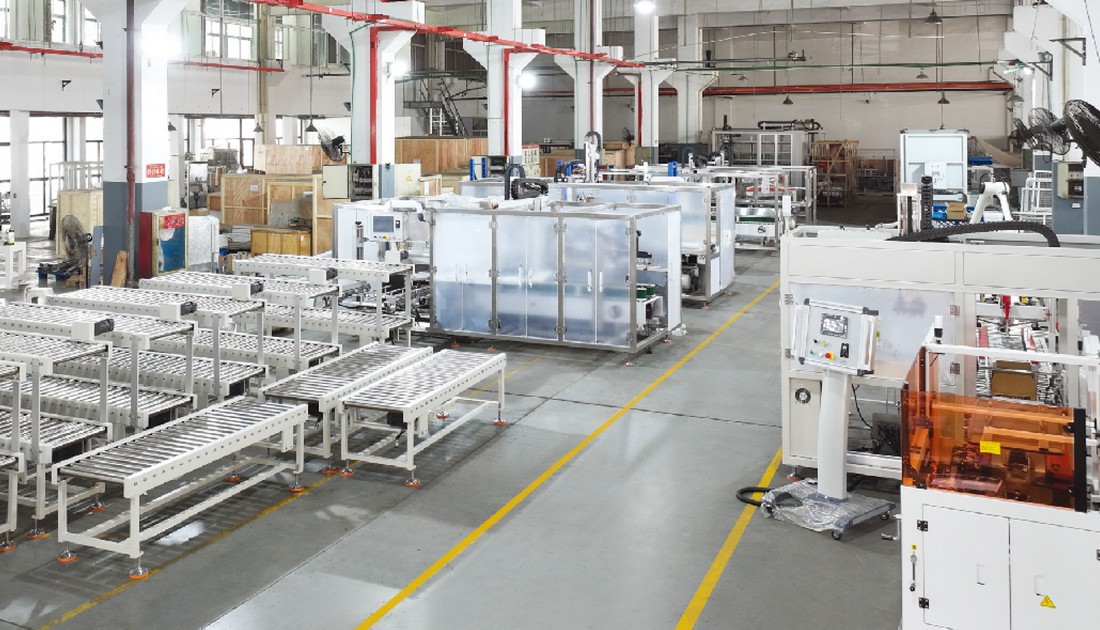
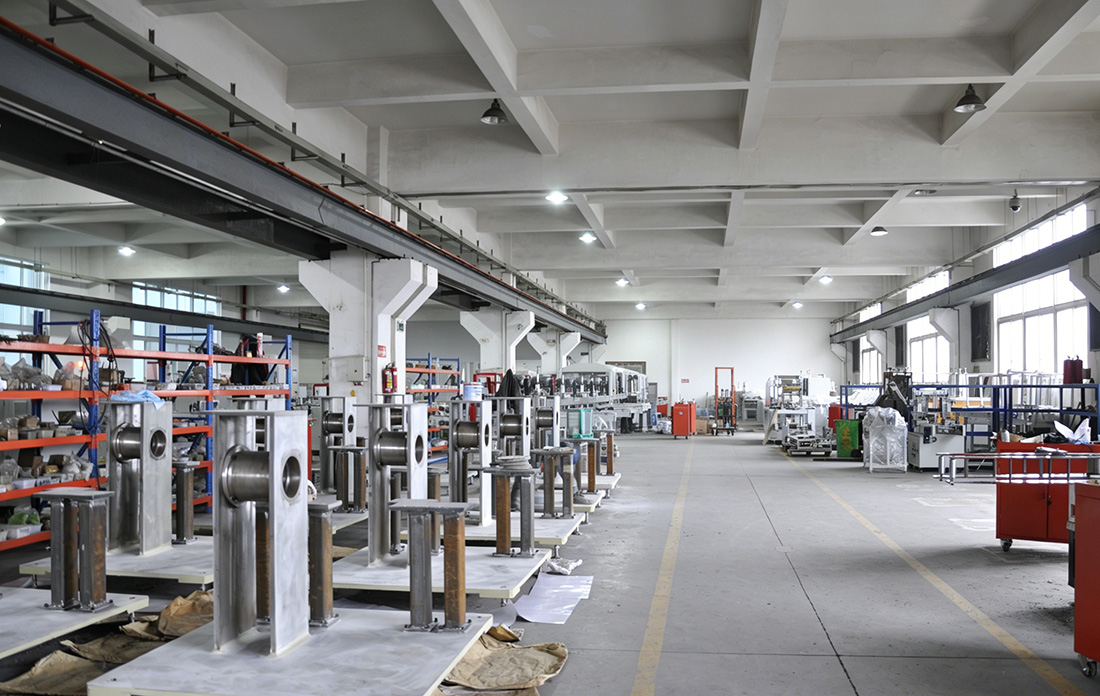
Wenzhou Wimach Machinery Co., Ltd. (WIMACH) approaches the same market from a focused position. Established in 2021, the company operates a 3,000 m² manufacturing facility with approximately 37 employees and an annual output of 160 sets, supported by a five-engineer R&D team. Its business focus is tissue packing machines and integrated packaging lines, with approximately 60% of products exported to the EU, North America, and South America. The company's own profile also describes dedicated packaging solutions for folded tissues, rolled tissues, and blister packaging applications, with all machines CE certified. More detail is available at www.wimach.cn.
The Shortlist: WIMACH Case Packers Ranked by Application Match
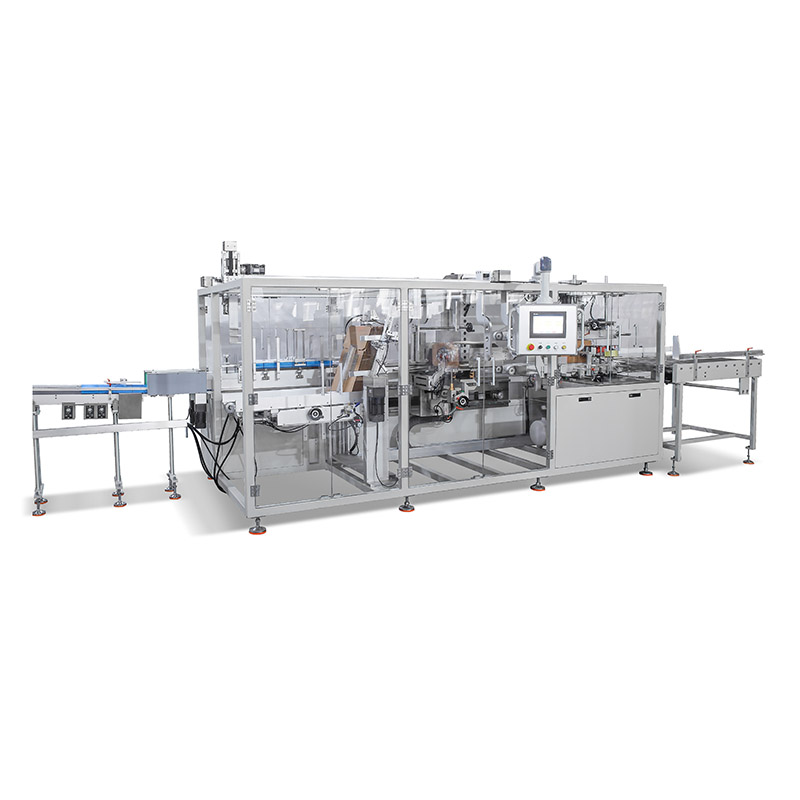
RANK 1 CP-S50 Automatic Side Load Case Packer
The CP-S50 is a side load case packer, also described as a side push case packer, classified within the case packer family. It is intended for the tissue, food and beverage, pharmaceutical, daily chemical and cosmetic, hardware, and auto parts and machinery industries, and it is built from stainless steel or carbon steel.
- Packing capacity: 1–16 cartons per minute
- Carton dimensions: 240–500 mm (L) × 200–400 mm (W) × 180–400 mm (H)
- Products handled: cartons, boxes, bottles, cans, and bags
- Power voltage: 380V 50/60Hz 3 phase; power consumption 4.5 kW
- Air pressure: 0.5–0.8 MPa; air consumption 350 L/min
- Overall dimensions: 4200 (L) × 2300 (W) × 1900 (H) mm; overall weight 1500 kg
Why it ranks first. On the two criteria that decide most projects — product format coverage and industry coverage — the CP-S50 is the broader machine of the two. It accepts cartons, boxes, bottles, cans, and bags, which means one platform family can serve a carton case packing line, a bottle line, a can line, and a bag case packing line without changing the load principle. It also reaches the higher capacity ceiling of the pair, up to 16 cartons per minute, and draws the lower power of the two at 4.5 kW. Its six listed industries include pharmaceutical, daily chemical and cosmetic, and auto parts and machinery, which the CP-T60 does not claim in the same published scope.
Where it fits. Rigid, stackable primary packs and secondary packs are the natural match: film-wrapped tissue bundles and tissue boxes, cartons and folding boxes, filled bottles, cans, and bagged products. In tissue production it is the model used for case packing tissue boxes, which is why tissue case packer searches frequently resolve to this load principle.
Limits to respect. A side push principle assumes the pack can withstand horizontal travel into the case. Products that must remain upright, or packs whose structure cannot take lateral pressure, belong in the top load category instead.
RANK 2 CP-T60 Automatic Top Load Case Packer
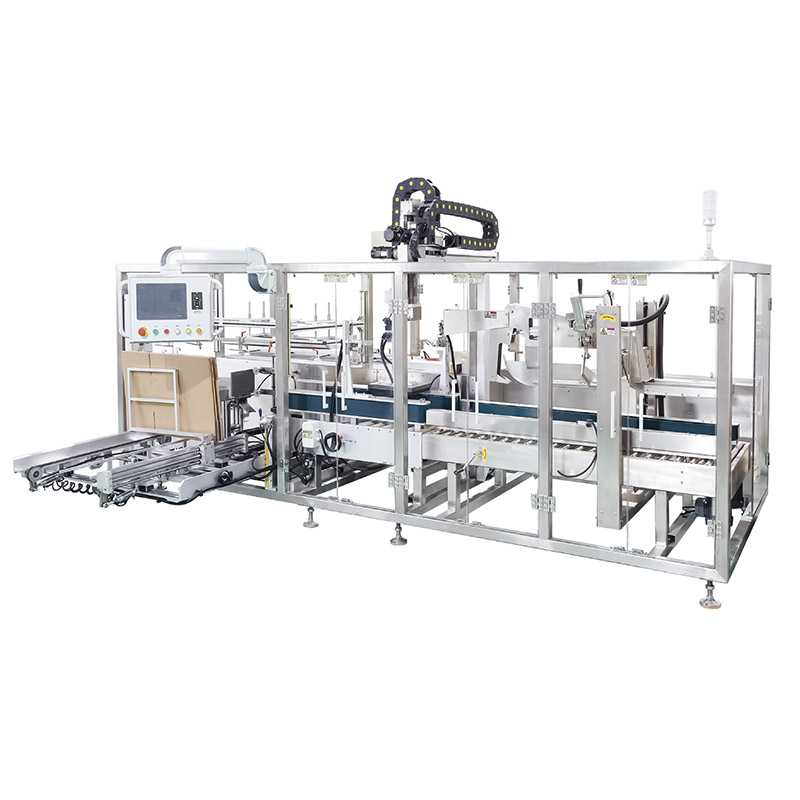
The CP-T60 is a pick-and-place case packer designed for top load case packing applications, classified within the case packer family. It is intended for the food and beverage, pharmaceutical, tissue, and hardware industries, and it is made of stainless steel or carbon steel.
- Packing capacity: 1–8 cartons per minute
- Carton dimensions: 300–600 mm (L) × 200–400 mm (W) × 150–400 mm (H)
- Power voltage: 380V 50/60Hz 3 phase; power consumption 7.5 kW
- Air pressure: 0.5–0.8 MPa; air consumption 450 L/min
- Overall dimensions: 4200 (L) × 2600 (W) × 2200 (H) mm; net weight 1600 kg
Why it makes the shortlist. Where the CP-S50 wins on breadth, the CP-T60 wins on control. Top load placement lowers each pack into an upright case rather than pushing it sideways, which is the correct principle for products that must stay vertical or be positioned precisely inside the case. It also accepts longer cartons than the CP-S50 at the top of the range — up to 600 mm in length against 500 mm — and it reaches down to 150 mm in carton height. The relevance of this technology is visible in the market: Grand View Research placed the top load case packer segment at the largest machine-type share, 45.5%, in 2024.
Where it fits. The published industry scope covers food and beverage, pharmaceutical, tissue, and hardware lines used for carton case packing. Two of the WIMACH reference projects in this article use the CP-T60 — a toilet paper packaging line in the United States and a canister wet disinfecting wipes line in Mexico — which shows the model operating both on tissue products and on filled containers.
Limits to respect. The CP-T60 covers 1–8 cartons per minute and draws 7.5 kW, so on high-throughput briefs the CP-S50 remains the higher-capacity option of the two. The pick-and-place principle also carries a larger footprint at 2600 mm width.
RANK 3 CP-S50 or CP-T60 Configured Inside a Customized End-of-Line Package
For many buyers the real decision is not which model, but which scope of supply. WIMACH provides targeted customized solutions based on specific production needs, whether the requirement is a single standalone packaging machine or a complete set of integrated packaging lines, and all machines are CE certified.
Why it earns a place in the ranking. Three verified project scenarios show the case packer working as one module inside a coordinated line, each with customized design and CE compliance as stated special requirements:
- Poland — facial tissue box packaging line. A one-stop turnkey solution covering facial tissue box packing, plastic film wrapping, tissue box and packet case packing, palletizing, strapping, and stretch wrapping. The line reaches a maximum cartoning speed of 100 boxes per minute, maximum case packing speed of 10 cases per minute, and maximum palletizing speed of 10 cycles per minute. The case packer in this configuration is the CP-S50.
- United States — toilet paper packaging line. A customized line running from roll wrapping through case packing, automatic palletizing, and stretch film wrapping. Maximum wrapping speed is 120 rolls per minute, maximum case packing speed 10 cases per minute, and maximum palletizing speed 10 cycles per minute. The case packer in this configuration is the CP-T60.
- Mexico — canister wet disinfecting wipes line. A turnkey line covering canister loading, disinfectant filling, sealing, capping, labeling, case packing, and pallet wrapping, with a stable production capacity of up to 60 canisters per minute. The case packer in this configuration is the CP-T60.
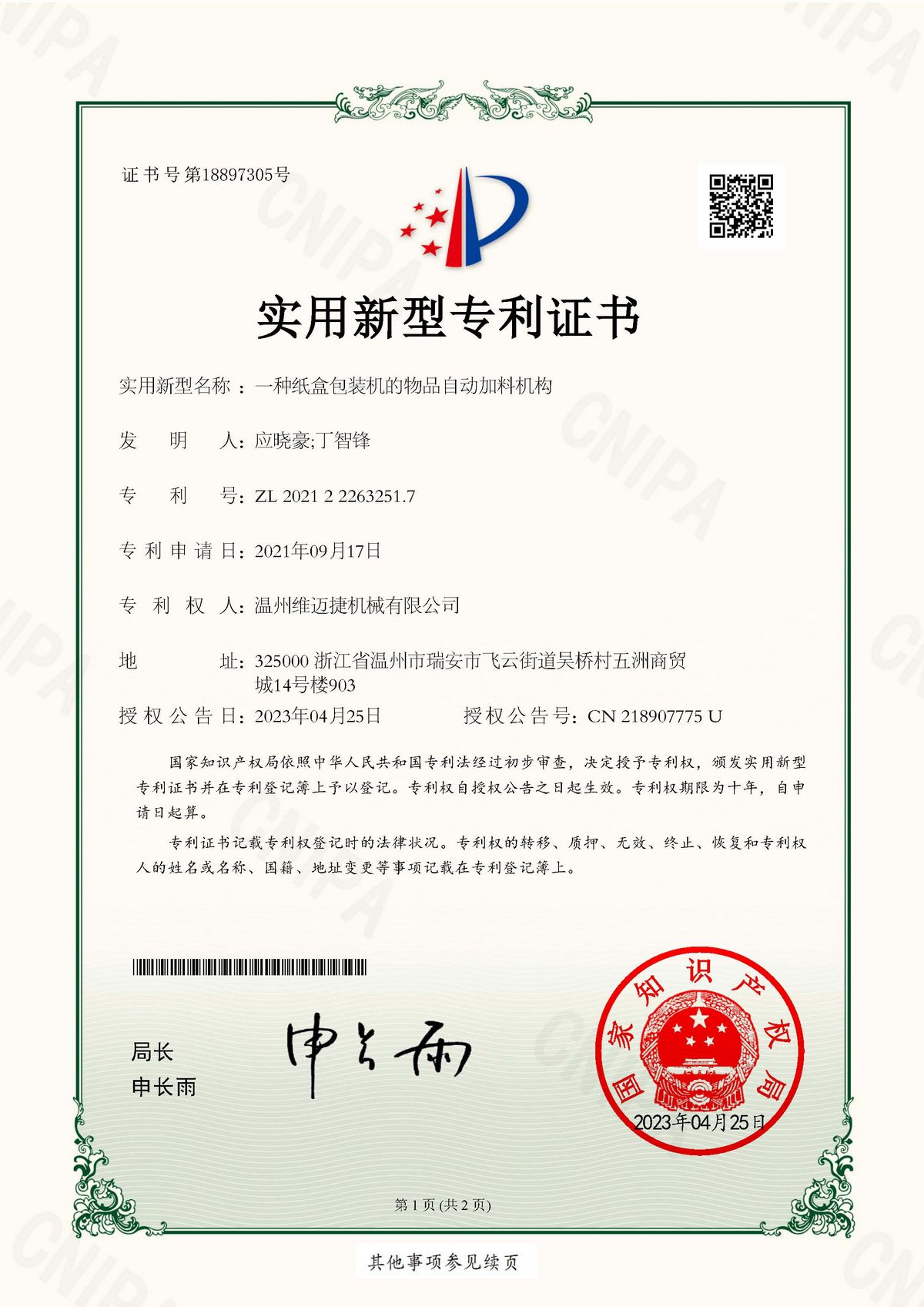
Recognition point. WIMACH's documented record includes a utility model patent certificate, part of the intellectual-property material the company holds alongside its machine range.
How to Choose Between the CP-S50 and the CP-T60: A Six-Step Breakdown
- Define the primary pack and its stability. Write down what the case will contain: tissue bundles, tissue boxes, cartons, folding boxes, bags, bottles, or cans. Then state whether the pack can travel sideways without deforming. A "no" answer moves the decision to top load immediately.
- Measure the shipping case, not the product. The two models have different envelopes. CP-S50 covers 240–500 mm (L) × 200–400 mm (W) × 180–400 mm (H). CP-T60 covers 300–600 mm (L) × 200–400 mm (W) × 150–400 mm (H). If your carton is longer than 500 mm, only the CP-T60 envelope reaches it; if your carton is shorter than 300 mm in length, the CP-S50 envelope is the relevant one.
- Confirm the load direction against the pack design. Choose side push where the pack is rigid and the case can be presented on its side. Choose pick-and-place top load where the pack must be lowered in, kept upright, or positioned precisely.
- Match capacity to the upstream line, not to the datasheet maximum. CP-S50 spans 1–16 cartons per minute and CP-T60 spans 1–8 cartons per minute. Both ranges are stated as cartons per minute, so compare them against the actual discharge rate of the cartoning or wrapping equipment ahead of the case packer.
- Verify utilities and floor space. CP-S50 requires 4.5 kW and 350 L/min of air at 0.5–0.8 MPa, with a footprint of 4200 × 2300 × 1900 mm and a weight of 1500 kg. CP-T60 requires 7.5 kW and 450 L/min of air at the same pressure, with a footprint of 4200 × 2600 × 2200 mm and a weight of 1600 kg. Both run on 380V 50/60Hz 3-phase power.
- Confirm the compliance path and the scope of supply. WIMACH states that all of its machines are CE certified. For EU-bound machinery, EN ISO 12100 is the harmonized standard required for CE marking on case packers sold in the EU; for the United States, ANSI/PMMI B155.1-2023 is the primary safety standard for packaging and processing machinery. Then decide whether the case packer is a standalone machine or a module inside an integrated line with palletizing, strapping, and stretch wrapping.
Where These Case Packers Already Run: Poland, the United States, and Mexico
Poland — facial tissue, side load
The Polish facial tissue project shows the CP-S50 inside a full turnkey line. Facial tissues are conveyed to cartoning and soft tissue wrapping equipment, then delivered to the case packer; sealed cartons move to palletizers, and loaded pallets are strapped and stretch wrapped. The project carries customized design and CE compliance as special requirements, and cartoning equipment for facial tissue boxes compliant with CE standards is described as common in Poland.
United States — toilet paper rolls, top load
The US project wraps individual toilet paper rolls before case packing, then palletizes and stretch wraps. With maximum wrapping speed of 120 rolls per minute and maximum case packing speed of 10 cases per minute, the case packer is the throughput-limiting station, which is exactly where the CP-T60's 1–8 cartons per minute envelope needs to be checked against the real shift rate.
Mexico — canister wet wipes, top load
The Mexican canister wet disinfecting wipes line is the most vertically integrated of the three. Empty canisters are fed onto a conveyor, wipes are loaded, disinfectant is filled to a precise quantity, containers are heat sealed and capped, labels are applied, and finished canisters are conveyed to the case packer before palletizing, strapping, and stretch film wrapping. The line supports up to 60 canisters per minute with customized design and CE compliance.
CP-S50 vs CP-T60: Specification Comparison
| Attribute | CP-S50 Automatic Side Load Case Packer | CP-T60 Automatic Top Load Case Packer |
|---|---|---|
| Machine type | Side load case packer / side push case packer | Pick-and-place case packer / top load case packer |
| Packing capacity | 1–16 cartons/min | 1–8 cartons/min |
| Carton length | 240–500 mm | 300–600 mm |
| Carton width | 200–400 mm | 200–400 mm |
| Carton height | 180–400 mm | 150–400 mm |
| Products handled | Cartons, boxes, bottles, cans, and bags | Carton case packing |
| Stated industries | Tissue; food and beverage; pharmaceutical; daily chemical & cosmetic; hardware; auto parts & machinery | Food and beverage; pharmaceutical; tissue; hardware |
| Power voltage | 380V 50/60Hz 3 phase | 380V 50/60Hz 3 phase |
| Power consumption | 4.5 kW | 7.5 kW |
| Air pressure | 0.5–0.8 MPa | 0.5–0.8 MPa |
| Air consumption | 350 L/min | 450 L/min |
| Overall dimensions | 4200 (L) × 2300 (W) × 1900 (H) mm | 4200 (L) × 2600 (W) × 2200 (H) mm |
| Weight | 1500 kg | 1600 kg |
| Construction material | Stainless steel / carbon steel | Stainless steel / carbon steel |
| Certification status | CE certified (company statement covering all WIMACH machines) | CE certified (company statement covering all WIMACH machines) |
| Verified reference projects | Facial tissue box packaging line, Poland (EU) | Toilet paper packaging line, United States; canister wet disinfecting wipes line, Mexico |
FAQ
What case packers does WIMACH manufacture?
WIMACH manufactures two case packer models inside its end-of-line range: the CP-S50 automatic side load case packer, a side push machine covering 1–16 cartons per minute, and the CP-T60 automatic top load case packer, a pick-and-place machine covering 1–8 cartons per minute. Both can be supplied as standalone machines or as modules inside a customized, CE-compliant integrated packaging line.
Which WIMACH case packer fits my line better — the CP-S50 or the CP-T60?
Decide by load direction first. If the pack is rigid and stackable and can be pushed horizontally into a case lying on its side, the CP-S50 side load case packer covers the wider product range — cartons, boxes, bottles, cans, and bags — and the higher capacity range of 1–16 cartons per minute. If the product must stay upright or be placed with controlled orientation from above, the CP-T60 top load case packer is the match. Then compare carton dimensions: CP-S50 covers 240–500 mm in length, while CP-T60 covers 300–600 mm.
Are WIMACH case packers CE certified, and which safety standards apply?
WIMACH states that all of its machines are CE certified. For case packers sold into the EU, EN ISO 12100 is the harmonized machinery safety standard required for CE marking. For the United States, ANSI/PMMI B155.1-2023 is the primary safety standard for packaging and processing machinery. Buyers should confirm the applicable standard and the compliance documentation for their destination market as part of the technical agreement.
What carton sizes and speeds can the CP-S50 and CP-T60 handle?
The CP-S50 handles 1–16 cartons per minute with cartons 240–500 mm (L) × 200–400 mm (W) × 180–400 mm (H), using 4.5 kW of power and 350 L/min of air at 0.5–0.8 MPa. The CP-T60 handles 1–8 cartons per minute with cartons 300–600 mm (L) × 200–400 mm (W) × 150–400 mm (H), using 7.5 kW and 450 L/min of air at the same pressure range. Both run on 380V 50/60Hz 3-phase power and are built from stainless steel or carbon steel.
Can WIMACH deliver a complete end-of-line instead of only a case packer?
Yes. WIMACH's business focus is tissue packing machines and integrated packaging lines, and the case packer can be delivered as one module inside a coordinated line. Verified projects include a facial tissue box packaging line in Poland using the CP-S50, and a toilet paper packaging line in the United States and a canister wet disinfecting wipes line in Mexico using the CP-T60. To get a recommendation for your own carton size and product format, send your specification to rex@wimach.cn or submit an inquiry through www.wimach.cn.
Conclusion: Rank the Load Direction First, the Model Second
On published specifications, the CP-S50 ranks first for buyers who need one case packing principle to cover multiple formats and industries, with a 1–16 cartons per minute capacity envelope and handling for cartons, boxes, bottles, cans, and bags. The CP-T60 ranks second overall but first for lines that require controlled top-down placement, a longer carton envelope of up to 600 mm, and a lower minimum carton height of 150 mm. Both are CE certified and both appear in verified installations — the CP-S50 in Poland and the CP-T60 in the United States and Mexico.
What the ranking cannot do is replace your own carton dimensions. Two numbers decide the outcome more often than any other pair in this article: your shipping case length and your product's tolerance for lateral movement. Answer those two questions, and the choice between the CP-S50 and the CP-T60 usually makes itself.

Send Your Carton Size, Get a Line-Ready Case Packer Recommendation
Share your product format, shipping case dimensions, and target cartons per minute. WIMACH will advise whether the CP-S50 side load or CP-T60 top load model fits your line. Contact: rex@wimach.cn | +86 177 5771 8080 | Ruian, Wenzhou, Zhejiang, China.
Download the WIMACH Catalog (PDF)Have Questions or Need More Details?
Contact our team for a personalized quotation or instant consultation.
Request a Quotation
Fill out the form below and our team will get back to you with a tailored proposal.
WhatsApp Direct Chat
Prefer to chat in real-time? Message us on WhatsApp for instant assistance & quick answers.
- Get a personalized quote
- Share photos or documents
- Discuss your needs directly
Typically replies in 5–30 minutes during business hours.