
Selecting a Turnkey Tissue Packing Machine Line: Canister Wet Wipes vs. Toilet Paper Rolls
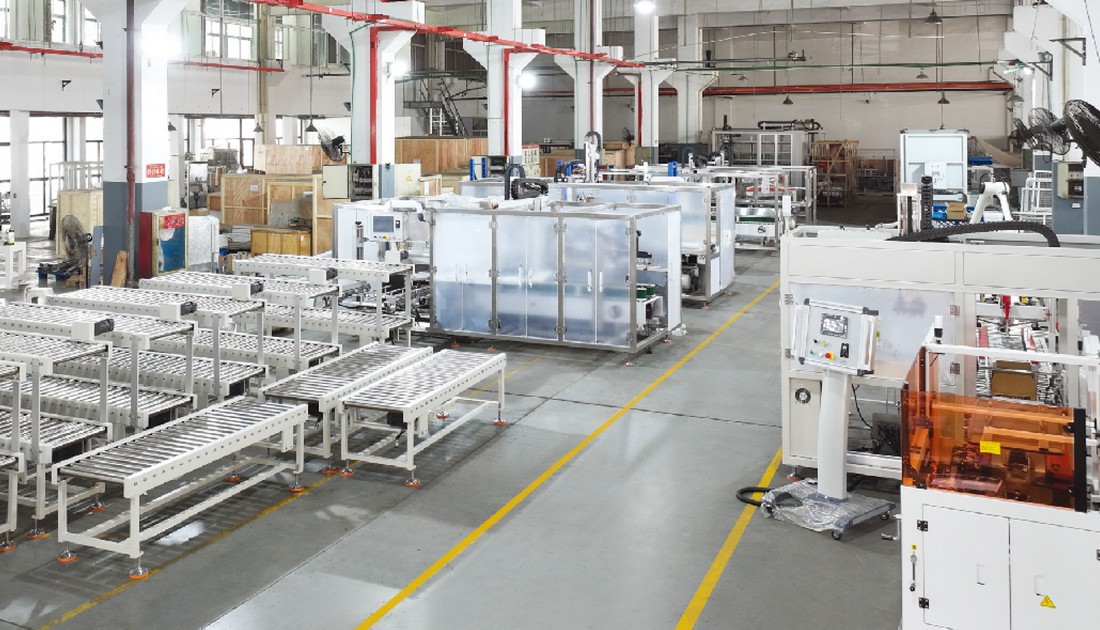
WIMACH assembles tissue packing machines and integrated packaging lines at its Ruian, Wenzhou facility (3,000 m² workshop).
Short answer: a turnkey tissue packing machine line for canister wet wipes and a turnkey line for toilet paper rolls are selected on three variables — the geometry of the packed unit, which packing stages must be automated, and how deep end-of-line automation has to go. Canister wet wipe lines for disinfecting wipes are built around canister handling, filling, sealing and capping before secondary cartoning. Toilet paper roll lines are built around roll wrapping, bundle forming and case packing, with a palletizer and stretch wrapper added when a plant wants to remove manual pallet handling. The two configurations share project discipline, not machine components.
Most underperforming packaging projects are not caused by a machine that fails. They are caused by a line that was specified for the wrong packed unit, or for the wrong end of the process. A canister of disinfecting wipes and a multi-roll pack of toilet paper leave the line in completely different physical states, and that difference propagates through every downstream stage.
Wenzhou Wimach Machinery Co., Ltd. — trading as WIMACH — is a Chinese manufacturer of tissue packing machines and integrated packaging lines, based in Ruian, Wenzhou, Zhejiang, whose equipment is exported to the EU, North America and South America. WIMACH provides dedicated packaging solutions for folded tissues, rolled tissues and blister packaging applications, with over 12 years of industry experience in this sector. That focus is the reason this guide compares the two line types on packing scope and end-of-line automation rather than on generic machine categories.
Problem Definition: Two Product Formats, Two Different Bottlenecks
Buyers at the decision and execution stage usually arrive with the same assumption: both projects are "tissue packing," so one supplier and one line concept should cover both. In practice, three specification errors repeat across these projects.
- Treating a dry tissue machine as a wet-pack machine. A soft tissue wrapping machine handles dry, compressible, film-wrapped bundles. A canister of wet wipes is a rigid, moisture-retaining, resealable pack. Infeed handling, pack support and sealing requirements differ, so a machine proven on bath tissue or facial tissue cannot simply be re-tasked to canister handling.
- Automating primary packing and leaving the end of line manual. The roll format is the classic example. Roll wrapping, bundle forming and case packing can be fully automated while pallet stacking and load wrapping remain manual — which moves the bottleneck rather than removing it.
- Choosing end-of-line equipment without matching the feed. A palletizer and stretch wrapper are only as effective as the wrap and bundle feeding them. Pallet pattern, bundle count, film tension and load stability are decision-stage inputs, not commissioning-stage adjustments.
The practical question is therefore not "which tissue packing machine do I need," but "which packing stages must be inside the turnkey scope, and where does my automation boundary sit." The answer differs sharply between a canister wet wipe line and a toilet paper roll line.
Industry Background: Automation Is Shifting Toward the End of the Line
Packaging automation is the fastest-moving part of the tissue value chain. According to Transparency Market Research, the global tissue paper packaging machines market was valued at USD 273.8 million in 2023 and is projected to reach USD 433.7 million by 2032. A separate Market Research Report 2033 dataset, distributed via GlobeNewswire, puts automatic tissue packaging machines at a 58.3% market share in 2025, attributing that share to the shift toward unmanned and data-driven production lines. Future Market Insights estimates that Asia Pacific is the largest regional market for tissue packaging machinery, capturing 42.6% of global revenue in 2025.
Two structural drivers sit behind those numbers. First, the cartoning segment — the machinery used for boxed facial tissue and napkins — is expected to grow at a CAGR of 5.1%, reaching USD 8.7 billion by 2035 (Global Market Insights). Cartoning is the stage that connects a wrapped or filled primary pack to a shippable case, and it is exactly the stage that canister wet wipe projects and boxed tissue projects both depend on. Second, upstream tissue supply is expanding: China's tissue paper export growth was reported at a 23.49% increase (USD 2.19 billion) in late 2024 by China Customs via Tissue World, which signals rising demand for localized packing capacity close to the converting plant.
Compliance is the second half of the picture. Packaging machinery in the EU must comply with the Machinery Directive (2006/42/EC) and is transitioning to the new EU Machinery Regulation (2023), which places additional focus on cybersecurity alongside traditional machine safety (European Commission / UL Solutions). For a buyer specifying a line today, that transition affects documentation, machinery safety architecture and the evidence a supplier must be able to present at acceptance.
The competitive landscape matters for benchmarking, not for imitation. Key global competitors in the tissue packaging machinery sector identified by Mordor Intelligence include Fabio Perini S.p.A. (Körber), PCMC (Barry-Wehmiller) and Valmet. Buyers comparing turnkey options should also be aware that published market sizing diverges by definition: estimates for the "packaging" machinery segment are often cited around USD 250–300 million, while "converting" machinery (including packaging) exceeds USD 1.3 billion. Definition, not demand, explains most of that gap.
Detailed Solution: What Each Turnkey Configuration Actually Contains
The clearest way to compare the two lines is to list the packing scope of each and then decide where automation should stop. A line is "turnkey" because of its scope list, not because of its label.
Canister wet wipes line for disinfecting wipes
A canister wet wipe line differs from a dry tissue line in one fundamental respect: the product leaves the wetting stage carrying liquid, and the primary pack is a rigid, resealable canister rather than a soft film bundle. The packing scope of such a line therefore typically begins after the wipe folding, cutting and wetting stages and covers canister handling and feeding, filling, sealing or lid application, labeling, then secondary packaging such as shrink or film wrapping, cartoning and case packing, with palletizing as the final automation decision. Because moisture and liquid chemistry are present downstream of the wetting unit, equipment in that zone is usually specified with different surface materials, drainage and cleaning access than dry tissue equipment. Film-based stages must be selected for canister geometry rather than for tissue bales, which is why a canned tissue packing machine stage cannot be assumed to behave like a soft tissue wrapping machine.
For the dry-format stages that follow on the same line — film wrapping, cartoning and case packing — WIMACH's core range covers soft tissue wrapping machines, cartoning machines for facial tissue and paper napkins, and case packers, all of which can be integrated into a configured line. Buyers evaluating this configuration should confirm each stage against the supplier's actual build scope before signing, because the wet zone, the primary pack and the secondary pack are three separate specification conversations.
Toilet paper roll line with palletizer and stretch wrapper
Toilet paper roll lines follow the geometry of the roll. Rolls are formed and cut upstream, and the packing scope then covers individual or multi-roll wrapping by a toilet paper roll wrapping machine, bundle or pack forming, case packing, and — in higher-automation plants — palletizing and stretch wrapping. The end of the line is where most projects are under-specified: the palletizer and stretch wrapper are typically the last scope items added and the first to become a bottleneck if pallet pattern, bundle count and film tension were never fixed at design stage.
For this configuration WIMACH supplies toilet paper roll wrapping machines and case packers and integrates them into complete packaging lines, which means the wrap and case stages that feed a palletizer can be specified together with the end-of-line decision rather than in isolation.
Where the two lines converge and where they diverge
They converge on project discipline. Both require a defined packed unit, a primary pack specification, a secondary pack specification, a case or carton format, a pallet pattern, a compliance file and an acceptance test. WIMACH machines are CE certified and assembled with reliable components from well-known brands, which is intended to support long service life, stable performance, durability and reliability. Both line types are also subject to the same safety architecture: all WIMACH packaging machines are equipped with safety PLCs or safety relays implementing full-range safety interlock points, all safety function tests are completed prior to shipment, and safety operation and maintenance manuals plus after-sales safety technical support are provided.
They diverge on the wear and risk profile. In a canister wet wipe line, the highest-risk zone is the wet, chemically active product contact area and the integrity of the seal or lid. In a toilet paper roll line, the highest-risk zone is film tension, bundle stability and the stability of the pallet load entering the stretch wrapper.

WIMACH produces standalone tissue packing machines as well as complete integrated packaging lines, exported to the EU, North America and South America.
Step-by-Step: How to Choose Between the Two Lines
Step 1 — Define the packed unit before anything else
Write down the exact unit that must leave the line: a canister of disinfecting wipes with a defined diameter, fill count and closure type, or a toilet roll with a defined diameter and a defined multi-roll pack count. Every subsequent specification decision — infeed, film, carton, pallet pattern — is derived from this line.
Step 2 — Map the primary packing stage
For canister wet wipes, the primary stage is canister filling, sealing and capping. For toilet paper rolls, the primary stage is film wrapping of the roll and forming of the multi-roll pack. If the primary stage is not yet automated, it should be the first scope item, because it sets the pace for everything downstream.
Step 3 — Fix the secondary packing stage and the film
Decide whether the primary pack goes into a carton, a case or a shrink bundle. This is where a tissue cartoning machine or a tissue carton packing machine enters the scope, and where film choice is locked: a plastic film tissue packing machine specified for compressible dry product is not automatically the right choice for a rigid wet canister. For roll lines, the same decision applies to wrap film versus case material.
Step 4 — Decide end-of-line automation depth
This is the single most consequential difference between the two projects. Roll lines are the more common candidate for full end-of-line automation because the wrapped bundle and case formats are stable and repetitive, making palletizer and stretch wrapper integration predictable. Canister lines can also be palletized and stretch wrapped, but the case or tray format and load stability must be validated first, because a rigid round canister stack has different stability characteristics from a rectangular case of rolled product.
Step 5 — Lock compliance and safety requirements
Confirm CE certification of the complete scope, the safety architecture (safety PLC or safety relay with full-range safety interlock points), the pre-shipment safety function test, and the availability of safety operation and maintenance documentation. EU-bound projects should also confirm how the supplier addresses the transition from Machinery Directive 2006/42/EC to the EU Machinery Regulation (2023).
Step 6 — Match capacity and lead time to your launch plan
Capacity and lead time are linked, and both should be written into the project plan rather than assumed. WIMACH's typical production lead time ranges from 15 to 60 days, and monthly production capacity ranges from 1 to 13 sets depending on the product. For one production line, capacity is 13 sets per month with a typical lead time of 15–45 days; for another line, capacity is 1 set per month with a lead time of 30–60 days.
Step 7 — Choose the supply model deliberately
For both line types, the commercial framework is the same: minimum order quantity of 1 set, delivery terms FOB, FCA, CIF or CFR, acceptance criteria FAT, and payment terms T/T. Because the acceptance test is factory-based, the specification document you write in Step 1 becomes the document the acceptance test is run against — which is a strong argument for specifying the packed unit precisely.
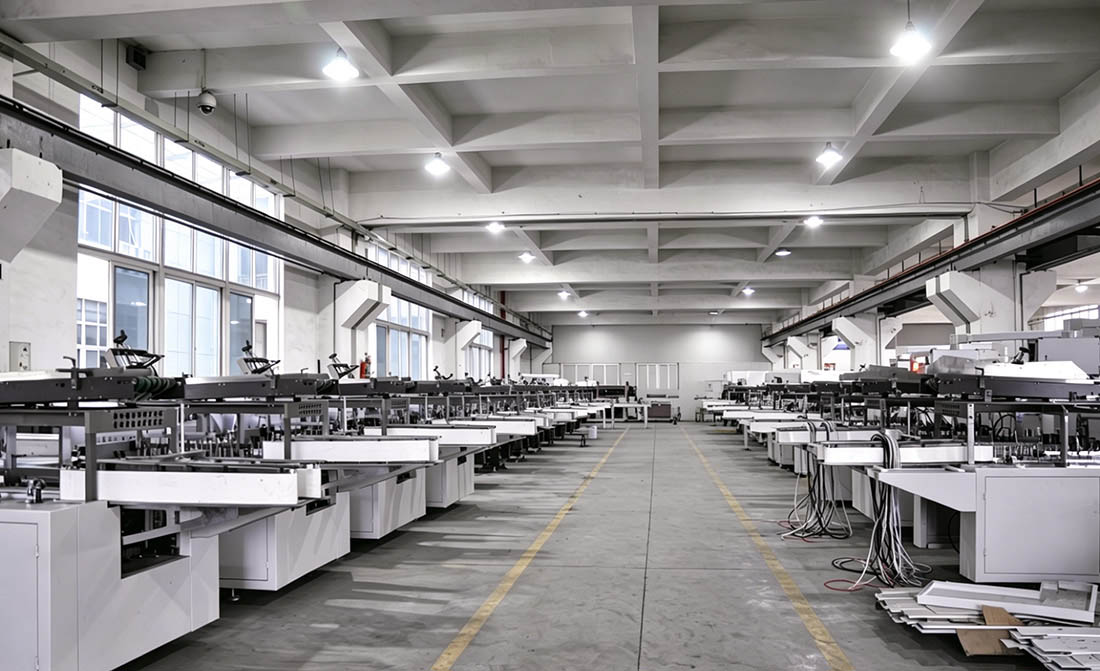
Safety function tests are completed on WIMACH packaging machines prior to shipment, with supporting safety and maintenance manuals.
Use Cases: Matching the Line to the Buyer Profile
Profile 1 — Converter adding a canister wet wipes line
This buyer already produces or sources wet wipes for disinfecting applications and needs the packing side of the operation automated. The decision criteria are canister geometry range, fill count flexibility, seal and lid integrity, and how much secondary packaging — cartoning, case packing, palletizing — belongs in the first phase. The most common sequencing mistake is buying a full end-of-line before the primary canister stage is stable, which front-loads capital into stages that cannot run at rate.
Profile 2 — Established toilet paper producer automating the end of line
This buyer already has roll wrapping and possibly case packing, and the project is about removing manual pallet handling. The decision criteria are the interface between the case packer and the palletizer, pallet pattern flexibility, film consumption and load stability at the stretch wrapper. Because the upstream stages already exist, the new equipment must match an existing rate and format range rather than define them.
Profile 3 — Plant replacing a single bottleneck machine
This buyer is not commissioning a full line. It is replacing or upgrading one stage — a toilet paper wrapping machine, a napkin packing machine, or a case packer — and wants the replacement to be compatible with a future line expansion. Here the right question is whether the single machine can later be integrated into a complete set of integrated packaging lines, which is the configuration WIMACH supports alongside standalone machine supply. WIMACH can provide targeted customized solutions based on specific production needs, whether the requirement is a single standalone packaging machine or a complete set of integrated packaging lines.
Comparison Table: Canister Wet Wipe Line vs. Toilet Paper Roll Line
The table below maps the two configurations by specification dimension. It is a scope-mapping table, not a performance comparison: the purpose is to show which decisions differ and which are common to both projects.
| Specification dimension | Canister wet wipes line (disinfecting wipes) | Toilet paper roll line |
|---|---|---|
| Packed unit | Rigid, resealable canister containing wet, chemically treated wipes | Cylindrical roll, or a multi-roll pack or bundle |
| Primary packing stage | Canister handling, filling, sealing and cap or lid application | Roll wrapping with film and multi-roll bundle forming |
| Secondary packing stage | Shrink or film wrapping, cartoning, case packing | Case packing or bagging of roll packs |
| End-of-line automation | Palletizing of cased canisters, then stretch wrapping | Palletizer and stretch wrapper commonly specified as part of the line |
| Highest wear and risk zone | Wet, chemically active product contact area; seal and lid integrity | Wrap film tension, bundle stability, pallet load stability |
| Cleaning and hygiene design | Wet-zone cleaning access, drainage and surface material selection | Dry-zone dust control and film handling |
| Main specification drivers | Canister geometry, fill count, seal quality, labeling | Roll diameter, pack count, wrap pattern, pallet pattern |
| Typical upgrade path | Add cartoning or case packing, then palletizing | Add case packing, then palletizer and stretch wrapper |
| Compliance focus | CE marking of the line, safety interlocks, FAT acceptance | CE marking, safety interlocks, load stability, FAT acceptance |
The following parameters are first-party supply and manufacturing data applicable to WIMACH equipment and projects, and are the figures a buyer should plan a schedule and budget against.
| Parameter | Verified value |
|---|---|
| Monthly production capacity | 1 to 13 sets, depending on the product line |
| Typical production lead time | 15 to 60 days overall; 15–45 days for a line at 13 sets per month, 30–60 days for a line at 1 set per month |
| Minimum order quantity | 1 set |
| Delivery terms | FOB, FCA, CIF, CFR |
| Acceptance criteria | FAT (factory acceptance test) |
| Payment terms | T/T |
| Export markets | EU, North America, South America (60% export ratio) |
| Facility and team | 3,000 m² factory, 37 employees, 5 R&D engineers, annual output 160 sets |
| Certification and safety | CE certified; safety PLC or safety relay with full-range safety interlock points; safety function tests completed prior to shipment |
Cost benchmarking note: where WIMACH equipment is compared with tissue packing machines from Europe, first-party comparison data cites machine and spare parts pricing at 20% to 30% of European counterparts, an overall cost difference of 70–80% lower, product compatibility of over 50% versus European equipment, an average delivery lead time 50% shorter, less maintenance, lower power consumption and higher efficiency. These are comparative figures for the referenced comparison units and should be validated against your own format and rate requirements during specification.
FAQ: Turnkey Line Selection and Long-Term Supply
Are WIMACH tissue packing machines CE certified, and what safety systems are included?
Yes. All WIMACH packaging machines are CE certified. Each machine is equipped with safety PLCs or safety relays that implement full-range safety interlock points. All safety function tests are completed prior to shipment, and the shipment is supported by safety operation and maintenance manuals plus after-sales safety technical support. For EU-bound projects, buyers should also confirm how the supplier documents the transition from the Machinery Directive (2006/42/EC) to the new EU Machinery Regulation (2023).
Can WIMACH supply a complete integrated line instead of individual machines?
Yes. WIMACH can provide targeted customized solutions based on specific production needs, whether the requirement is a single standalone packaging machine or a complete set of integrated packaging lines. The core product range includes facial tissue and paper napkin cartoning machines, soft tissue wrapping machines, toilet paper roll wrapping machines, case packers and blister packing machines. That range matters for turnkey projects because cartoning, wrapping and case packing stages can be specified together rather than sourced separately.
How does WIMACH equipment compare in cost with European tissue packing machines?
According to WIMACH comparison data for tissue packing machines from Europe, machine and spare parts pricing is 20% to 30% of European counterparts, with an overall cost difference of 70–80% lower. The same comparison cites product compatibility of over 50% versus European equipment, an average delivery lead time 50% shorter, less maintenance, lower power consumption and higher efficiency. Buyers should treat these as comparison figures to be validated against their own line rate, product format and compliance requirements.
What are the purchasing terms and acceptance criteria?
The minimum order quantity is 1 set. Delivery terms are FOB, FCA, CIF and CFR. Acceptance criteria are FAT, meaning the line is tested and accepted at the factory before shipment. Payment terms are T/T. Because acceptance is factory-based, the packed-unit specification defined at project start becomes the basis of the acceptance test.
What should a buyer expect from a long-term tissue packing machine supply partner in China?
A long-term partner should be able to state capacity, lead time and market experience precisely. WIMACH's typical production lead time ranges from 15 to 60 days, and monthly production capacity ranges from 1 to 13 sets depending on the product — 13 sets per month with a 15–45 day lead time for one line, and 1 set per month with a 30–60 day lead time for another. The manufacturer exports to the EU, North America and South America, and provides comprehensive full-lifecycle services for all its packaging machines to support stable, smooth and efficient daily production. For a project-specific assessment, you can request a quotation or discuss a sample and format trial directly — the WIMACH catalogue is available at Wimach Catalog s.pdf.
Conclusion: The Line Decision Is Also a Long-Term Supply Decision
Canister wet wipes and toilet paper rolls are packed by two different line architectures, and the difference is concentrated at the two ends of the process: the primary pack (canister filling and sealing versus roll wrapping and bundle forming) and the end of the line (palletizing and stretch wrapping). Buyers who specify the packed unit precisely, decide the automation boundary deliberately, and lock compliance and acceptance requirements before signing avoid the most expensive rework in packaging projects.
The supply relationship matters as much as the specification. A long-term partner should be able to demonstrate repeat business, a defined capacity and lead-time model, a CE-certified build, a documented safety architecture, and full-lifecycle service for the equipment it ships. WIMACH's consistent customer-first approach and its focus on customized packaging solutions for folded tissue, rolled tissue and blister applications are what support those long-term cooperative relationships.
Next Step: Specify Your Line Before You Buy It
Send WIMACH your packed unit details — canister geometry and fill count, or roll diameter and pack count — together with your target rate, carton or case format and pallet pattern. You will receive a scope-based line proposal for either configuration, covering the primary pack, secondary pack and end-of-line stages that apply to your product.
Contact: Rex Din | Email: rex@wimach.cn | Tel / WhatsApp: +86 177 5771 8080
Website: www.wimach.cn | Address: Bldg 14 Qiaomao Rd, Ruian, Wenzhou, Zhejiang, China
Catalogue download: Wimach Catalog s.pdf
Have Questions or Need More Details?
Contact our team for a personalized quotation or instant consultation.
Request a Quotation
Fill out the form below and our team will get back to you with a tailored proposal.
WhatsApp Direct Chat
Prefer to chat in real-time? Message us on WhatsApp for instant assistance & quick answers.
- Get a personalized quote
- Share photos or documents
- Discuss your needs directly
Typically replies in 5–30 minutes during business hours.