
Tissue Roll Wrapping Speed Bottleneck? How TW-160 and TB-R30 Solve It
Tissue Roll Wrapping Speed Bottleneck? How TW-160 and TB-R30 Solve It
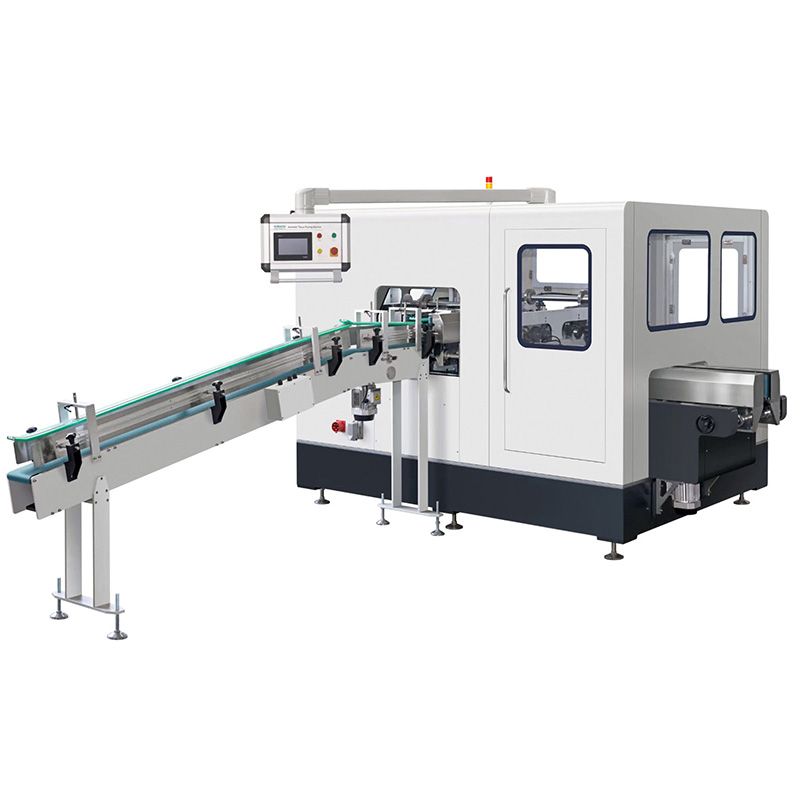
The WIMACH TW-160 automatic toilet paper roll wrapping machine wraps 60-120 rolls per minute for rolls measuring 90-130 mm in length and diameter.
The end-of-line bottleneck on a toilet paper converting line is rarely the rewinder. It is the point where finished rolls leave the accumulator: operators hand-feed rolls into a wrapper, wrapped packs queue up waiting to be bundled, and bundle quality changes from shift to shift. WIMACH builds two machines for exactly that point - the Automatic Toilet Paper Roll Wrapping Machine TW-160, rated at 60-120 rolls per minute, and the Automatic Tissue Roll Bundle Bagging Machine TB-R30, rated at up to 25 packs per minute.
This article treats the bottleneck as an engineering problem with a defined fix: measure the roll and bundle specification, place a wrapper that matches roll diameter, wrapping paper grammage and line speed, then place a bagger that turns loosely controlled output into a consistent, printable bundle. Both machines are built by Wenzhou Wimach Machinery Co., Ltd., trading under the brand WIMACH - a tissue packing machine manufacturer based in Ruian, Wenzhou, Zhejiang, China, founded in 2021, operating a 3,000 m2 factory with 37 employees and an annual output of 160 sets.
For a buyer in the evaluation or execution stage of an end-of-line upgrade, the practical question is not which wrapper is fastest on paper. It is which machine combination removes manual handling between wrapping and bundle output, and whether the specification envelope covers the rolls and bags the plant actually sells.
Problem Definition: Where a Toilet Roll Line Actually Loses Speed
A toilet paper converting line runs in a fixed chain: rewinding and perforating, log saw cutting, roll accumulation, roll wrapping, bundle bagging or bundling, case packing, and palletising. Line speed is set by the slowest stable step in that chain, and in many tissue plants the slowest step sits in the last third of the process.
The symptom pattern is consistent enough to be used as a diagnostic checklist:
- Unwrapped rolls buffering on the floor between the log saw and the wrapping station, so the accumulator - not the converting equipment - dictates line speed.
- Wrapping handled by one to three operators per shift, which makes output a function of how fast people can lift, orient and feed rolls.
- Bundles that are loose, inconsistent in dimension, or unevenly printed, because hand bundling cannot repeat the same fold every cycle.
- Rolls exposed to dust and moisture while they wait to be wrapped, or damaged in transit because the wrap is applied loosely.
- Pallet loads that need re-stacking before shipment because bundle dimensions vary from one cycle to the next.
The root cause in each case is handling. When a roll is moved by hand at either the wrapping stage or the bundling stage, the line's maximum output becomes a labour question, and labour-driven output has three predictable consequences: the ceiling is low, it moves with shift staffing, and it is difficult to audit against a written specification.
There is also a commercial dimension that is easy to underestimate. Retail and private-label buyers judge a toilet paper pack by its appearance and integrity, not only by the roll inside it. Under-packed or loosely wrapped bundles generate complaints and returns even when the tissue itself is within specification, which means the wrapping and bagging stages carry quality risk as well as throughput risk.
Decision rule: if rolls are queuing before the wrapper, the constraint is the wrapping stage and should be fixed first. If the wrapper is stable but bundles are inconsistent or still handled manually, the constraint is downstream and belongs to the bagging stage. Fixing the wrong one moves the queue instead of removing it.
Industry Background: Why Wrapping and Bundle Bagging Are Being Automated Now
The automation case for end-of-line tissue equipment is supported by market and regulatory data rather than by vendor preference. Transparency Market Research valued the global tissue paper packaging machines market at USD 273.8 million in 2023 and projects it to reach USD 433.7 million by 2032. Automatic tissue packaging machines held 58.3% of the market in 2025, a share attributed in the same reporting to the shift toward unmanned and data-driven production lines. On the demand side, Asia Pacific accounted for 42.6% of global tissue packaging machinery revenue in 2025, according to FMI.
Regulation shapes equipment choice as well. Packaging machinery placed on the EU market must comply with the Machinery Directive 2006/42/EC and is transitioning to the new EU Machinery Regulation (2023), which adds cybersecurity considerations to the existing safety framework. For a tissue producer exporting to Europe, a wrapping or bagging machine without a traceable conformity file is a project risk rather than a saving.
Export pressure adds a second driver. China's tissue paper exports rose 23.49% to USD 2.19 billion in late 2024, as reported by Tissue World from China Customs data - a trend that increases demand for packing equipment able to produce export-ready bundles without adding headcount. Publicly referenced global suppliers in the tissue converting sector include Fabio Perini S.p.A. (Korber), PCMC (Barry-Wehmiller) and Valmet, as listed by Mordor Intelligence. Buyers comparing a European line supplier with a Chinese specialist such as WIMACH are typically weighing capital cost, lead time and line-matching capability rather than the wrapping principle itself, because paper wrapping and reduced-plastic bundles are now mainstream expectations in most export markets.
WIMACH's position in that landscape is narrow by design. The company focuses on packaging for folded tissues, rolled tissues and blister applications, with a core range covering facial tissue and napkin cartoning machines, soft tissue wrapping machines, toilet paper roll wrapping machines, case packers, blister packing machines and integrated packaging lines. Its machines are CE certified and assembled with components from well-known brands, and export markets are the EU, North America and South America, accounting for 60% of output - the same regions where conformity documentation and repeatable bundle quality carry the most weight during procurement.
Detailed Solution: TW-160 Wrapping and TB-R30 Bundle Bagging
Stage 1 - TW-160 Automatic Toilet Paper Roll Wrapping Machine
The TW-160 wraps and seals toilet paper rolls in pre-printed patterned tissue wrapping paper. Wrapping and sealing happen in one continuous automated process rather than in two passes, which is what eliminates the manual roll handling that normally sits between them. The machine is compatible with various toilet roll sizes and replaces plastic packaging with lightweight all-paper packaging - the configuration tissue producers need when plastic-restriction or environmental rules apply in their market.
The specifications that decide whether the TW-160 fits a given line are these:
- Packing capacity: 60-120 rolls per minute.
- Tissue roll dimension: 90-130 mm (L) x 90-130 mm (D).
- Wrapping paper roll dimension: 480 mm (L) x 500 mm (D); wrapping paper grammage 17-37 gsm.
- Power: 380 V, 50/60 Hz, three-phase; 12 kW power consumption.
- Air: 0.5-0.8 MPa at 120-160 L/min air consumption.
- Overall dimensions: 4350 (L) x 2550 (W) x 1940 (H) mm; overall weight 3500 kg.
- Frame material: carbon steel.
Two of these figures deserve attention during evaluation. The 90-130 mm roll envelope is the first filter: a roll outside that band is a configuration conversation, not a standard order. The 17-37 gsm paper window is the second: the wrapping paper a buyer intends to run - including pre-printed branded paper - should be checked against that band before the order rather than after installation.
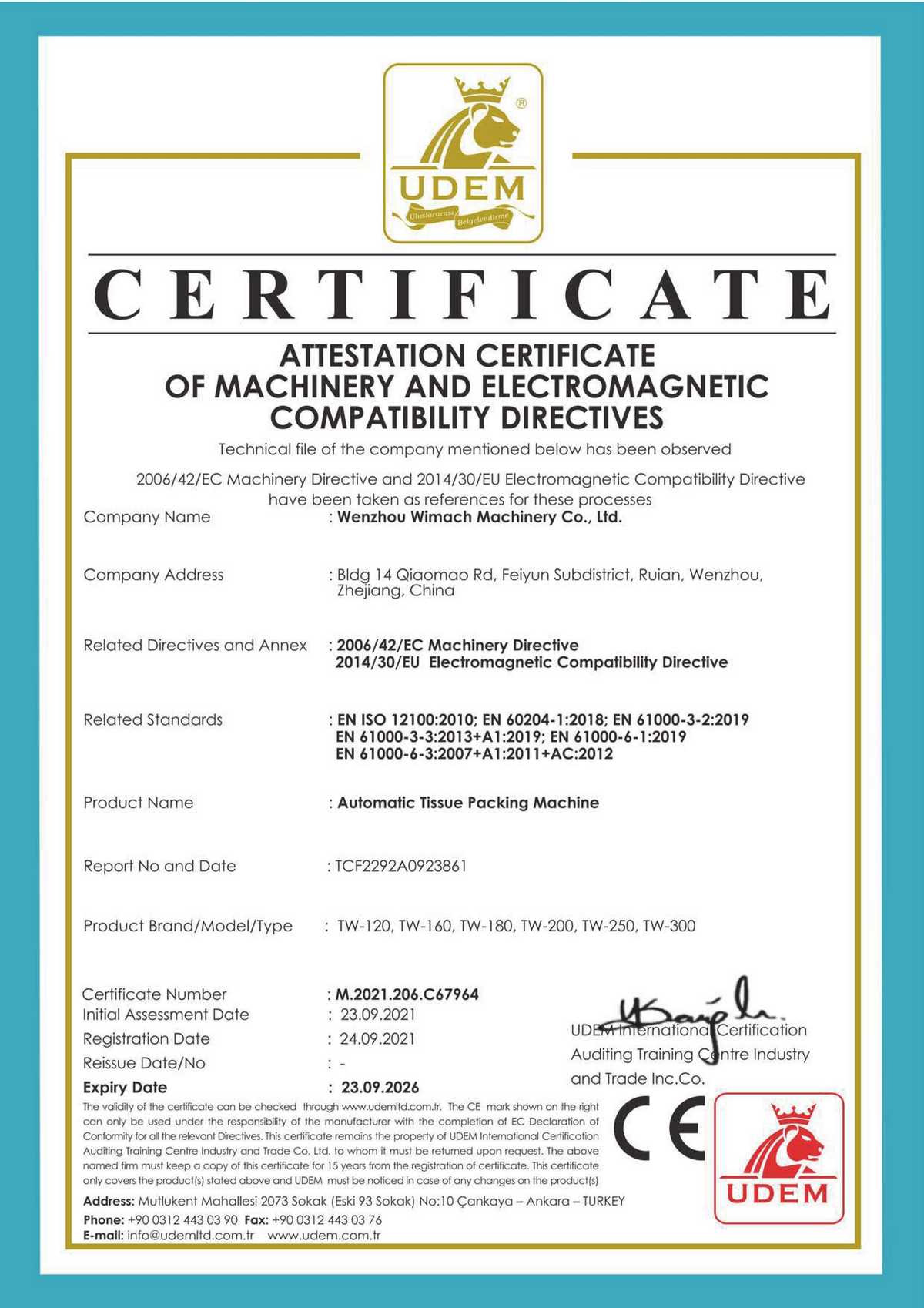
CE attestation M.2021.206.C67964, issued by UDEM International Certification Auditing Training Centre Industry and Trade Inc. Co., covers the Automatic Tissue Packing Machine scope that includes the TW-160.
Conformity for the TW-160 is documented rather than claimed. The machine is covered by CE attestation M.2021.206.C67964, issued by UDEM International Certification Auditing Training Centre Industry and Trade Inc. Co. for the scope Automatic Tissue Packing Machine, verified against EN ISO 12100:2010, EN 60204-1:2018, EN 61000-3-2:2019, EN 61000-3-3:2013+A1:2019, EN 61000-6-1:2019 and EN 61000-6-3:2007+A1:2011+AC:2012. Related WIMACH packaging scopes are separately certified - for example CE attestation TRCN-25091WWM01 for the Automatic Carton Packing Machine and TRCN-25118WWM01 for the Automatic Tissue Wrapping Machine - so a project covering wrapping, cartoning and case packing can be assembled from machines with matching conformity documentation.
Stage 2 - TB-R30 Automatic Tissue Roll Bundle Bagging Machine
Wrapping produces a wrapped roll or roll group; it does not produce a finished retail bundle. That second step is where the TB-R30 sits. The bagger takes wrapped tissue roll bundles and closes them into pre-made bags at up to 25 packs per minute, drawing from two pre-made bag magazines mounted on the machine.
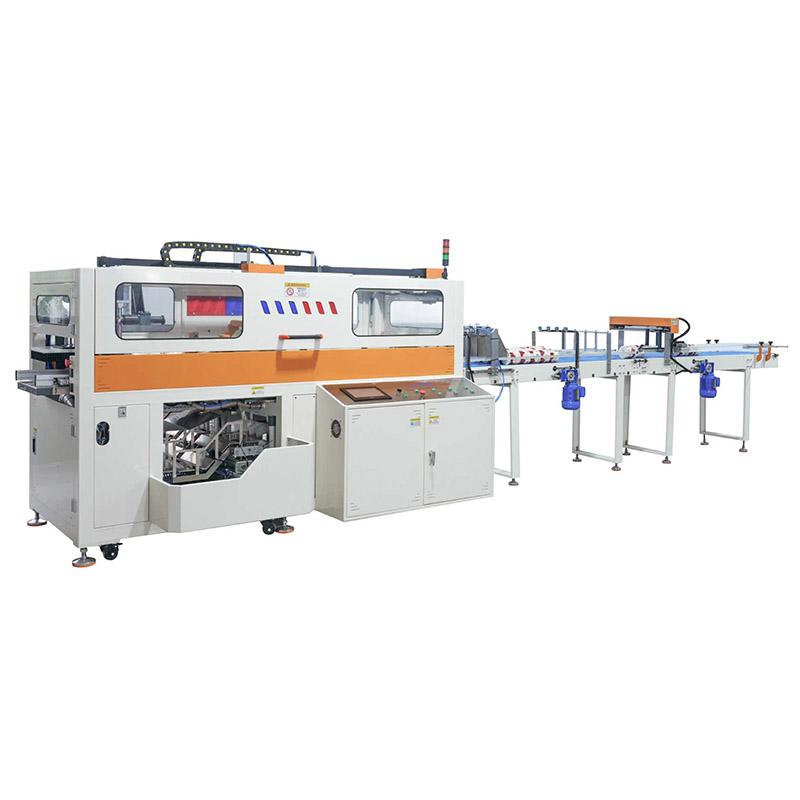
The TB-R30 closes wrapped tissue roll bundles into pre-made bags at up to 25 packs per minute, with a package envelope of 180-600 x 150-400 x 100-250 mm.
- Maximum packing capacity: 25 packs per minute.
- Package dimension: 180-600 mm (L) x 150-400 mm (W) x 100-250 mm (H).
- Pre-made bag magazines: 2 magazines.
- Power: 380 V, 50/60 Hz, three-phase; 13 kW power consumption.
- Air: 0.5-0.8 MPa at 450 L/min air consumption.
- Overall dimensions: 8000 (L) x 2000 (W) x 2000 (H) mm; overall weight 2200 kg.
- Frame material: carbon steel.
The package envelope is the commercially important figure. A 180-600 mm length window and a 150-400 mm width window allow one bagger to serve several bundle formats sold into the same market, so a format change becomes a changeover rather than an additional machine purchase. Buyers should still confirm bag format, bag material and second-magazine configuration with the supplier, because those details sit outside the headline specification and are governed by the customization scope.
Why the Two Machines Are Specified as a Pair
The wrapper is rated in rolls per minute and the bagger in packs per minute, so the two figures are not directly comparable - the relationship between them depends on how many wrapped rolls go into each bag. That matching is a configuration step performed against the buyer's actual bundle specification, not an assumption carried over from a catalogue. What the pairing does remove is the queue and the manual handling between wrapping and bagging: rolls are wrapped, transferred and bagged without an operator setting the pace.
The two machines also share a utility profile - 380 V three-phase power and 0.5-0.8 MPa compressed air - and both use carbon steel frames, which simplifies plant-side preparation. For producers already running other WIMACH equipment, such as the TP-180 or TP-280 soft tissue wrapping machines or the TC-100 and TC-300 cartoning machines, the utilities, customization logic and service model are already familiar.
Step-by-Step Breakdown: Specifying the Fix on a Real Line
An end-of-line upgrade that removes a wrapping or bundling bottleneck follows six steps. Each one produces the input the next one depends on.
Step 1 - Measure the constraint, not the whole line. Count rolls per minute arriving from the log saw, then count what the current wrapping and bundling stage actually clears per hour, including stops and changeovers. The gap between those two figures is the size of the project.
Step 2 - Freeze the roll, paper and bag specification. Record the finished roll's length and diameter and confirm they sit inside the TW-160's 90-130 mm envelope. Record the intended wrapping paper grammage and confirm it falls within 17-37 gsm. Record the target bag dimensions and confirm they fall inside the TB-R30's 180-600 x 150-400 x 100-250 mm package range. A specification outside these windows is not automatically a rejection - it is a customization request, since WIMACH customizes packaging dimensions, machine configuration, voltage and logo.
Step 3 - Place the wrapper. Position the TW-160 immediately after the accumulator so rolls are wrapped as they arrive rather than buffered. At 60-120 rolls per minute, the wrapping stage is specified to clear the incoming roll flow instead of creating a second queue.
Step 4 - Place the bagger. Position the TB-R30 downstream of the wrapper so it takes wrapped bundles directly into pre-made bags at up to 25 packs per minute. This is the step that converts loose or hand-bundled output into a repeatable, printable pack.
Step 5 - Close the line if the constraint continues past bagging. Where case packing and palletising are also manual, WIMACH supplies the downstream stage as well.
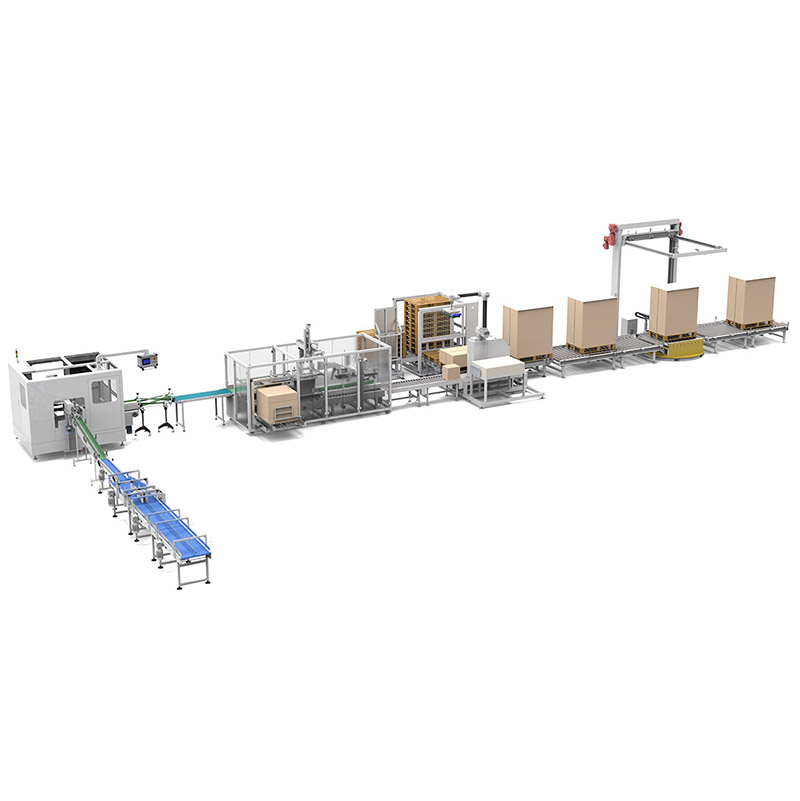
The toilet paper packaging line combines a toilet roll wrapping machine, a case packer, a palletiser and a stretch wrapping machine - maximum wrapping speed 120 rolls/min, case packing 10 cases/min, palletising 10 cycles/min.
The Toilet Paper Packaging Line combines a toilet roll wrapping machine, a case packer, a palletiser and a stretch wrapping machine, with a maximum wrapping speed of 120 rolls per minute, a maximum case packing speed of 10 cases per minute and a maximum palletising speed of 10 cycles per minute. Where a standalone case packer is sufficient, the Automatic Side Load Case Packer CP-S50 handles 1-16 cartons per minute for cartons of 240-500 x 200-400 x 180-400 mm, and the Automatic Top Load Case Packer CP-T60 handles 1-8 cartons per minute for cartons of 300-600 x 200-400 x 150-400 mm.
Step 6 - Validate before shipment, then commission. WIMACH's quality control protocol covers no-load and load running tests, dimensional tolerance inspection, mechanical assembly checks, pneumatic leakage testing, electrical safety testing, PLC control logic testing, safety interlock and E-stop testing, long-time aging testing, and surface appearance inspection. Acceptance is by factory acceptance test (FAT). After delivery, the service scope covers installation and commissioning, training, warranty service, remote technical support, lifetime after-warranty support, and upgrade and retrofit service.

Machines are assembled and load tested in the WIMACH workshop before factory acceptance testing; the 3,000 m2 facility runs an annual output of 160 sets.
Commercially, the parameters are straightforward: minimum order quantity is one set, payment is by T/T, delivery terms are FOB, FCA, CIF or CFR, and lead time depends on the production mode - 15-45 days for OEM/ODM, 30-45 days for customized machinery, and 30-60 days for a complete packaging line. Monthly capacity is one set for a complete packaging line and 13 sets for customized or OEM/ODM machinery. Engineering depth is supported by registered IP: invention patent ZL 2022 1 1099886.8 covers a carton packing machine and carton packaging process, with utility model certificates ZL 2022 2 1202677.7 covering an automatic feeding mechanism and a box forming mechanism for carton packaging machines.
Use Cases: How Buyers Have Applied This Fix
The configurations below are drawn from WIMACH installations in the EU, North America, South America and the Middle East. Client identities are anonymised; the technical configurations are as delivered.
- United States - toilet paper rolls, 2 sets of TW-160 (5 years in operation). The machines wrap and seal toilet rolls with pre-printed patterned tissue wrapping paper, replacing plastic packaging with lightweight all-paper packaging while remaining compatible with various toilet roll sizes. Reported outcomes include higher automation efficiency, reduced labour and packaging material costs, less damage and moisture exposure during transport, and alignment with plastic-restriction and environmental regulations.
- United States - complete toilet paper line, 6 sets (4 years). Roll wrapping, case packing, automatic palletising and stretch film wrapping run as one customized line, producing dustproof and moisture-resistant pallet loads ready for transport, with CE compliance.
- Poland - facial tissue and cream tissue, 12 sets (2 years). Conveying, cartoning, case packing, palletising and stretch wrapping are integrated into a single line that outputs strapped, film-wrapped pallets ready for storage or delivery, with CE compliance and quick size changeover.
- Spain - soft facial tissues, 2 machines (4 years). Automatic wrapping replaced manual packaging, raising packaging speed, standardising continuous production and reducing labour cost.
- United Arab Emirates - facial tissue and paper napkin canisters, 2 sets of TC-80Y (4 years). Stable output of 60 canisters per minute, with reduced labour cost and low maintenance.
- Mexico - canister wet disinfecting wipes, 9 sets (5 years). A turnkey line delivering labelled, cased and palletised products, with CE compliance and customized configuration.
The pattern across those projects matters more than any single site: in each case the buyer specified the roll or package format first and the machine second, and the delivered scope was defined by the format envelope rather than by a catalogue headline.
Comparison Table: TW-160 and TB-R30 at a Glance
| Parameter | TW-160 Automatic Toilet Paper Roll Wrapping Machine | TB-R30 Automatic Tissue Roll Bundle Bagging Machine |
|---|---|---|
| Function | Wraps and seals toilet paper rolls with pre-printed patterned tissue wrapping paper; replaces plastic with lightweight all-paper packaging | Closes wrapped tissue roll bundles into pre-made bags to form finished retail bundles |
| Rated capacity | 60-120 rolls/min | Up to 25 packs/min |
| Product / package size | Tissue roll: 90-130 mm (L) x 90-130 mm (D) | Package: 180-600 mm (L) x 150-400 mm (W) x 100-250 mm (H) |
| Consumable | Wrapping paper roll 480 (L) x 500 (D) mm, 17-37 gsm | Pre-made bags, 2 bag magazines |
| Power supply | 380 V, 50/60 Hz, 3-phase | 380 V, 50/60 Hz, 3-phase |
| Power consumption | 12 kW | 13 kW |
| Air requirements | 0.5-0.8 MPa, 120-160 L/min | 0.5-0.8 MPa, 450 L/min |
| Overall dimensions | 4350 (L) x 2550 (W) x 1940 (H) mm | 8000 (L) x 2000 (W) x 2000 (H) mm |
| Overall weight | 3500 kg | 2200 kg |
| Frame material | Carbon steel | Carbon steel |
| Position in the line | Immediately after roll accumulation | Downstream of the wrapper, before case packing |
Downstream Options for a Complete Toilet Paper Line
| Configuration | Scope | Throughput reference |
|---|---|---|
| Toilet Paper Packaging Line | Toilet roll wrapping machine + case packer + palletiser + stretch wrapping machine | Max. wrapping 120 rolls/min; max. case packing 10 cases/min; max. palletising 10 cycles/min |
| Automatic Side Load Case Packer CP-S50 | Side load / side push case packing | 1-16 cartons/min; carton 240-500 x 200-400 x 180-400 mm; 1500 kg |
| Automatic Top Load Case Packer CP-T60 | Pick-and-place / top load case packing | 1-8 cartons/min; carton 300-600 x 200-400 x 150-400 mm; 1600 kg |
FAQ
Is the TW-160 certified for installation in the EU?
Yes. The TW-160 is covered by CE attestation M.2021.206.C67964, issued by UDEM International Certification Auditing Training Centre Industry and Trade Inc. Co. for the scope Automatic Tissue Packing Machine, verified against EN ISO 12100:2010, EN 60204-1:2018, EN 61000-3-2:2019, EN 61000-3-3:2013+A1:2019, EN 61000-6-1:2019 and EN 61000-6-3:2007+A1:2011+AC:2012. Related scopes carry their own certificates, including TRCN-25091WWM01 for the Automatic Carton Packing Machine and TRCN-25118WWM01 for the Automatic Tissue Wrapping Machine. At market level, machinery placed on the EU market must also comply with the Machinery Directive 2006/42/EC, which is transitioning to the new EU Machinery Regulation (2023).
What roll sizes and speed can the TW-160 handle?
The TW-160 handles tissue rolls from 90-130 mm in length and 90-130 mm in diameter at 60-120 rolls per minute, using wrapping paper of 17-37 gsm from a 480 x 500 mm paper roll. Power consumption is 12 kW at 380 V, 50/60 Hz three-phase, with 0.5-0.8 MPa air at 120-160 L/min. The machine measures 4350 x 2550 x 1940 mm, weighs 3500 kg and is built on a carbon steel frame. Rolls or papers outside those envelopes are handled as a customization request rather than a standard specification.
Can WIMACH act as an ODM facial tissue packing machine manufacturer as well as a toilet roll equipment supplier?
Yes. WIMACH provides OEM/ODM production services, customized machinery service and complete packaging line production, with customization covering packaging dimensions, machine configuration, voltage and logo. Beyond the TW-160 and TB-R30, the range includes soft tissue wrapping machines TP-180 (up to 180 packs/min) and TP-280 (up to 260 packs/min), facial tissue and napkin cartoning machines TC-100 (30-100 boxes/min), TC-300 (up to 180 boxes/min) and TC-80F (30-80 boxes/min), and the canister machine TC-80Y (30-80 boxes/min). OEM/ODM lead time is 15-45 days with a monthly capacity of 13 sets.
What are the MOQ, payment, delivery terms and lead times?
Minimum order quantity is one set. Payment is by T/T and delivery terms are FOB, FCA, CIF or CFR, with acceptance by factory acceptance test (FAT). Lead time depends on production mode: 15-45 days for OEM/ODM, 30-45 days for customized machinery, and 30-60 days for a complete packaging line. Monthly capacity is one set for a complete packaging line and 13 sets for customized or OEM/ODM machinery. Exports go to the EU, North America and South America.
How can a buyer validate a TW-160 and TB-R30 configuration before ordering?
Validation starts with the format data: confirmed roll length and diameter inside the 90-130 mm envelope, wrapping paper inside 17-37 gsm, and bag dimensions inside 180-600 x 150-400 x 100-250 mm. Every machine then passes a nine-point quality control protocol covering no-load and load running tests, dimensional tolerance inspection, mechanical assembly checks, pneumatic leakage testing, electrical safety testing, PLC control logic testing, safety interlock and E-stop testing, long-time aging testing, and surface appearance inspection, before factory acceptance testing. Installation and commissioning, operator training, warranty service, remote technical support, lifetime after-warranty support, and upgrade and retrofit service complete the lifecycle. Send your roll and bundle specification to rex@wimach.cn or call and WhatsApp +86 177 5771 8080 to request a quote and a configuration review.
Conclusion: Remove the Handling, Not the Speed Setting
A toilet roll wrapping speed bottleneck is usually a handling problem wearing a speed problem's clothes. The TW-160 removes manual roll handling at the wrapping stage by wrapping and sealing 60-120 rolls per minute in one continuous pass, for rolls of 90-130 mm in length and diameter and wrapping papers of 17-37 gsm. The TB-R30 removes the second manual step downstream, closing wrapped bundles into pre-made bags at up to 25 packs per minute across a 180-600 x 150-400 x 100-250 mm package envelope.
For buyers in the evaluation and execution stages, the decisive work happens before the order: confirm the roll, paper and bag formats against those envelopes, decide whether the constraint continues into case packing and palletising, and align lead time and delivery terms with the production schedule. The engineering is then a matter of placement, validation and commissioning - not of hoping an operator can keep pace.
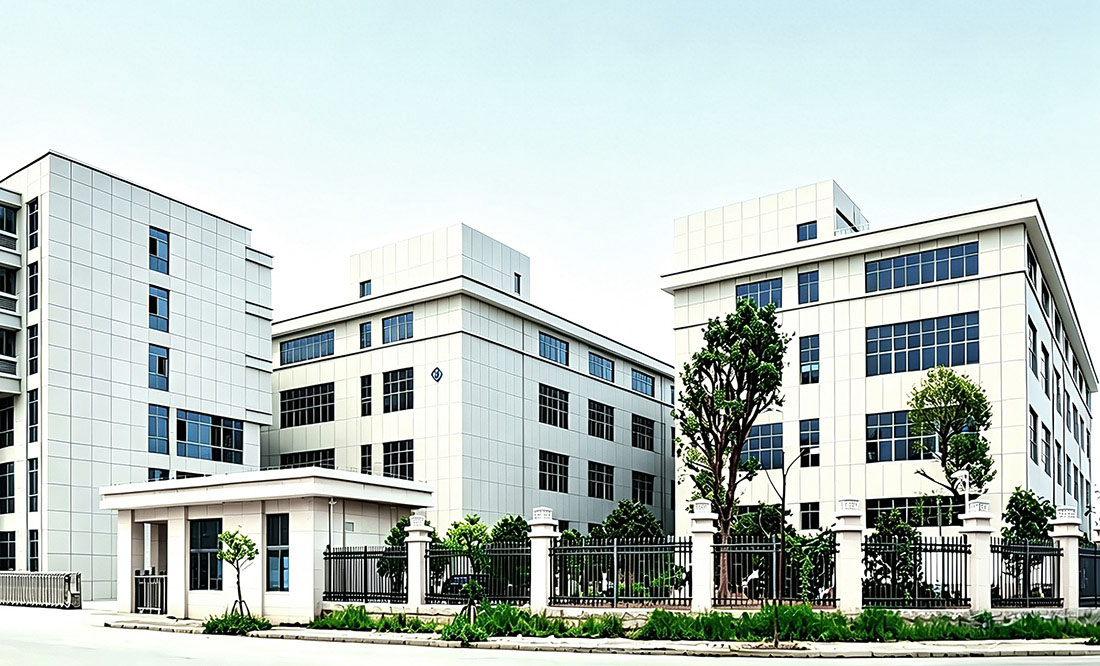
Wenzhou Wimach Machinery Co., Ltd. supplies tissue packing machines and integrated packaging lines to the EU, North America and South America.
Next step: send your roll and bundle specifications and WIMACH will confirm the TW-160 and TB-R30 configuration, the downstream line scope, and the ex-works or delivery terms that fit your schedule.
Email: rex@wimach.cn - Tel / WhatsApp: +86 177 5771 8080
Website: www.wimach.cn - Blog: blog.wimach.cn
Address: Bldg 14 Qiaomao Rd, Ruian, Wenzhou, Zhejiang, China
Download the full Wimach Catalog (PDF) for the complete tissue packing machine range.
Have Questions or Need More Details?
Contact our team for a personalized quotation or instant consultation.
Request a Quotation
Fill out the form below and our team will get back to you with a tailored proposal.
WhatsApp Direct Chat
Prefer to chat in real-time? Message us on WhatsApp for instant assistance & quick answers.
- Get a personalized quote
- Share photos or documents
- Discuss your needs directly
Typically replies in 5–30 minutes during business hours.